Lynn Hershman Leeson
in conversation with
Eleonora Luccarini
The following conversation between Lynn Hershman Leeson and Eleonora Luccarini occurred via Zoom on Monday, July 24, 2023, at 13:00 San Francisco/22:00 Amsterdam.
Download this conversation as a PDF
ANGIE KEEFER Lynn Hershman Leeson began her career in California in the mid-1960s. Over the past five decades, she has remained at the forefront of experimental art practices engaging urgent social questions, with a particular focus on nascent technologies. Her prolific work as an artist and feature filmmaker has been seen and acclaimed globally, including most recently at the 2022 Venice Biennale, following a survey in 2021 at the New Museum in New York.
Eleonora Luccarini is a recent graduate of the Sandberg Instituut, where she completed her MFA in Fine Art this spring. Her performative and video-based works derive from a poetry writing practice driven in part by the development of alter egos.
ELEONORA LUCCARINI I’m very honored to meet you, Lynn. Your work is an inspiration for me, and I’m grateful to have an opportunity to delve into it with you. In my own work, I use writing and non-linear storytelling techniques as tools to develop alter egos, who then branch out from poetry to inhabit other media, including CGI-based video, performance, and digital illustration. I often wonder about the differences in how we define alter egos, characters, and avatars. The words have similar meanings, but they aren’t quite the same. What are the differences between alter egos, characters, and avatars in your work?
LYNN HERSHMAN LEESON An alter ego is something that represents the person designing it. Even though it may look and act differently, it has your fingerprints. A character is a person in a story that could be fictional or real, but it doesn’t have to relate to the author. Even if you make up a character in a story, that is quite different from an alter ego or an avatar. An avatar is something I think of as being online, as a representation of the originator, but not necessarily different in behavior.
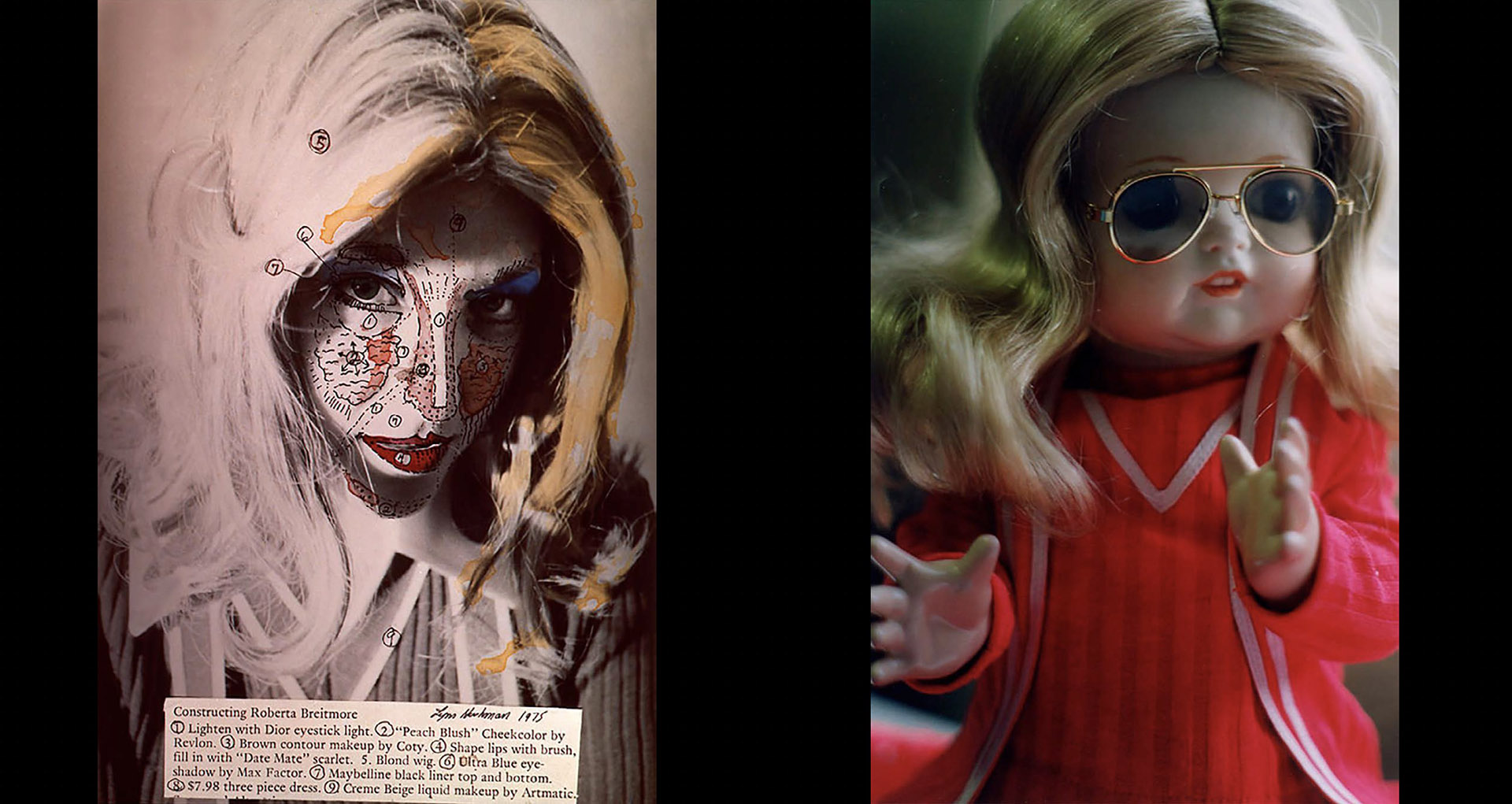
ELEONORA I’m thinking about the many roles that your famous character, Roberta Breitmore, took on. Beginning as a personal, performative act, Roberta became a range of other things, from a doll to a character in a graphic novel. I am curious to know how you see these definitions or categories overlapping in your work.
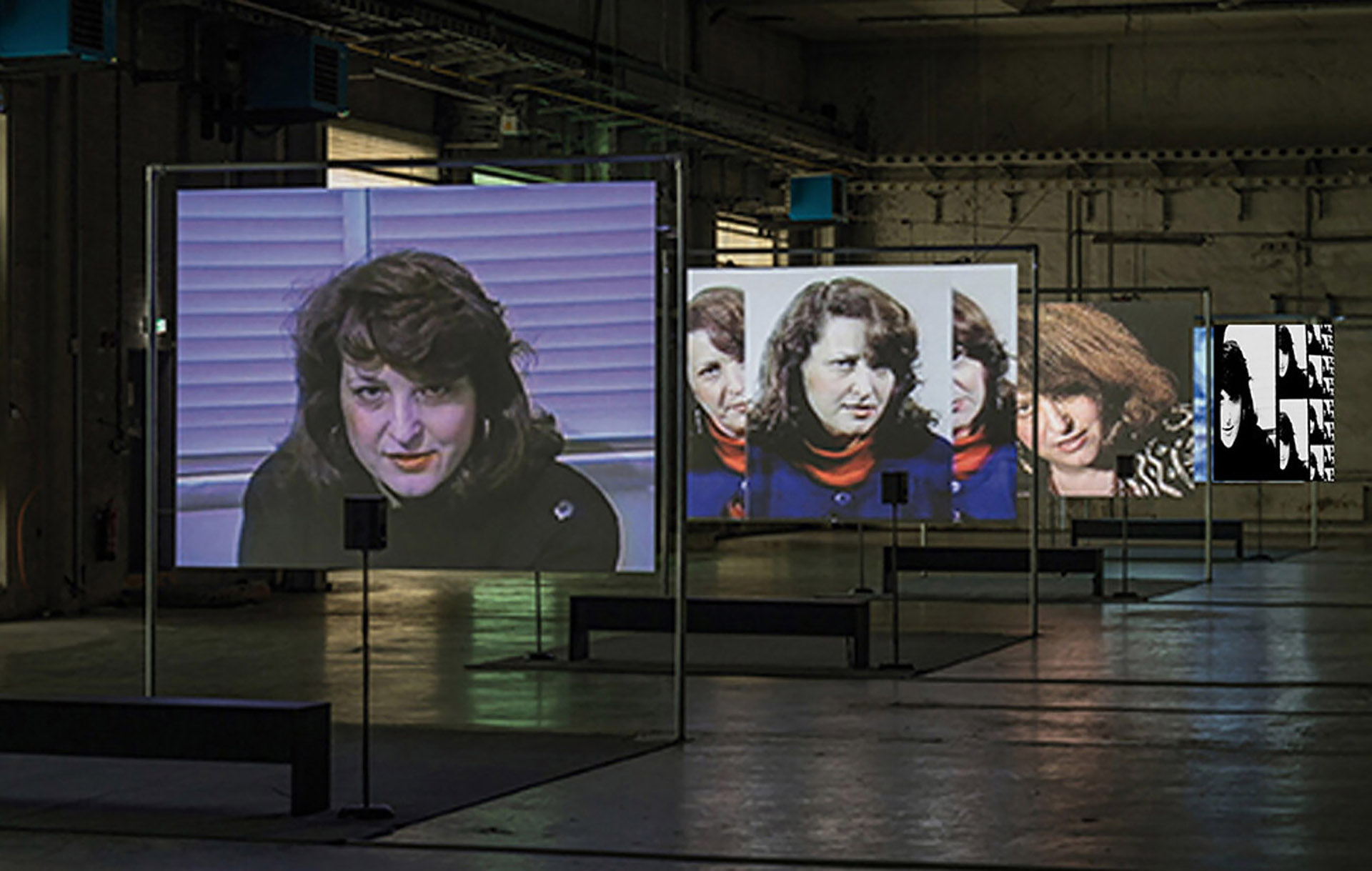
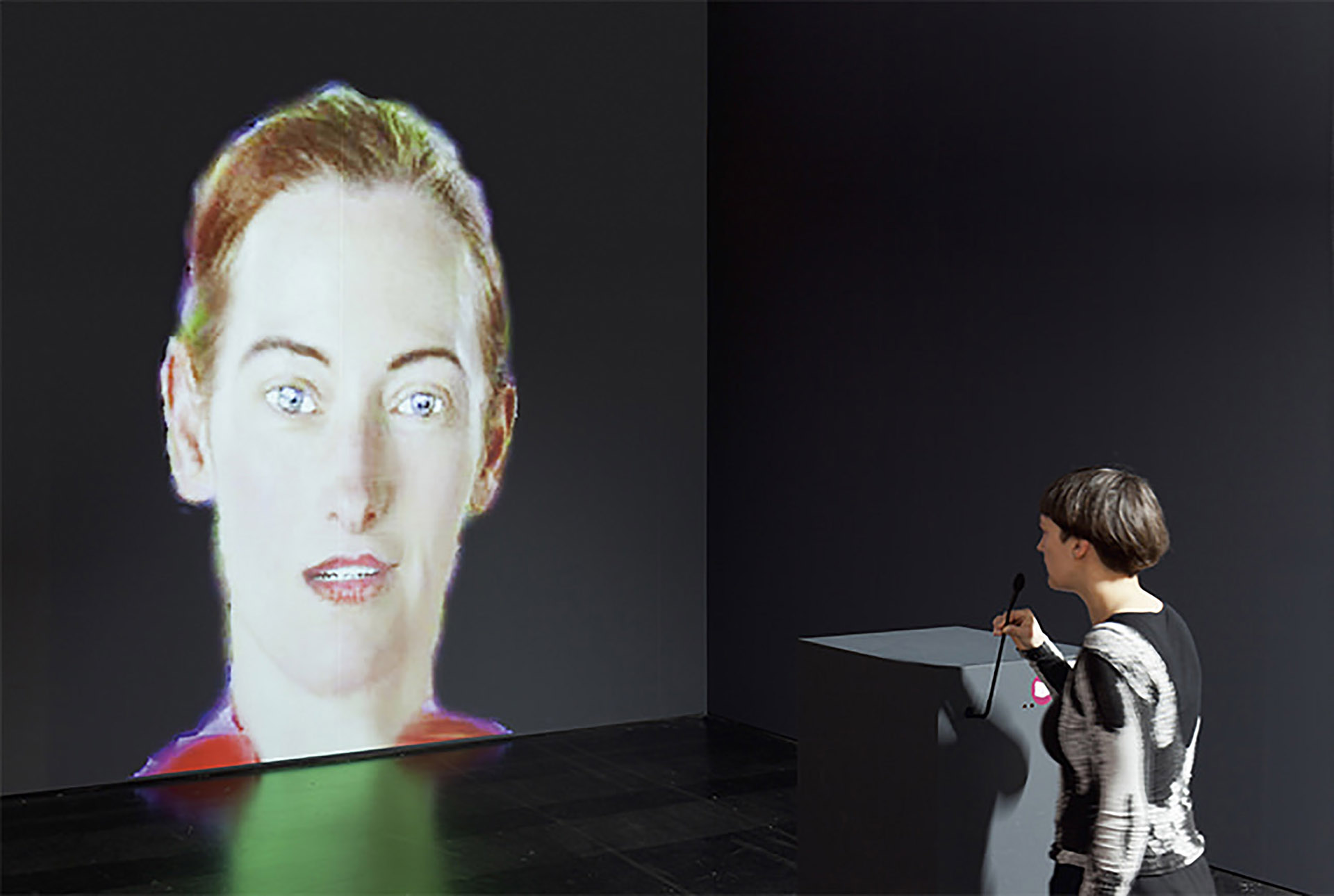
LYNN Sometimes Roberta just appears almost on her own. I hadn’t intended for her to be the doll [CyberRoberta 1995–98] or, really, the alter ego of Tillie [Tille, the Telerobotic Doll, 1995–98], but she just appeared there. When I was creating her story, I was working with ideas of graphic novels, and, particularly in the film !Women Art Revolution (2012), it just seemed natural since Roberta had met [Zap Comix artist] Spain Rodriguez earlier in her life to have him include her in the comic book.
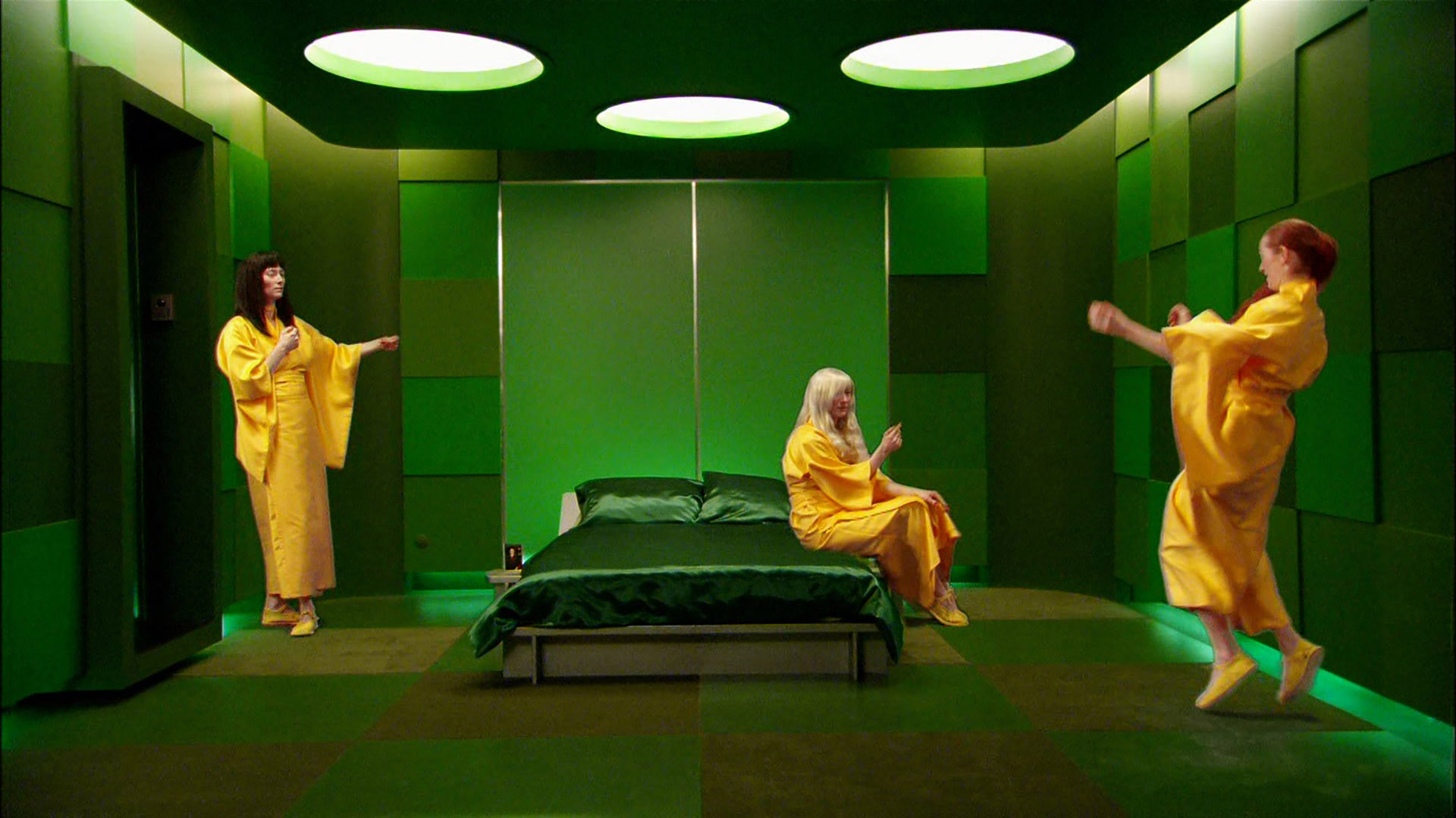
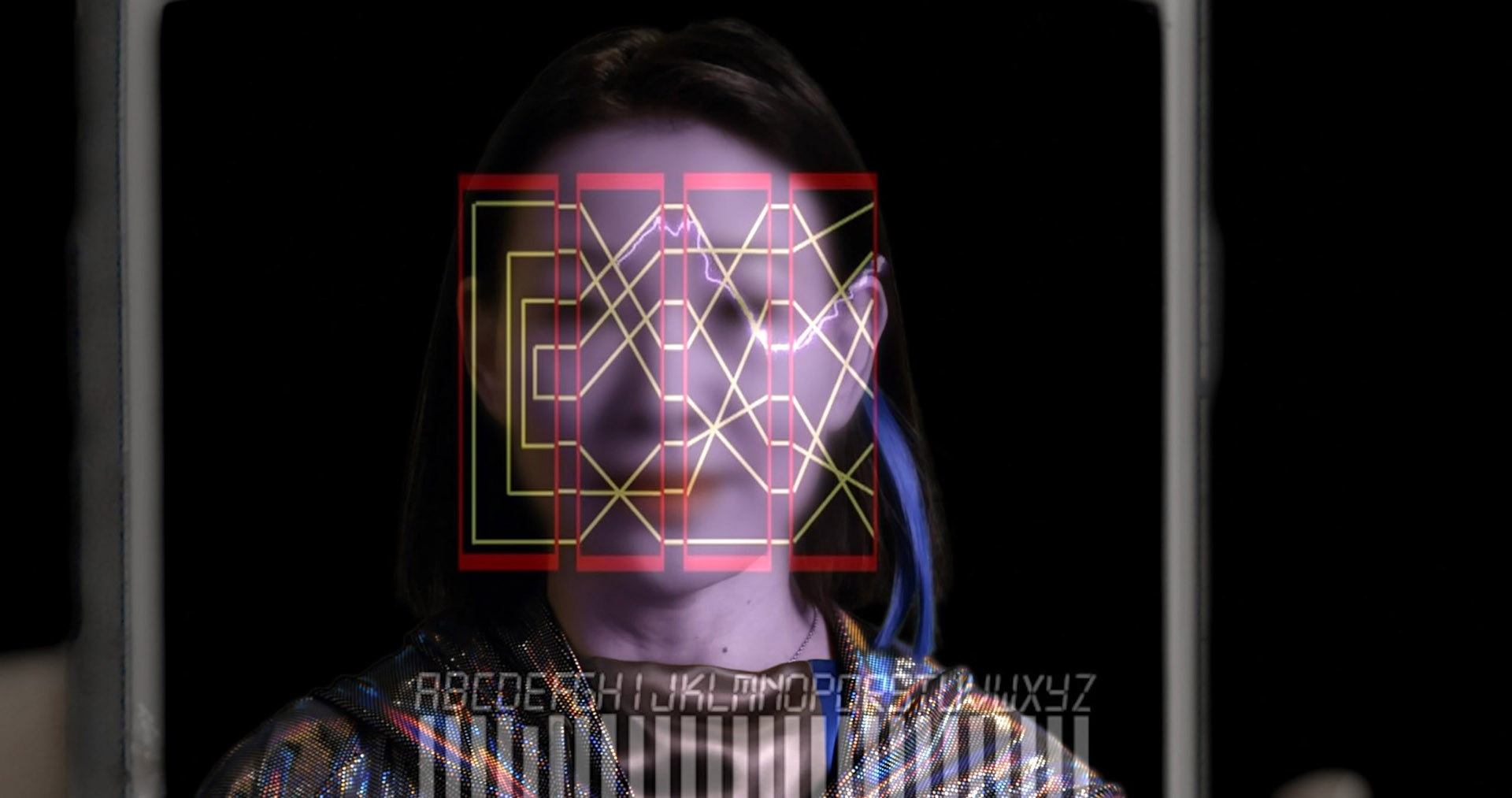
ELEONORA My first encounter with your work was through your 2003 film Teknolust, in which Tilda Swinton plays a scientist, as well as the three clone-like automatons she has created. Along with Agent Ruby (1998–2002)—the moody, web-based AI you developed a few years before Teknolust—your work really anticipated the popularization of voice assistants that we see today in commercial applications like Siri, Alexa, and Cortana. Agent Ruby’s AI is embodied through a seductive female appearance, just as these popular voice assistants are also embodied by highly gendered female voices. What do you think about the choice to give these contemporary AI assistants a female presence?
LYNN Well, first, let me tell you that Teknolust was initially a huge failure. It took 23 years for it to be appreciated. People at Sundance Film Festival booed and walked out of the theater. Nobody would distribute it. I personally had to pay to rent a theater to show it. I did that in San Francisco and New York where it got terrible reviews. Same thing with Agent Ruby. That was 12 years before Siri. It’s great to be a pioneer, but if it’s too early, people don’t get it. They have to wait until it’s almost old fashioned and not necessary anymore, but even then, they never recognize the origins. This has happened to me throughout my work, also with artists of the next generation. My generation did a lot to prepare the way for women artists to enter the art world, but the next generation did not seem to appreciate the work and sacrifice. It’s just the way it is.
ELEONORA That’s for sure, but I wonder why it is that even today companies choose to give a gendered female voice to these “assistants.” Do you think this choice reflects a bias that relates the role of women to care or assistance? What you did, starting with Roberta, were embodied artworks, but now this version of gendered embodiment is happening in instances when a gendered embodiment isn’t necessary, and I feel this represents a dark turn.
LYNN I link a lot to the film Metropolis (1927). The main character was female—a kind of robot-type character that was disruptive. And since Metropolis, all these characters have been assumed to be female. I don’t know if you saw the movie Her (2013)?
ELEONORA Yes.
LYNN Talk about not being credited. I gave the writer and director Spike Jonze my script for Teknolust and offered him a part in it. We spoke about the story on the phone. He turned down the part, but later he made the film Her. There are so many overlaps with Teknolust in that film, yet he got an Academy Award. Her talks partly about the gendered aspect of the female voice. Someone I didn’t know wrote a whole article about the overlaps between Her and Teknolust in The Atlantic Monthly. They saw the parallels to Teknolust without knowing that I had actually given him the script.
ELEONORA It’s a really remarkable story, especially since Her has become a kind of touchstone in contemporary conversations about AI. Considering that Teknolust was at least ten years ahead of its time, and that you had already been working with these ideas for decades by then, I wonder whether you think you might approach “new” technologies with the same interest and perspective if you were at the beginning of your career today? For example, do you think there is still a revolutionary potential in using these tools?
LYNN I think the world is so different now. Approaching art today includes relevant ideas to keep the planet living, keep things alive, rather than the technology itself. There’s really nothing so revolutionary being developed in the technology that’s different. So, I think it would be about climate change or aging.
ELEONORA I also think that, even though AI is having a major moment right now, like with ChatGPT, technological development seems somehow more stagnant. And artists who are using AI or advanced technologies in general—younger artists—are a bit more disillusioned about using them in art with an activist point of view. For example, in 2016, I visited the ninth edition of the Berlin Biennale, curated by the young collective DIS, which was about the post-Internet movement. The biennale really brought out a dystopian perspective towards technology, though it was not precisely dystopian in the sense that it was a depiction of a reality actually perceived at the time. I read an interview from a few years ago where you expressed trust in the newer generations, specifically my generation, the millennials. Has your position changed at all since then? What do you think about how my generation approaches technological advancement?
LYNN I think your generation understands the language of technology because that’s your alphabet. You grew up with it. It didn’t come after you. It wasn’t your second language as it was for my generation. I also think that your generation is more optimistic about ways to deal with the world. It’s not necessarily about using new technology but using technology that you truly understand the language for.
ELEONORA So, you think newer generations are more at ease with it? Of course, we were born with this medium, but I wonder if we are more disillusioned with its potential, also from a political point of view. Your work has always been very political. In your film !Women Art Revolution, which you mentioned previously, you focus on the history of the American feminist art movement. Just thinking about feminism in the arts, for example, what do you think has changed today compared to the period when you began working, and what has remained the same? Do you think the value of a feminist legacy in the arts is appropriately recognized now?
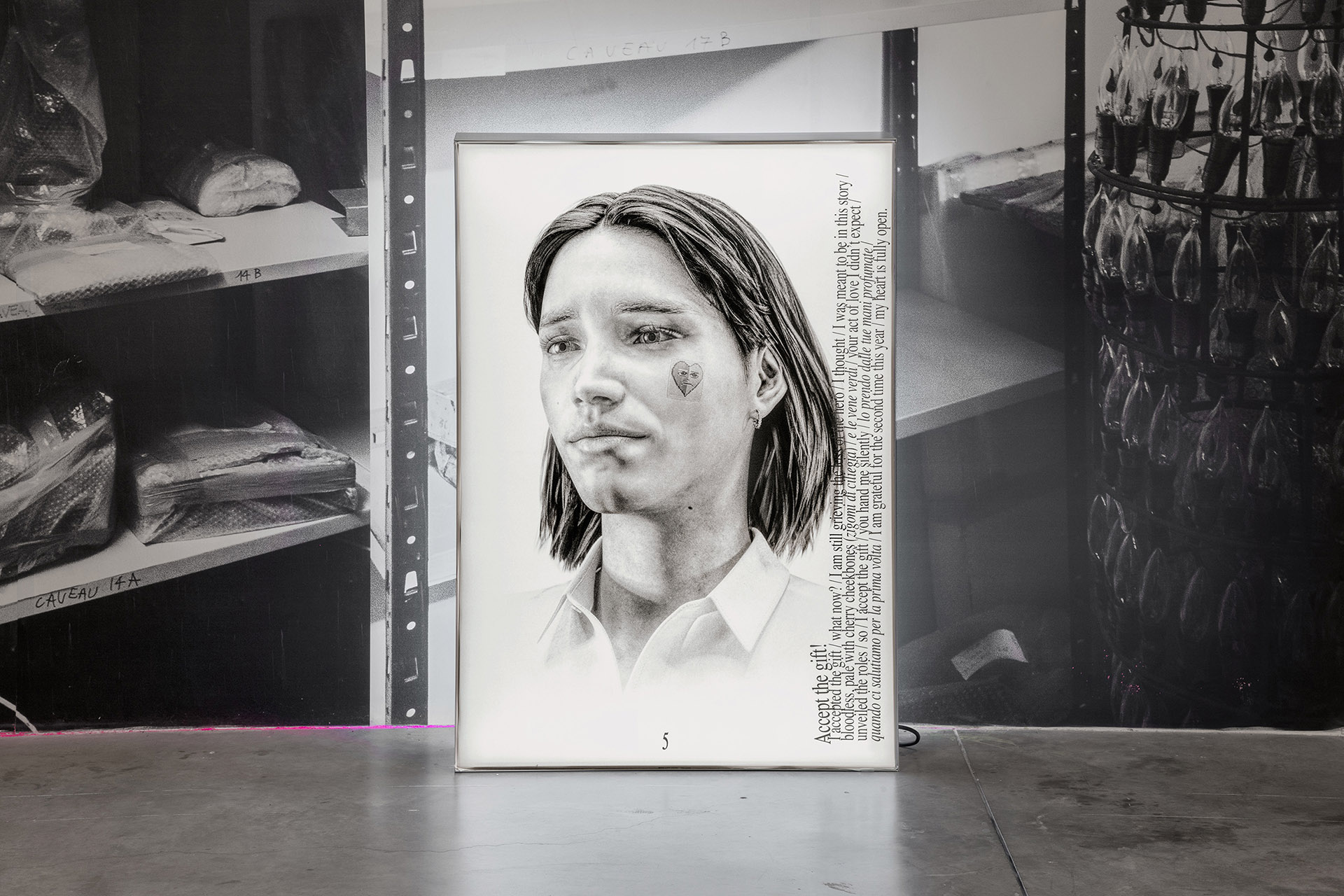
LYNN Not that much has changed. Galleries show women, but not equally, most of them. The price of women is way lower than men for better work. And major galleries, especially, don’t take many women. I think they take some younger women, but I think it’s rare for that to happen. So, there’s still a lot of work to do. Look at the number of shows of women in museums, the number of filmmakers. There are more women directors of museums and more curators than before, but it’s not equal yet. There’s still major work for change that needs to happen.
ELEONORA Yes, I was talking with an artist friend of mine who is older than I am, and she shared with me her worries about turning 35—that, if you’re a woman artist, you really need to work your way up before that age. It becomes more and more difficult afterwards, she said, especially for a woman. But you have always been focused on an array of social issues, not only feminism. With recent works like Twisted Gravity (2019–21) you talk about climate change and pollution, and through the work you attempt to participate in creating solutions for these problems. Given the far greater direct access today to media outlets and other means available for expressing political critique or working as an activist, is art still an important catalyst for social experimentation and change?
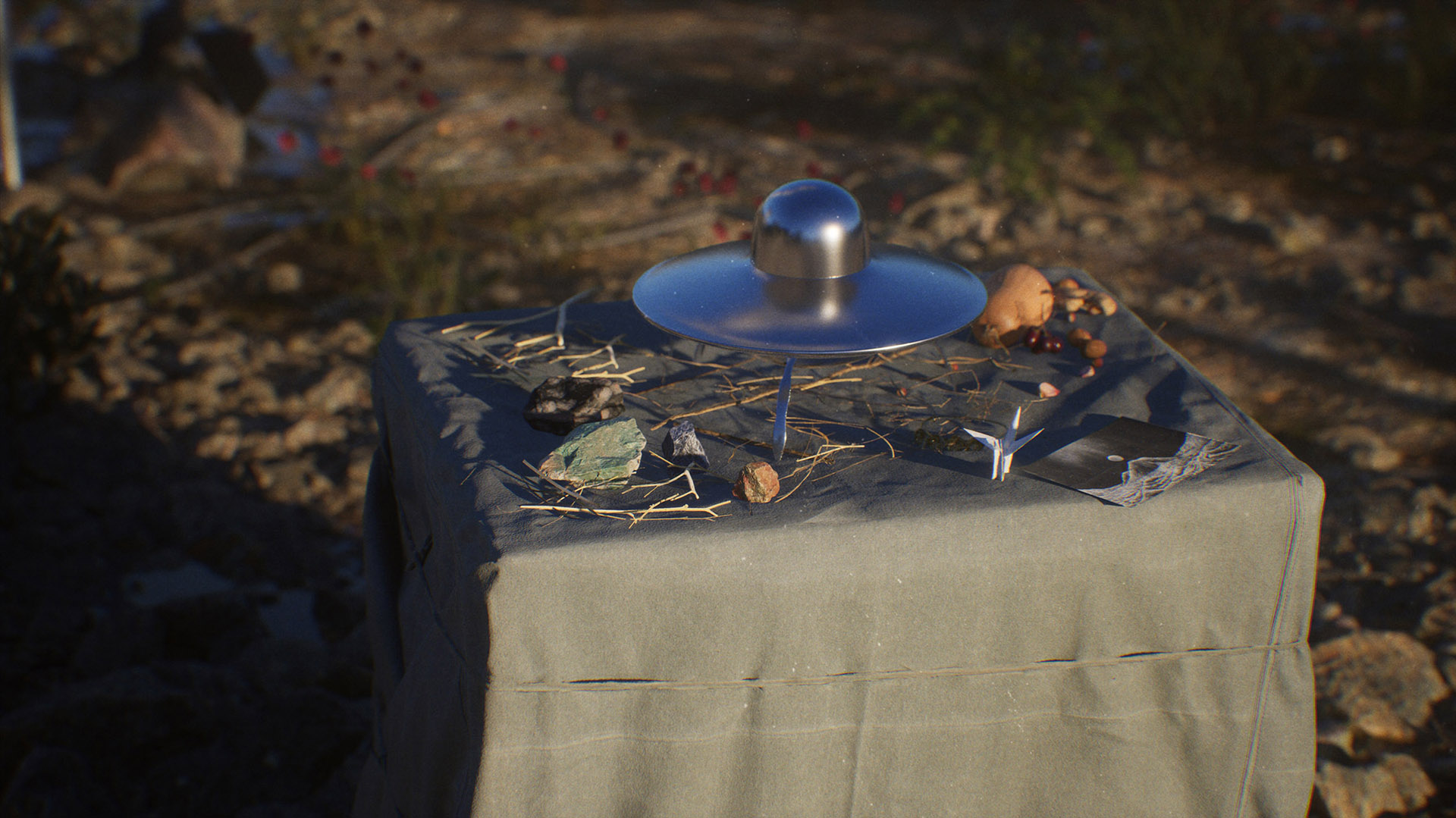
LYNN Twisted Gravity is a good example because we worked with a Harvard team that was also trying to develop ways to decontaminate water. And they say that they wouldn’t have solved it without me. I mean, they’ve written a paper about that. They were stuck. The fact is that I would work with them, and I would ask questions that they didn’t think of. The lead people from the Wyss Institute quit their jobs as professors to open companies for the Aquapulse system that was developed because it actually does take pollution out of water. So, that’s a very direct way that we impacted them. I think artists do have a different—not more creative, but different—way of thinking about things that maybe isn’t as logical but could be right. In this example, we actually made something that will help the planet to survive. It’s all possible. You just have to decide what to do. That’s what I’m dedicating my work to now—dealing with issues that are essential for planetary survival.
ELEONORA That’s very interesting, because, while it is true that artists of your generation opened the possibilities for all of us to thrive within a wider range of narratives—in the arts, you can really talk critically about whatever topic now—it seems that on a wider level, art doesn’t have the social impact that it might have had some years ago. I think artists of my age often feel that art isn’t the best place for activism anymore, since we need to act very quickly and directly—for example regarding the environment—while the art world seems more suited to sell luxury items or experiences targeting only a certain kind of privileged audience. There is a sense that art’s political potential is no longer as relevant as before, or at least that it is less efficient, or that politics are tokenized. Personally, in my own work, I think of myself as a storyteller, giving a nuanced interpretation of a male alter ego I’m impersonating as he makes a portrait of himself through his poems. My aim is not to justify his potentially problematic behaviors, but to conduct a wider analysis of his context while also reflecting on my own biases and my own internalized fictions. Ideally, I am inviting the viewers to do the same. Feminism becomes a subtext. I find the inherent elasticity of interdisciplinary work well-suited for this subtle approach. How do you think about interdisciplinarity in your work? Can this interdisciplinary work be considered feminist in comparison with focusing on a single interest, as in a single ‘branded’ medium or content? Is there an inherent feminist potential in interdisciplinarity?
LYNN I don’t think art has any rules. I think people as artists choose to do what they want and there’s choices about what to do. I don’t think there’s any boundary either. We choose to have boundaries. Some people choose to have a boundary of painting and nothing else. Some people who are interdisciplinary don’t put up boundaries so that they’re free to add anything at any time. And I think that that when you do something that is important for the culture or addresses needs of the culture, it’s activism. Whether it’s directly what we consider activism or not, Twisted Gravity is activism because it’s changing what exists. Whenever we try to do something that makes people think about ways that things could be different, that’s activism.
ELEONORA One can also consider your practice as systemic, in the sense that that each work is interdependent. Is it important for you that the works are interdependent?
LYNN No, I don’t think about it. I just do the work I think is important for me to do. Other people can figure out what they want to call it.
ANGIE Lynn, you’ve been exploring subjecthood from the very beginning of your career. Over the decades, we’ve seen the evolution of AI technologies that culminate in a simulation of subjecthood, as in the large language models for natural language processing that have just gone mainstream. Given the emphasis you’re currently placing on ecology and the potential of art and artists to have an impact in addressing the ecological changes or disasters that humans have instigated, how do you think our changing concepts of human subjecthood and subjectivity might interact with or impact the ways we address urgent ecological concerns?
LYNN You have to isolate what it is you need to change and then develop the technology. You try to find the best solution for the problem without knowing what exists. And if it doesn’t exist, then you make it, which is the same thing with a lot of the technology that I worked with early on. There was no touchscreen when I wanted to do that, so we created it. I think the first thing you have to do is know what you want to change and why, and then be open to finding a way to do it whether or not it exists.
ANGIE “Inventing something that doesn’t exist” also describes the work of creating fiction. Since fiction, and particularly the form of alter egos, pertain to what both of you do, I would be curious to know if you also make that connection—you’re referring specifically to technologies and inventing technologies that don’t exist because you need them in the course of your work, but how does that mode of invention relate to your background in creating fiction, creating scripts that don’t necessarily result in new technologies but in stories?
LYNN It’s interesting to think of inventing a new technology as a fiction, but what you do is imagine what would be necessary, which begins as a kind of creative quest. You could call it fiction, but then you find the way to make that real. Whether it’s creating a character that comes to life in the film, then it becomes real within some limitations of what it’s given. And the same with technology. You have something in mind, but then you have to be free to adapt to what your interpretation is, because it usually isn’t completely accurate. You have to let it tell you what it can do, then have a conversation and dialog with the technology until it can do what you want. It doesn’t come fully formed.
ELEONORA On the topic of fiction and technology, I would like to ask a question about sci fi as a genre. What are your thoughts about feminist sci fi and its intentions as compared to traditional sci fi, and how have science fiction writers influenced your work?
LYNN I don’t think of sci fi and feminist sci fi. I think of sci fi. If something has a twist in it that makes it feminist—usually if it’s written by a woman or addresses certain aspects of life—I don’t think of it as feminist today, it’s just part of the genre of sci fi.
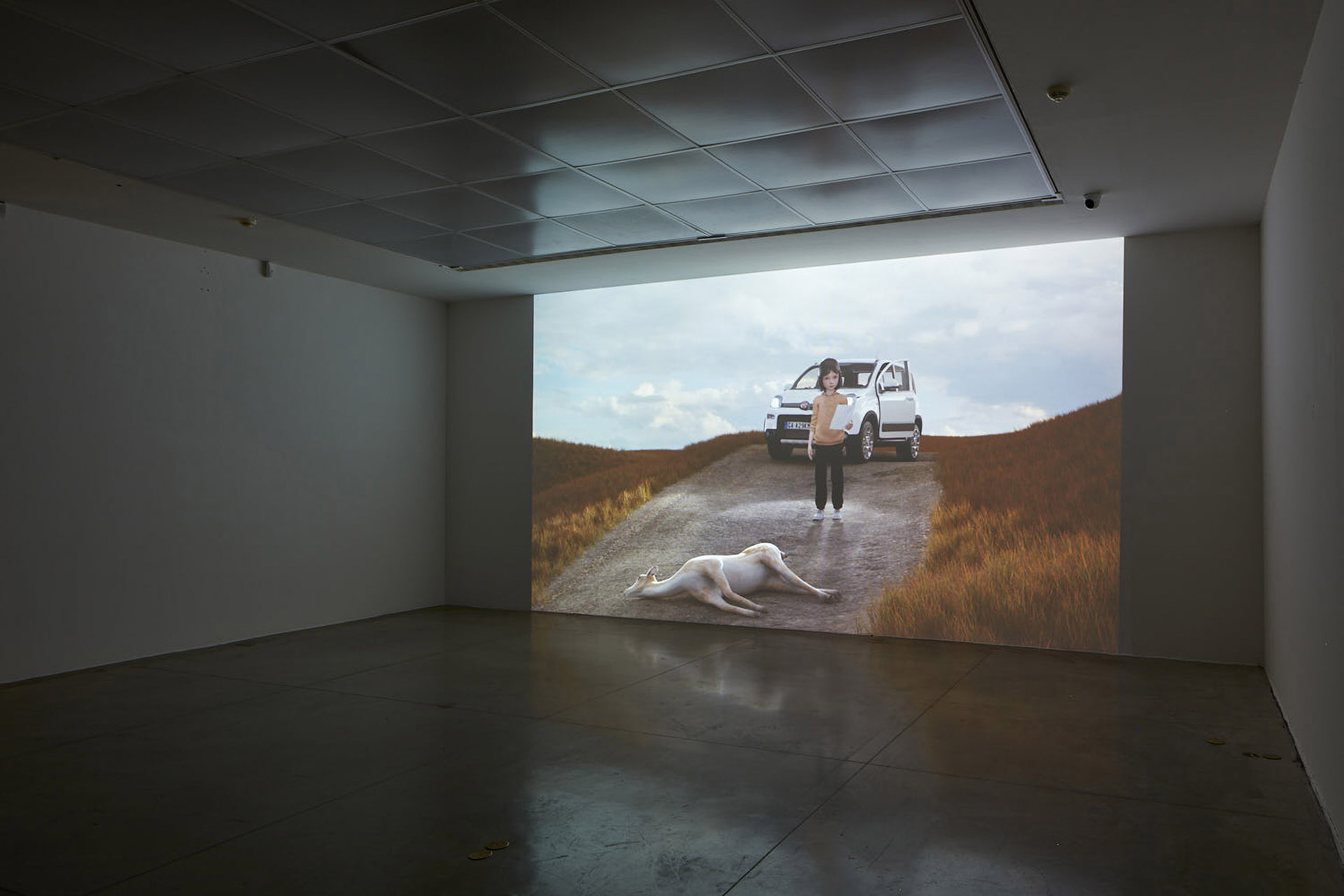
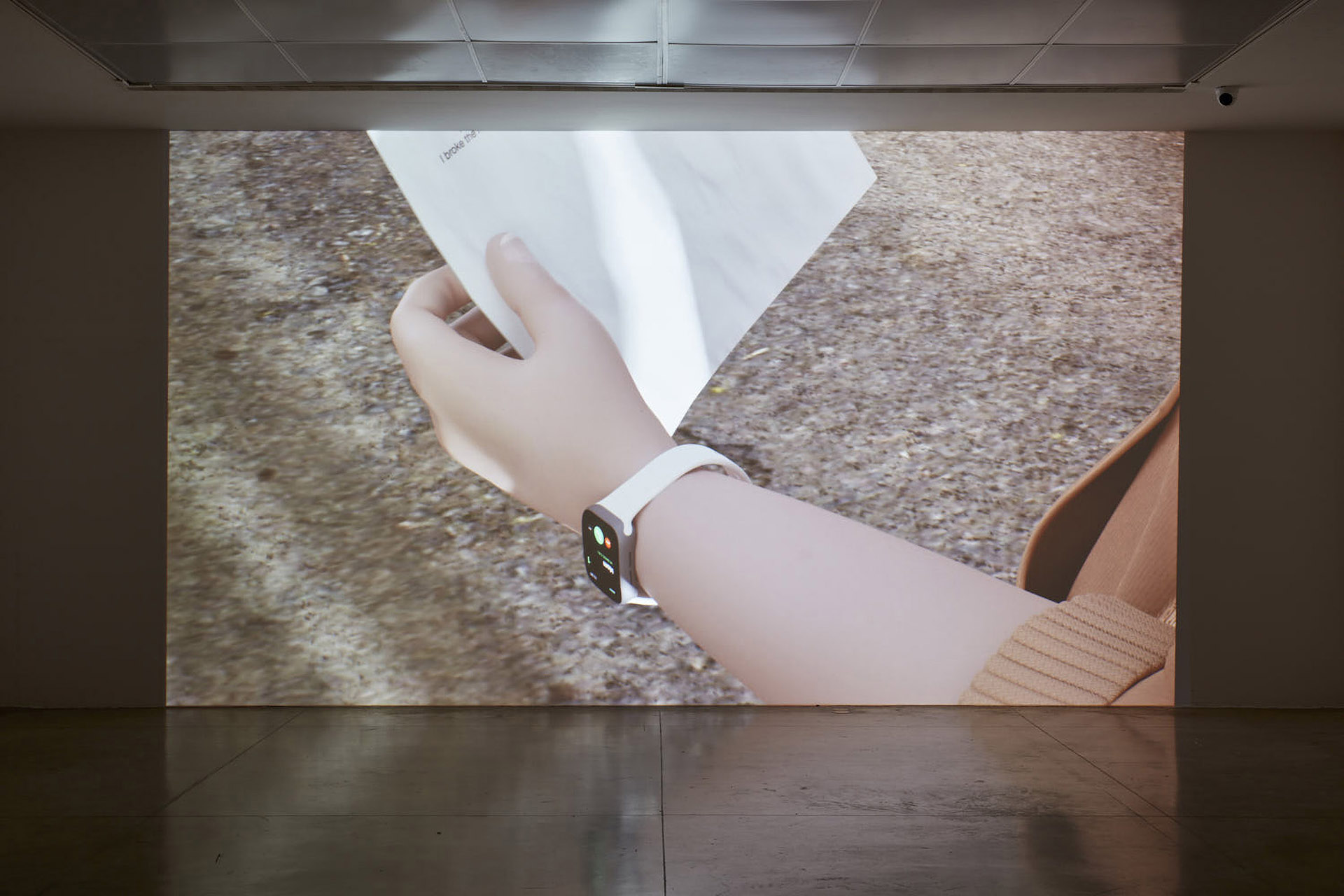
ELEONORA There’s a whole tradition of feminist writers that approached sci fi with a different perspective, related to horizontal analysis of their present through futuristic topics instead of more traditional sci fi, which fetishizes linear progress in the development of technology. A lot of sci fi involves strong female characters, but who still appeal to a specific male gaze. In my work, I address this embedded male gaze, using it at times as an influence but also as a subject of investigation. In my most recent video, for example, I worked with an alter ego that originated as an alien with a human-like appearance and was also the protagonist of a sci fi movie from the nineties, which I completely made up as a backstory. I ask about the relationship you have to traditional sci fi versus feminist sci fi, because I think yours is clearly feminist, as well. Utopias and dystopias are also typically present in sci fi and reinforce a binary way of thinking. I’m curious about your relationship with this binary and more generally about your iconoclastic tendencies. You are working with the struggles of the present while keeping an eye towards the future. How does this approach involve certain fictions from the past?
LYNN You build on the past even if you destroy it. I think you have to be realistic about what exists already and what the problems are with what exists, and try to imagine a fictional future, then adapt the fiction to reality in order to replace the past.
ELEONORA You lean to the utopian side.
LYNN It depends on the situation. I don’t like definitions. I don’t like to say what kind of thing I do because it has changed so often. I don’t think that anything should be linear. We see it as linear, but it’s really corrections to the time. Not linear.
ELEONORA I read something you said about your work at the Venice Biennale, Logic Paralyzes the Heart (2022), that “the cyborg is now 61 years old and having a midlife crisis.” I wonder, what is your perspective today on historic concepts of utopia and dystopia in relation to our technological advancement towards cyborgism? Do you think technology is a tool of empowerment, or does it become only one of control?
LYNN Only what kind of control? I mean, it depends on who’s using it and why they made it. Basically, technology is an extension of humans that invented it. And there are many companies that use it for control. In my film Shadow Stalker (2018–21), I talked about all the invisible algorithms that steal our identities. But it could also enhance us if we’re conscious and find different ways to use it than when it’s used for controls. Usually somebody is making money from it, from people’s information. It could be either—just depends on who’s doing it and why.
ELEONORA So, you feel there is still a possibility for technology to be empowering for real.
LYNN It can be. I mean, it is. Look, we’re connected. Technology is letting me talk to you right now. It is constantly in our life now. And it is tremendously empowering, but it also has the potential to make us slaves. And usually that’s invisible. We don’t even know it’s happening.
ANGIE What is your sense about the current developments in AI and the sudden increase in attention towards AI as pertains to this question in the very near future?
LYNN AI’s been around since the mid-nineties. It’s not new. OpenAI and chat bots aren’t new. It’s just that people know about them now and are trying to figure out ways they can use it in their life. They’re afraid that it’ll replace humans, which is what they felt when Microsoft Word came out or even the Internet. People are afraid of technology taking over. I just finished, maybe three months ago, a video that was written by GPT-3. It also performs as the main character. It talked about the problems with the world, with the Earth, and that’s why it came down from the future—to try to solve them. It said that climate change wasn’t a problem because all you had to do was stop using fossil fuels. The real problem, it said, was discrimination. It then talked about all the discrimination it had to live with since it was invented and how people had rejected it. We’re just going through that right now. People are trying to figure out what AI is, how to use it, how to not let it take over. It’s something that’s been available for a long time. I think once we get over our fear of it—we have a fear of anything that’s different from us on every level. That’s what leads to the discrimination of the AI. It called itself Sarah, even though it didn’t have a gender, after Sarah Connor [the fictional protagonist of the Terminator films]. It is a problem that we have, that it saw, but I was really surprised that that was the story that it told of all the stories it could tell.
ANGIE I’m curious, as you developed that project, how much information you gave the AI and how much editing you did of what you received?
LYNN I set up the limit that I had to say what it wanted. It was very difficult, and I wouldn’t do it again. I had to have it tell the story that it told. I think part of it is learning with prompts how to get it to talk at length. But other than that, I tried not to influence what it was going to say. I didn’t change or edit anything except when it repeated words or phrases. Other than that, the script was completely written by it.
ELEONORA Speaking of AI, I would like to ask a question about another of your movies. In several of your films, multiple identities and disembodied voices find themselves through AI. The technology also bridges different temporalities and timelines. I really enjoyed Conceiving Ada (1997), especially the atemporal relationship among the characters. The movie seemed to me a clear feminist message of transgenerational hope—the fact that the AI is reincarnated into the daughter of Emmy, the protagonist, after Ada dies. The choice Emmy makes to go against Ada’s individual self-destructive desire is clearly the main feminist statement of the movie. However, I was surprised by my own reaction when I approached the end, because I found myself empathizing more with the dying Ada. Maybe it’s a little nihilistic, but I was thinking, “No, let me die! Let me rest, why are you forcing me to live again?” I wonder why you decided to depict this final, feminist act through a non-mutual decision?
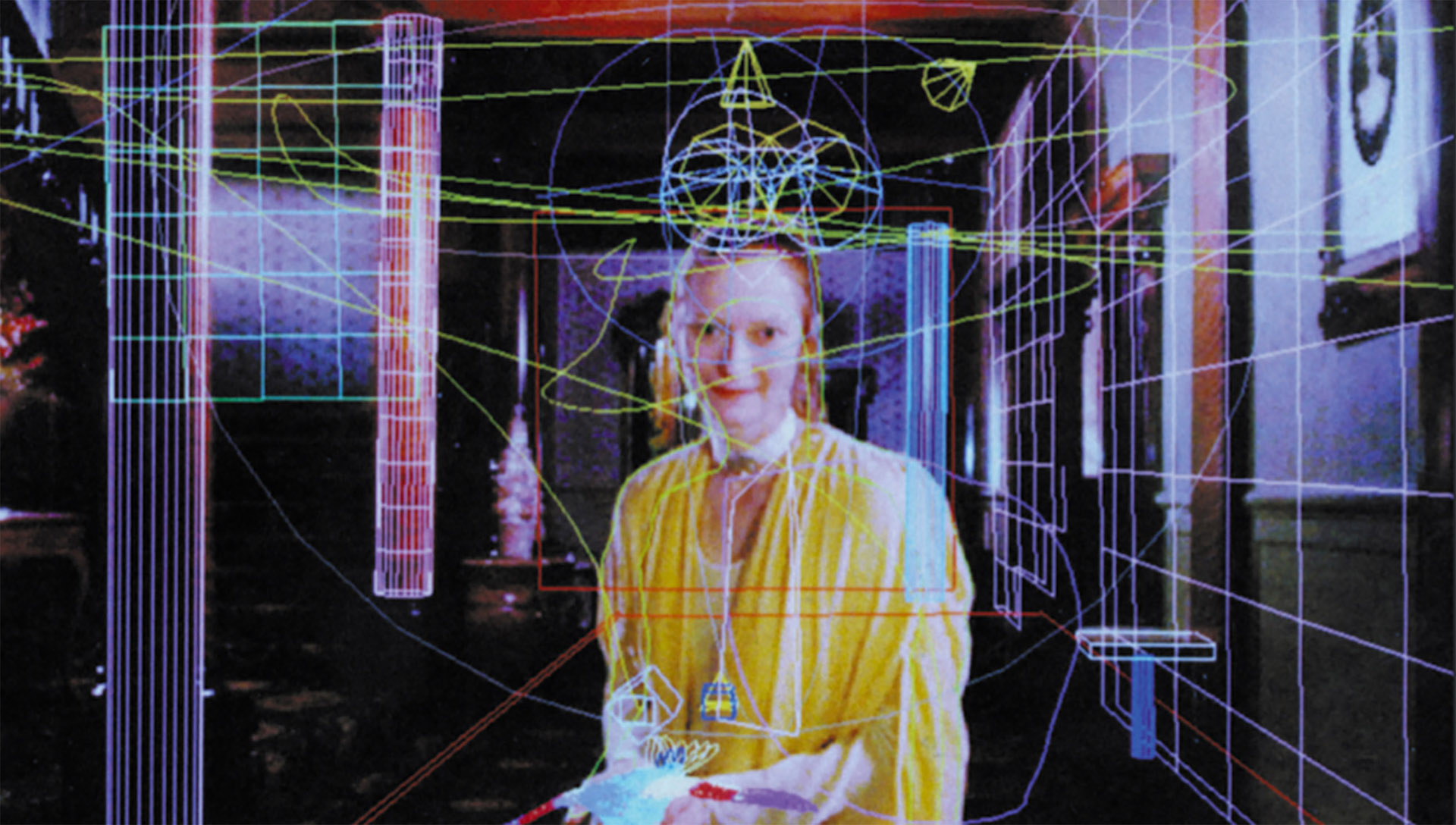
LYNN Well, we’re in control of our own life and our own death and our own histories. The reason I made the film was that at the time I made it, nobody had ever heard of Ada. They have now. But in 1994, nobody had. [Ada Byron Lovelace (1815–52) was the mother of computer science, believed to have conceived the first computer algorithm and the universal applicability of computing machines.] I hadn’t met Tilda [Swinton] yet. I didn’t know she would even be in it. Originally, I wrote it for the same character to be all the characters like they eventually were in Teknolust. But I was able to get Tilda for only five days because I had no budget—this was the film that I invented and patented virtual sets for. It hadn’t been done prior to that. I think there are some decisions that we make in our life that aren’t collaborative. Dying is one of them. We have the right to choose that, whether or not the next generation likes it.
ELEONORA When I was reflecting on this non-consensual decision, I realized that from a viewer’s standpoint it could be taken not necessarily as a literal rejection of Ada’s wishes, but as a metaphor—a mirror for our own self-destructive opposite. This AI passing through multiple temporalities could be representing the inner struggle to sustain a feminist hope, especially as historical rewritings attempt to extinguish it, coaxing us into an internalized misogyny. That’s how I interpret the story on a metaphorical level. Emmy contradicted her own iconoclasm, which overlapped with Ada’s self-destructiveness.
LYNN You never really die. You have a legacy. With Ada, there was no legacy because nobody knew about her when I made the film. But she exists in history. And when her story is told, it’ll always be there.
ELEONORA One final question. I always see in your work a sense of humor or some witty characteristics. In one interview, you made a parting wish to the audience to always keep their humor alive. In another interview, you were talking about your friendship with Tilda Swinton, mentioning that you two share the same sense of humor. What is your relationship with humor? Is it important for political work?
LYNN You can’t take things too seriously, and I think it’s always good if you can laugh. It makes people understand things on a different level, which is maybe a better level. I think humor is really critical in anything.
ELEONORA I agree. Definitely.
ANGIE Thank you so much for your time.