Kite
in conversation with
Yara Veloso and
Alexander Tanazefti
The following conversation between Kite, Yara Veloso, and Alexander Tanazefti occurred via Zoom on Friday, November 19, 2021, at 8:00 Tulsa/15:00 Arnhem/and Saturday, November 20, 2021, at 1:00 Sydney.
Download this conversation as a PDF
ANGIE KEEFER Welcome, Kite. Thank you for joining us. This is the fifth conversation in the Version Space series. Normally, I introduce the interviewee and the interviewers in a line or two for the future readers’ benefit, but in a preliminary discussion, Yara and Alex and I decided that it would be better if everyone introduced themselves today instead. So, to start, I’m Angie Keefer, joined by Yara Veloso and Alex Tanazefti, who are both students or former students I met while teaching at the Werkplaats Typografie in Arnhem, which is a graduate art program ostensibly focused on graphic design and typography, but is in fact highly self-directed and research-oriented. I’m an artist, as well as a teacher. I work with writing and artists’ publishing, among other forms. I currently also teach in Fine Arts at the Sandberg Instituut in Amsterdam, which is the original funder of this publication series by way of an artistic research program devoted to Artificial Intelligence, in which I was a fellow a couple of years ago. Version Space evolved from an AI-focused seminar I held at the Sandberg in 2018, which I then continued in modified form at the Werkplaats in 2019. In 2020, we conducted our first interview for the series on Zoom, due to the pandemic, and that’s how we’ve continued. Today, I am in Hudson, New York. I have encouraged Yara and Alex, like the past interviewers, to draw from their own work in their questions to you.
YARA VELOSO Thanks, Angie. My name is Yara. I’m Portuguese and Brazilian. I’m a designer and artist, and I’m in my final year of graduate school at the Werkplaats. I work with a lot of digital media and sometimes physical objects. I’m interested in the relationship between craft and technology. I’m in Arnhem right now, where the school is located.
ALEXANDER TANAZEFTI I’m Alex. Before introducing myself further, I’d like to acknowledge that I’m speaking from the lands of the Cabrogal people of the Dharug Nation. I’d like to pay my respects to elders past and present and recognize that the land that I’m speaking on and the land of all of so-called Australia is first and foremost stolen land, yet it always was and always will be Aboriginal land. I would categorize myself as a graphic designer who sometimes makes artworks and sometimes codes. During my time at the Werkplaats, I was exploring how systems or technologies can be used or misused in unexpected or unintended ways. Currently, I’m working as an independent graphic designer and trying to find ways to incorporate these experiments and this research into my practice.
ANGIE And, Kite, you’re speaking to us from Tulsa?
KITE Yes, should I give my full introduction? I won’t do it in Lakota, but let’s see . . . It’s 8:20, and I’ve been working very late all week. Who am I today? I’m an artist and an academic. I live in Tulsa, Oklahoma, which is Muscogee Creek Nation, according to the latest Supreme Court rulings. I’ve been here for about a year and a half. I’m at the Tulsa Artist Fellowship, which is a full-time residency that’s going to be about two years for me. I grew up in Southern California in Laguna Niguel, and I am Oglala Lakota, so my people live in South Dakota, in the southern, western corner. My folks live there. I also have family in New York, and I went to do my composition degree at CalArts. I studied violin very intensely, and then I moved to composition. I studied with a lot of really interesting musicians like Ulrich Krieger and Marcus Schmickler, and then moved on to do a degree at Bard. So, I spent a lot of time in that area, very sound focused. Then I was invited to do a Ph.D. at Concordia in Montreal with Jason Edward Lewis. I spent a couple of years there, getting really involved with the Canadian art world, which is a very, very different world. I would compare it to the Australian context, except for the extreme difference in funding, but that’s just based on which conservative is in power. There are a lot of similarities, especially in terms of Indigenous support. I’ve moved out here to finish my Ph.D., and I’ll be moving to Vancouver soon to continue this specific line of AI- and arts-based-AI research.
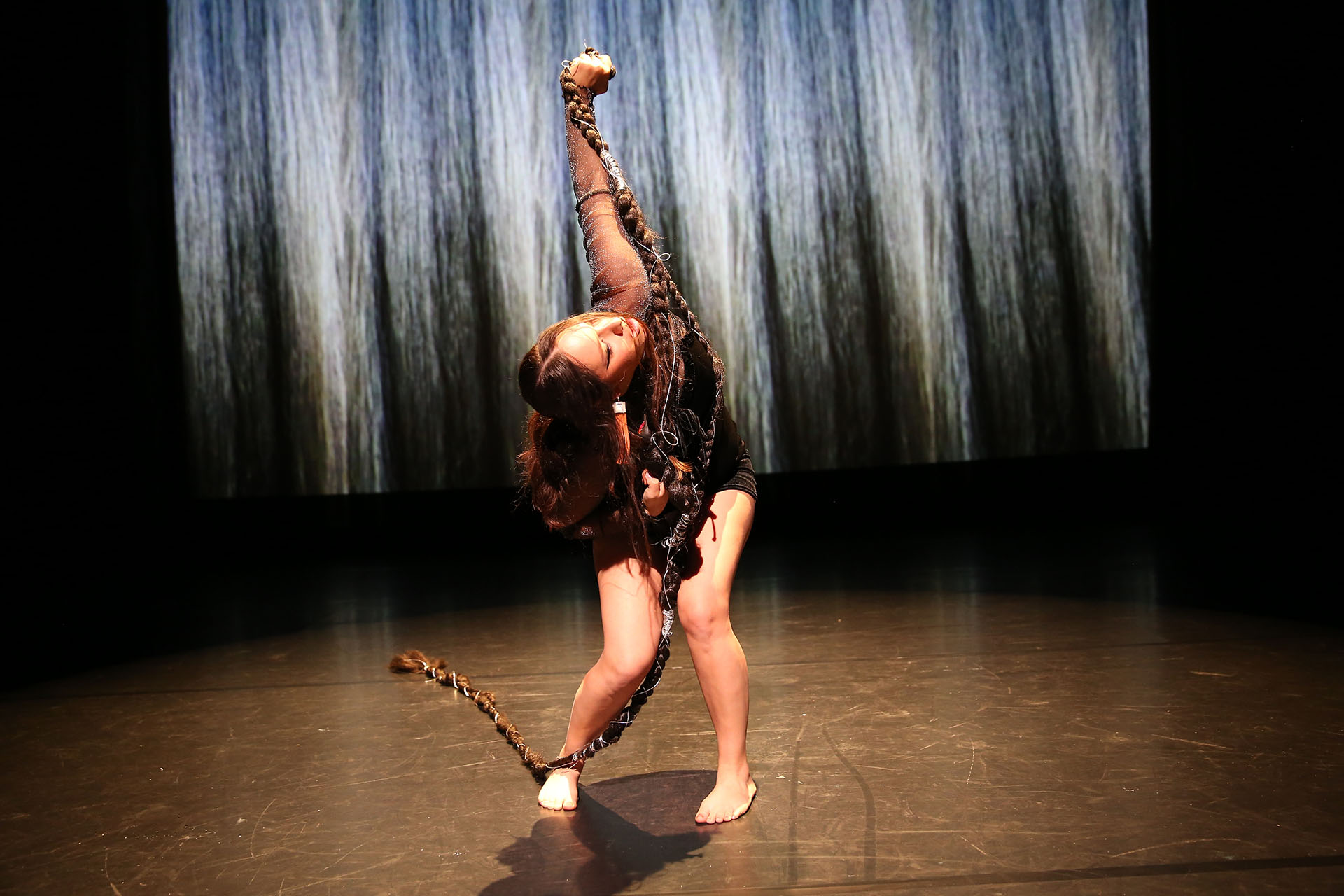
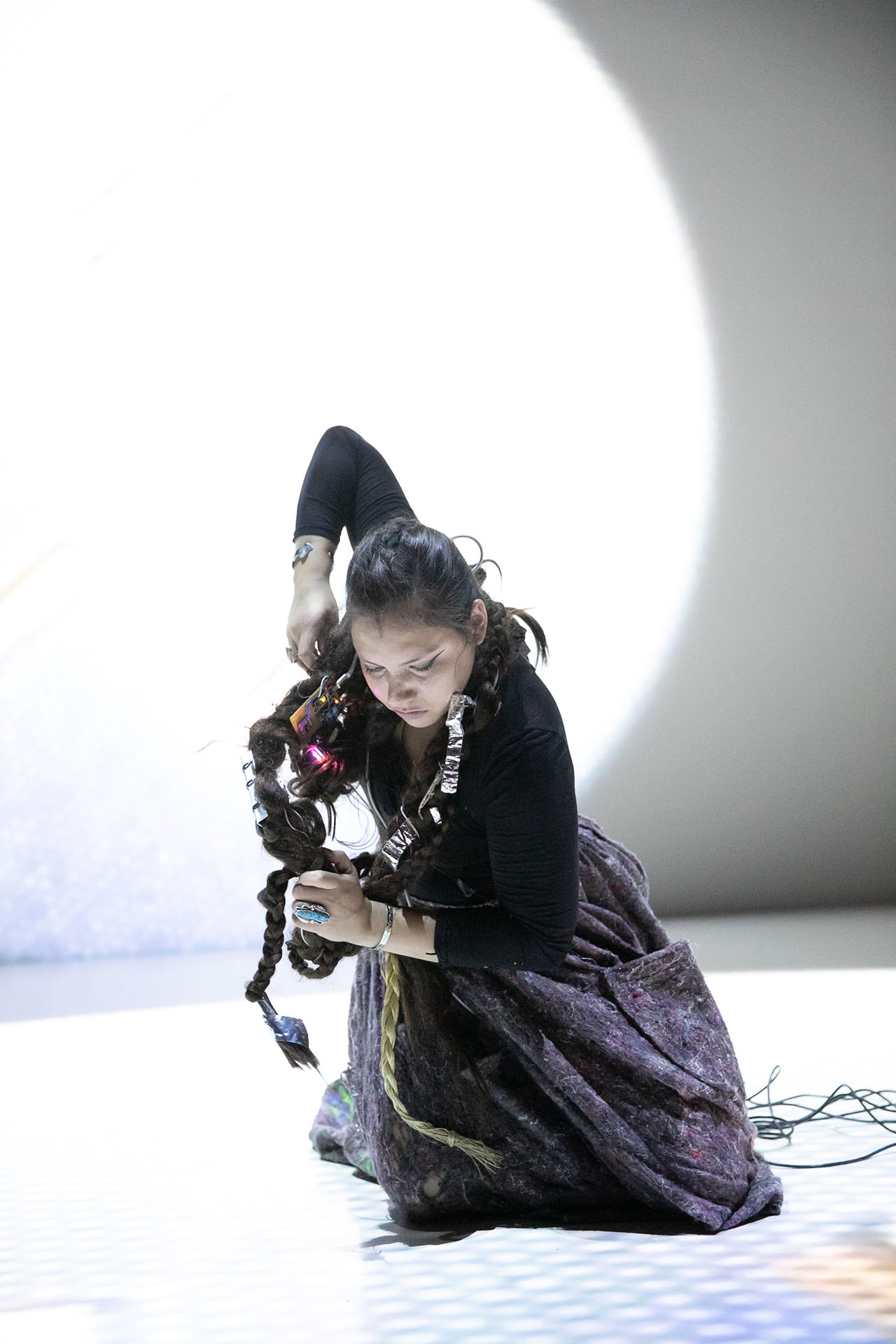
YARA Thank you. The performative aspect of your work—movement and body interfaces—is very important. For example, in your piece Pȟehíŋ kiŋ líla akhíšoke. (Her hair was heavy.), you’re manipulating a hair braid interface. I’m interested in what you’re bringing up through the body and its relationship to technology, which is also spelled out in your text, Making Kin with the Machines [collaboratively authored with Jason Edward Lewis, Noelani Arista, and Archer Pechawis]. I’m curious about your working process. Without getting too technical, it’s fair to say that a computer in a fifty-foot braid is not something you can buy in a store. I’m wondering whether this process of making, this element of craft and being directly involved with the materials, is important for you, as opposed to outsourcing that, for example.
KITE That’s a good question. I do outsource as much as I possibly can. I don’t have a very good relationship to detail or craft—or, I guess in some ways I do, but it’s not in the way that most people are passionate about it. Yeah, I love this question. I can feel my creative partner, Devin Ronneberg—he’s right here behind me—being like, “I built everything!” He does all the building. I made my first one, and then, after that, I’ve learned great lessons over the years that if I can’t do it really well, I shouldn’t do it. I should collaborate. And, so, my big learning over the years has been how to be a better collaborator, how to share decision-making, how to retain my creative decision-making through a collaboration, when to go full-collaborative and share full credit. But what does remain the same is the body.
The reason I got into doing wearables was that I missed playing violin. Violin is extreme craft for me, and I think I’m still on the back swing of, having played very intensely for twenty years, giving up some of that technical extremism and obsessiveness. The levels of possibility for being really good at violin infinitely increase as you get better, like with any skill. So, as a violinist, I saw the infinite mountain ahead, and I was like, “You know, I’m okay, let me try something different.” I think my real, technical skill set is to do probably thirty projects at once, while actually containing the whole and thinking very meta-conceptually. When I think about the body in relation to that, what I’m trying to do is replicate the relationship with the violin, where I find it to be a very dissociative relationship. If you’re doing a good job on stage in a performance, then you’re fully dissociated. I feel big similarities with the way that Lakota people think about what I would call “wearables” in this context—a lot of art-making is actually sacred wearable object-making. All those lines are very disintegrated into each other now, so that there’s a distinction between secular and religious, but that’s happened only very recently. So, for example, George Sword, a Lakota man around the turn of the 20th century, is asked a question, and his response is, “I don’t know if I can answer that, I might offend my ceremonial outfit.” I’ve been stuck on that for years now. If he’s wearing something—he made it—it’s made of other non-human beings, seen and unseen, and it can be offended. So, it has its own decision-making powers. And when he wears it, he has a relationship with the object and through it. If he played an instrument, that would be blurred, too. I have a relationship with the violin, and I connect with the unknown and explore the unknowable with the instrument. That doesn’t necessarily require good technical wearables or that they’re very well-made—my braids fall apart. I was literally in the studio late last night, taping hair down, because I didn’t buy the right wig glue this time. Devin really pushes me, though. And I learned how to do this machine learning stuff from Laetitia Sonami, who’s the inventor of the “Lady’s Glove,” the original hand gesture instrument from the early 1990s, and one of the original users of MAX MSP programming language.
The last thing I’ll say about the body is what I’ve begun to learn in Lakota context—even though I was initially making these things out of a group trying to rebel against Western laptop music. Now, my whole research is the question, “Where do songs come from?” If I’m going to make art, where does it come from? Ontologically, epistemologically, methodologically, where does it emerge from? The answer given by most singers—for example, when I ask my grandfather this, he says, “Oh, it comes from here—it comes from the throat.” It’s a physical thing, and the body is the conduit. I think the Lakota idea is that our bodies are conduits, they’re channels for the spirit world. And that’s that. So, now I’m trying to conceive of a body as the channel that creates the art object, but what is it channeling? It’s hearing, it’s listening to things, it’s listening to the knowable world, hearing the hearable world and the unknowable world, the beyond airwaves, beyond audio, listening to the cosmos.
YARA Right, and I wouldn’t expect a violinist to make the violin in order to have a concert!
KITE But what if it doesn’t exist?! I’m not very attached to mediums, so I think that’s another thing—I mean, I might be a geologist first. I really like rocks, but I don’t really care about AI that much. I don’t care about the violin that much. Music is great. I could live without it, though. There is deafness in my family. I could go deaf. And my artwork is very separate from my religion, though in a lot of ways they do cross over—there’s always ceremony to be done. I will never be a painter, though, that’s for sure.
YARA Listening to your response, I’m questioning something that I feel I’ve been told my whole life, which is that if you outsource things, then you have less freedom, because you have to tell people exactly what to do, but if you improvise, you can kind of wing it and change things along the way—as if improvisation is more intuitive. But it’s also really overwhelming to do everything yourself. So, in that sense, the thought that everything needs to be made by me doesn’t feel like freedom. Sometimes giving some responsibility to someone else, in collaboration, like you mentioned, is very liberating.
KITE I’ve learned to really rely on that. I shot my first film with a real crew last weekend. The crew was almost all native, and we did it on very little money, and I’m very grateful to them. In the film world, roles are clearly defined—they’re legally defined. Everyone signs paperwork stating their role and their credits before we get started. And that made it so relaxing! It was actually the most relaxing thing I’ve ever made, because everybody had a job. As the director, none of those things were my job. I mean, I did do a lot of brutal physical labor, because I wanted a tepee, and I had to move it around myself. But, besides that, the structure allowed more freedom. In conversation with Devin over the years, I’ve learned a lot about what labor is worth, not necessarily in terms of money, but in the balance of power, and in creating collaboratively. That’s something to be negotiated slowly over time. But I’ve learned the most about this from my collaborations with my family, which are the most important—collaboration doesn’t necessarily have to be somebody making something. And, too, I’m not a person who needs to edit others heavily—like, whatever gets made gets made, whatever I’ve heard is what I’m trying to show. I used to try to craft huge, elaborate things. But now I’m just trying to get one idea to be good enough. I worship at the altar of good enough, for sure.
ALEXANDER I listened to a talk you gave at UCLA sometime last year, where you spoke about your approach to working with musicians, and I liked that you explained it specifically as trusting your improvisers, setting up parameters for them to work within, but then really leaving it up to those individuals to express themselves or to operate within that piece and within those boundaries. Is this a practice that you’ve had with other collaborators outside of music—is this something that perhaps plays into some of your work with machines or your research into working ethically with machines? Is there a feedback loop connecting these approaches?
KITE Being a composer is an interesting concept, because in the Western training sense, it’s about giving people notes with extremely clear instructions, and there’s a right way to do things. There are interpretations, but the variations are so slight that, unless you’re an expert in those scores, you don’t hear all the differences. I’m just not attached to details that much. I want to be a composer of systems. I think that I’ve carved that kind of decision-making for myself into most pieces, where I’m setting up situations, not in the performative sense but in the structure. I’m seeing how much I can let the content push at the boundaries of the structure. I think Everything I Say Is True is my best example of that, sound-wise. There were eight musicians, and I gave them drone, and they listened, and they recorded, and then I mixed them afterwards. But it’s true there is a connection to relationships between decision-making and the computer. I won’t say that I don’t like a lot of control, because, clearly, I like to run a lot of projects at once, and there is a very intense sense of control there. But I don’t want to control my collaborators in their decision-making, and I think that’s how machine learning fits very well into my practice. I like slightly untrained training models—I like it to plateau at not fully trained, because a fully-trained model is too stable. What’s interesting about human decision-making is that when errors occur, like, let’s take jazz, when you have a rub—two notes that are just slightly too close together and that ring the ear in a special way—that’s the interesting part. Perfect harmony is very, very boring. The bottom line is, I want things to be easy, not as in simple, but as in I want to have a good time. I was talking to somebody this week who was like, “Oh, what if we just had a nice time doing this activity?” And I was like, “Oh, I haven’t considered that in a really long time!” But it’s true. I want my musician friends to come in—they’re geniuses, I don’t need to tell them what to do—and I want to give them the space to say what they want to say within a very clear framework—just a drone. I don’t want to trap them in the recording studio for hours on end. They can be in and out in twenty minutes if they just need to say a five-minute something. If I cannot provide a system that does that quickly for them, then maybe I’m composing wrong. I like things to be efficient.
ALEXANDER So, when you work, it’s more multivocal—it’s not just your own voice within a piece, but other people’s voices or other machines’ or other non-people’s.
KITE I’m trying to move towards that. It’s like we’re set up to be individualistic in the art world, and I do like to lead things—I really liked being first chair violin, I liked being the soloist—but it’s no fun alone. It’s only fun with the whole orchestra supporting you. But I do think it’s a bit of a setup. I do futuring exercises in a lot of different workshops—and that’s another thing: we’re talking about art, but I do so many practices. The workshops are their own vein, where it’s my job to shut up and listen. I do interviews, tons of interviews, and my job is to see how much I can listen. And this is the challenge, because art asks me to be the hero. But I like to play the game with futuring or pasting where I say, “Okay, well, what if Lakota art had the room and the funding and the support to grow on its own, grow its own science over hundreds of years?” Would we have the same model of hyperindividualistic heroism? I don’t think so. We wouldn’t build computers in the way that they’re built. There are a lot of things that we would do differently, because the system of protocols and decision-making is different, and the relationship to being heard is different, and on and on and on. I’ve seen my elder indigenous artists, mentors, and people I look up to move towards a model that I’m also moving towards, which is running a lab and having grad students to work with, where our goal is to collectively listen to other indigenous voices, create art that reflects their ethics, and try to pull at the thread of “why is this ethical?” How can we reflect that process in making anything: computers, art, conversations, et cetera? But I’d still like to sell a piece in the art world. That would be nice.
YARA Taking in what you’ve just said about deciding what you like to do and what you don’t like to do, and considering all that you work with—the depth of your practice—from writing to wearables and AI—even though you don’t like AI—and more, do you feel pressure to assert your preferences in different ways, depending on where you’re working? For example, in academic circles or in certain tech circles, is it helpful that you work with many different mediums and can overlap systems of value, or does this make things more difficult for you?
KITE You said it—I just don’t like the AI world very much. It’s inherently evil. So, that’s not very fun. But it has all happened so quickly over the past few years. Jason Edward Lewis and I are very lucky to have found gaps for ourselves to be the outsiders in. In an AI context, it’s art—we know a secret tool that doesn’t trap us in a sort of set decision-making. It’s called “art,” it’s called “you don’t have to do anything [in a certain way].” It’s extremely helpful. It really takes the pressure off. It helps in academia, where it feels like having a very diverse skill set is useful. But it doesn’t seem to work so well in art itself, because the way that the art market works seems to be that the quickest, most easily legible thing is what people want, which doesn’t leave a lot of room for depth. For years, I have gotten feedback on grant applications like, “It’s too intellectualized,” which I think is racist. The thing about having your eggs in thirty baskets or having your finger in all the pies is that you get spread very thin. But it does help me in how I think—I really like to have a big, broad overview. I was on a talk with some other AI ethics people last night, and I said, “The only reason I’m doing all this is because I wanted enough money to be able to go to the rez and hang out with my family and make art with them.” It just kind of exploded from there, but that’s still the premise. What’s great about that is, in dealing with the ontological arguments and dealing with questions of beinghood, it really is applicable everywhere. No matter how far away we get from that, there’s still a conversation to be had about rocks, stones.
YARA In what you mention about the grant applications, do you feel that you’re expected to perform your identity in a certain way that you are not doing?
KITE I don’t know. I mean, who really knows what the [grant funders’] reasons are? But, identity-wise, we’re different people in every different context, and I’m happy to do the dance. It comes with the territory of saying, “Well, in this context, I want to press on Indigenous identity in order to talk about certain points. In this [other] context, I want to talk about a more philosophical identity and religious identity.” In the end, as a performance artist, playing with desire—settler desire for indigeneity—is still very interesting to me, as is allowing myself the freedom to be who I want. I’m a tribal citizen no matter what. The most difficult part of identity is going home and being an outsider there. That’s hard. Dealing with settler art world and academia—that’s just a piece of cake in comparison. So, I’ll be whoever they want as long as they compensate me and treat me with respect.
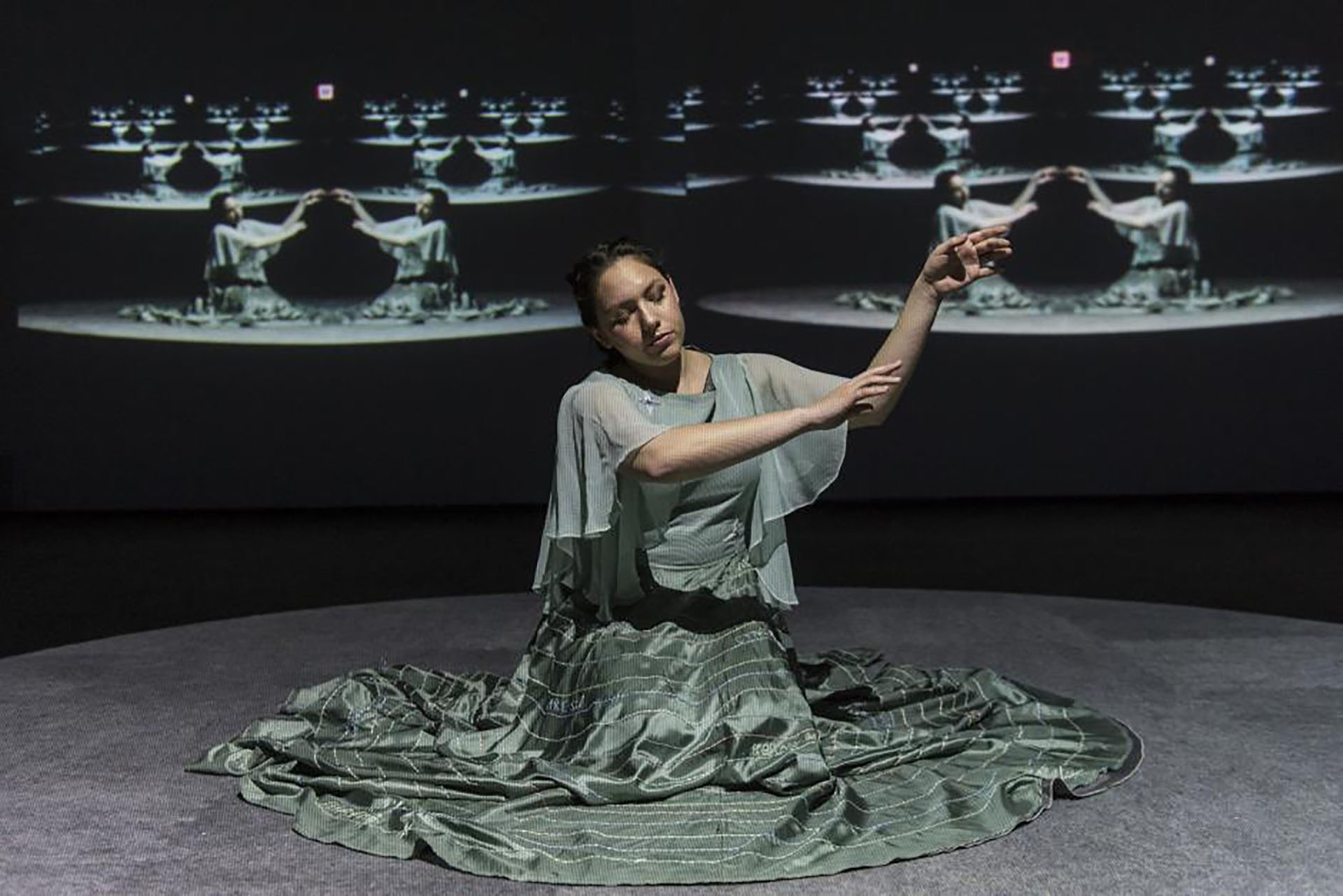
ALEXANDER Related to this question of identity, in one of your works, Listener, it seems that, in the process of the performance and the video, there are different voices being interpreted. You’ve mentioned that listening is a big part of your practice. Is there room or space given for misinterpretation, as well—both from yourself and from the machines that you’re working with? Are you interested in the slippages or gaps that happen in relationships between people and between things?
KITE My pat answer to questions about misinterpretation is usually about the training model, as I said before—that I like it not to be stable. I try to disengage and not hear too much interpretation of my work, because I don’t really want to hear anything weird or racist. I don’t need the public to fully understand. My goal is to have enough layers. If I consider it a good work, the success comes in having a layer for the audiences that I know are there—a layer for my Lakota family. If my elders can’t understand it, then I’ve done it wrong for sure. There’s a layer for technological critique. There’s a layer to try to laugh back at the art world when I feel like they don’t understand. I try to have some humor there. As far as misinterpretation with AI, I don’t actually consider AI to exist yet, but I do consider many stones to be animate, and, if they are my audience, then mostly what we’re doing is apologizing constantly to them. Again, I think the only people I’m really worried about misinterpreting are community members. I don’t ever want to offend them or step over boundaries. Right now, I’m at this impasse. For weeks, I’ve not been able to pick chords—I have a show going up in New York, and I really have to write the music, like, yesterday, and I’m struggling to pick the chords, because I’m very worried about picking chordal content from common Lakota songs. I’m just wrapped up, and it’s fraught. Even though, as I see it, the way they’re used is okay, I’m still a bit stuck in this thing, because not only could I offend my community, I could offend the unseen community, and I don’t want to be cursed. I don’t want to mess with things that I don’t understand. But not understanding them is good, too! If you understand something, it’s probably not that important. So, misinterpretation is okay, as long as it’s not certain people.
ALEXANDER I am also specifically wondering about the breakdowns that happen when you work with machine learning programs, or algorithms, or whatever they like to be called. When I was a student at the Werkplaats, I made something for a radio program that was student-organized. We were each given a text to read, and I thought it would be interesting to try to map my own voice with machine learning and create a duplicate of it. But I never got past the first hurdle, which was that when I tried to train it, it spat out gibberish that sounded like whispers. And that sort of misinterpretation, I thought, was a quite interesting moment of the computer completely mishearing me. So, in the end, the work became me trying to hear what the computer was saying back, with that element of misinterpretation processed multiple times. I wonder if you’ve ever worked with misinterpretation in similar ways.
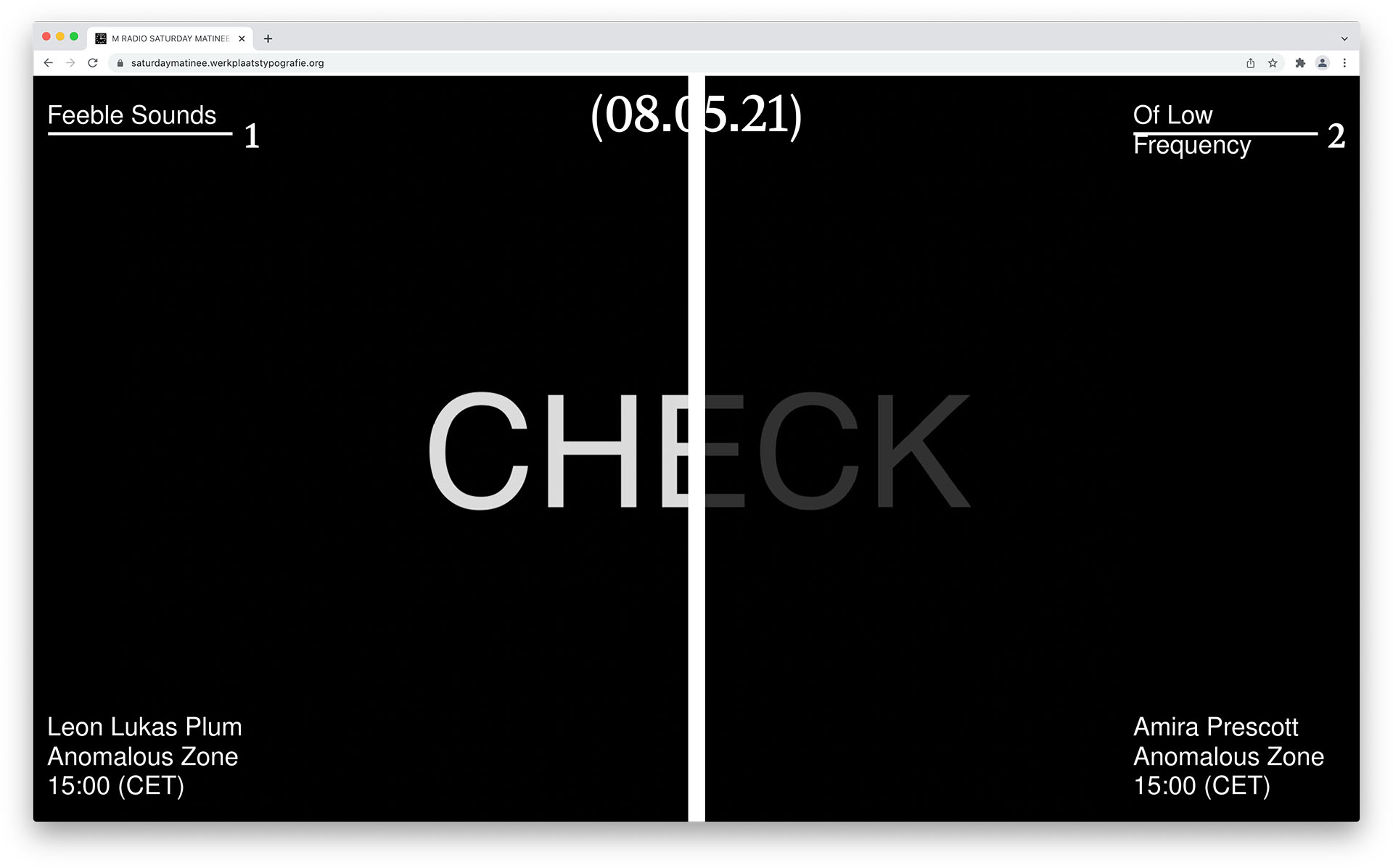
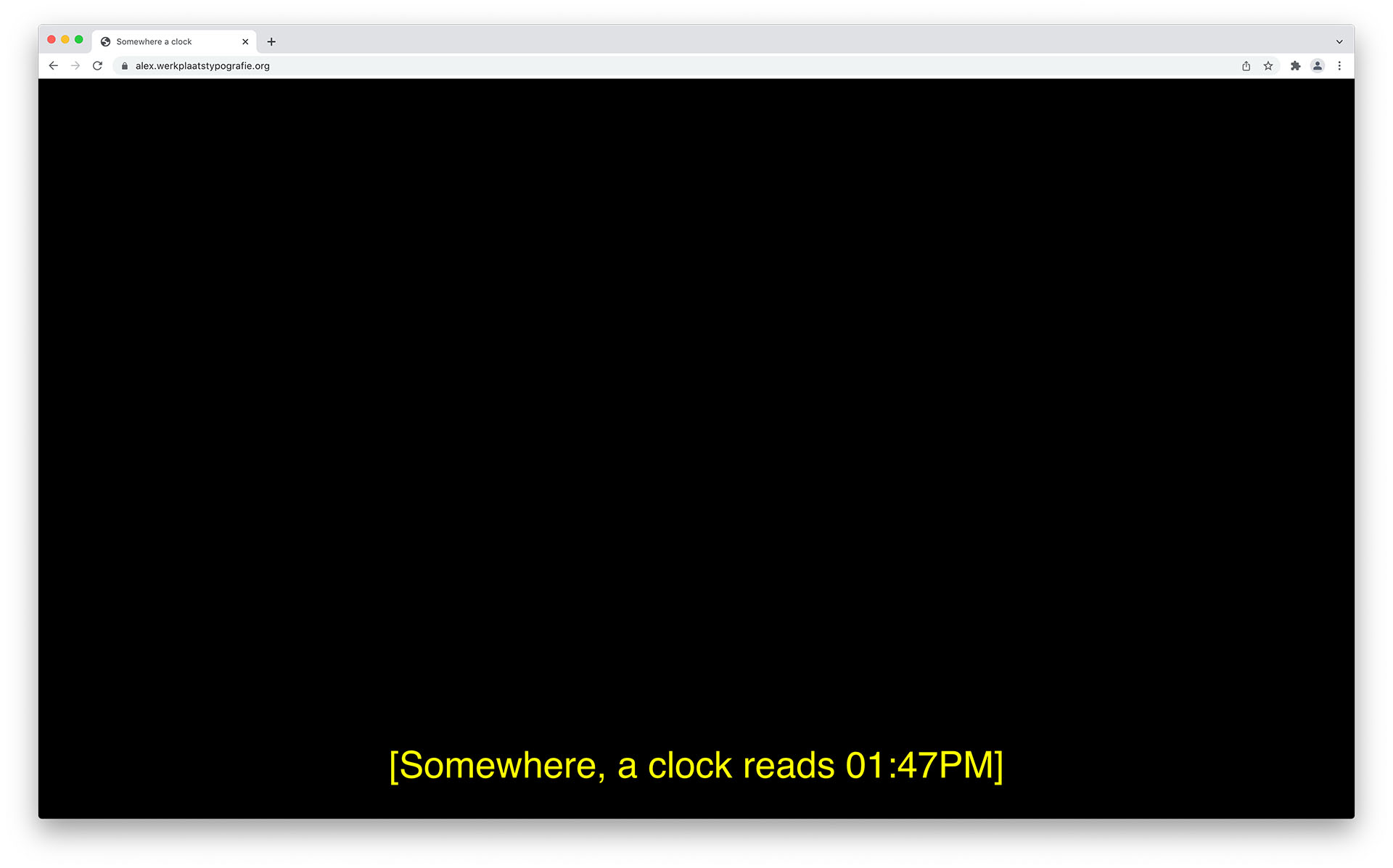
KITE Yeah, that’s where a broken system is way more interesting than a perfectly well-oiled system, because then you get to play with the question of what is broken and to whom. If there is agency outside of oneself, then maybe the computer—it did find that perfectly legible! You trained it, and it listened, and it did what you wanted it to do.
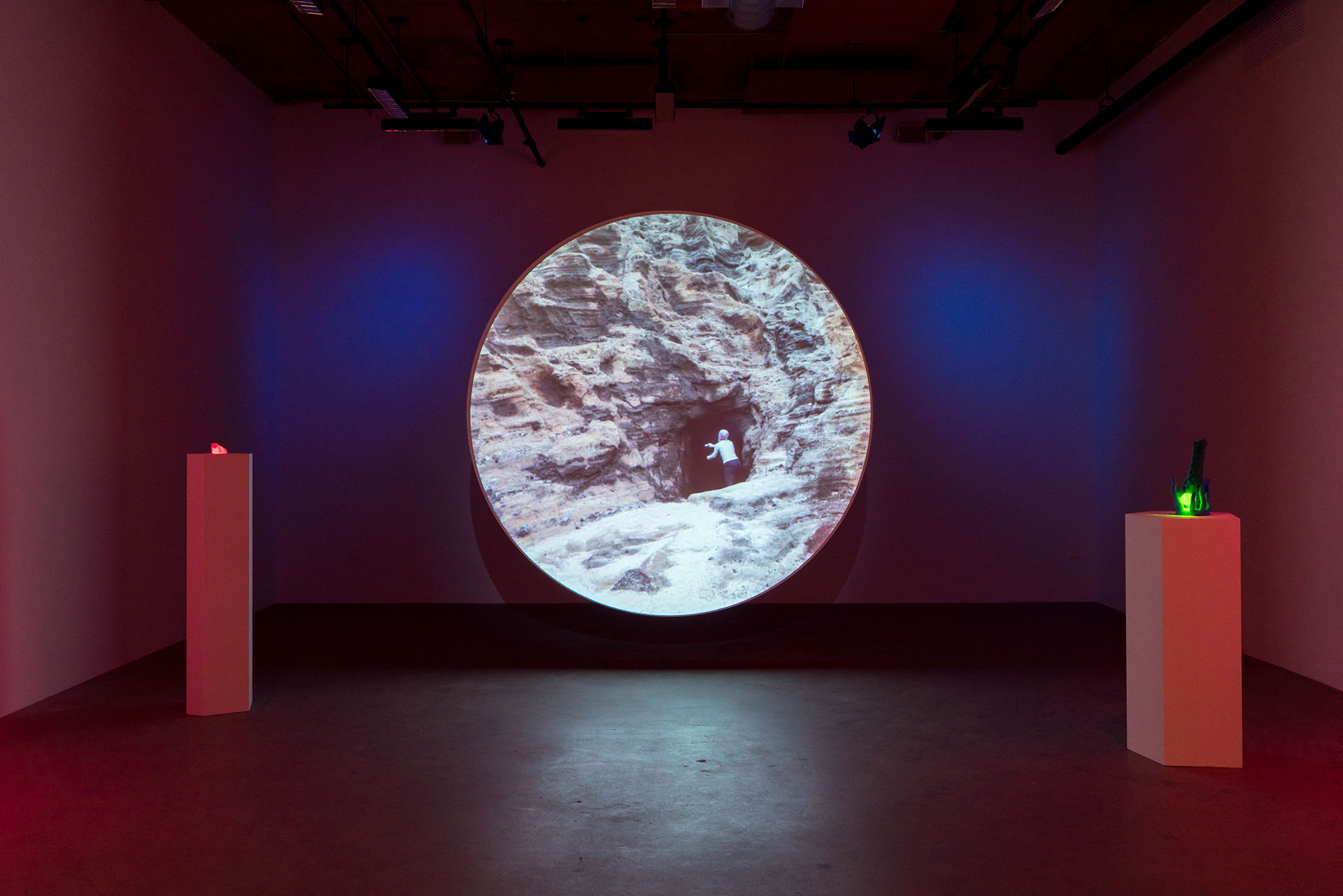
A lot of my work has GPT-2 stuff in it. Recently, I had a work at the MOMENTA Biennale in Montreal, The Last of the Lemurians, in collaboration with the New Red Order [Jackson Polys, Adam Khalil, Zack Khalil] in which I trained a model to be shaped by a lot of meditations on remembering being Lemurian. You can do these meditations that are to remind you that you were, like, descended from the stars—and it is so racist and so funny. The model spat out these horrible, insane guided meditations about—I mean, it leans towards white supremacy. That’s just what it is—like, “You remember having blue eyes . . .” That is, to me, a very broken data set, because it’s ethically broken. A “broken” data set is either trained on bad data or the model got glitched along the way, but it’s much more interesting, because you can see behind the curtain a little bit.
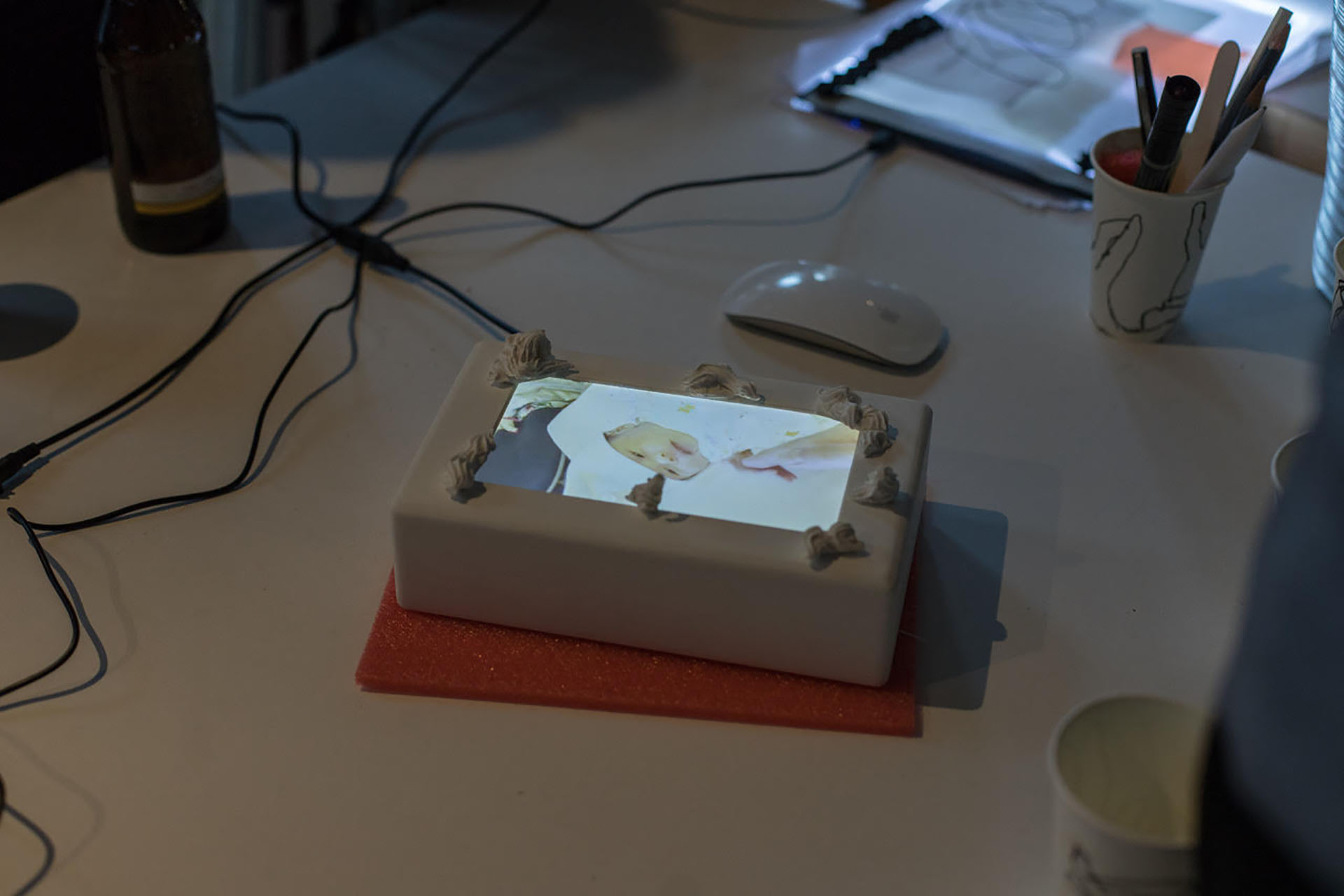
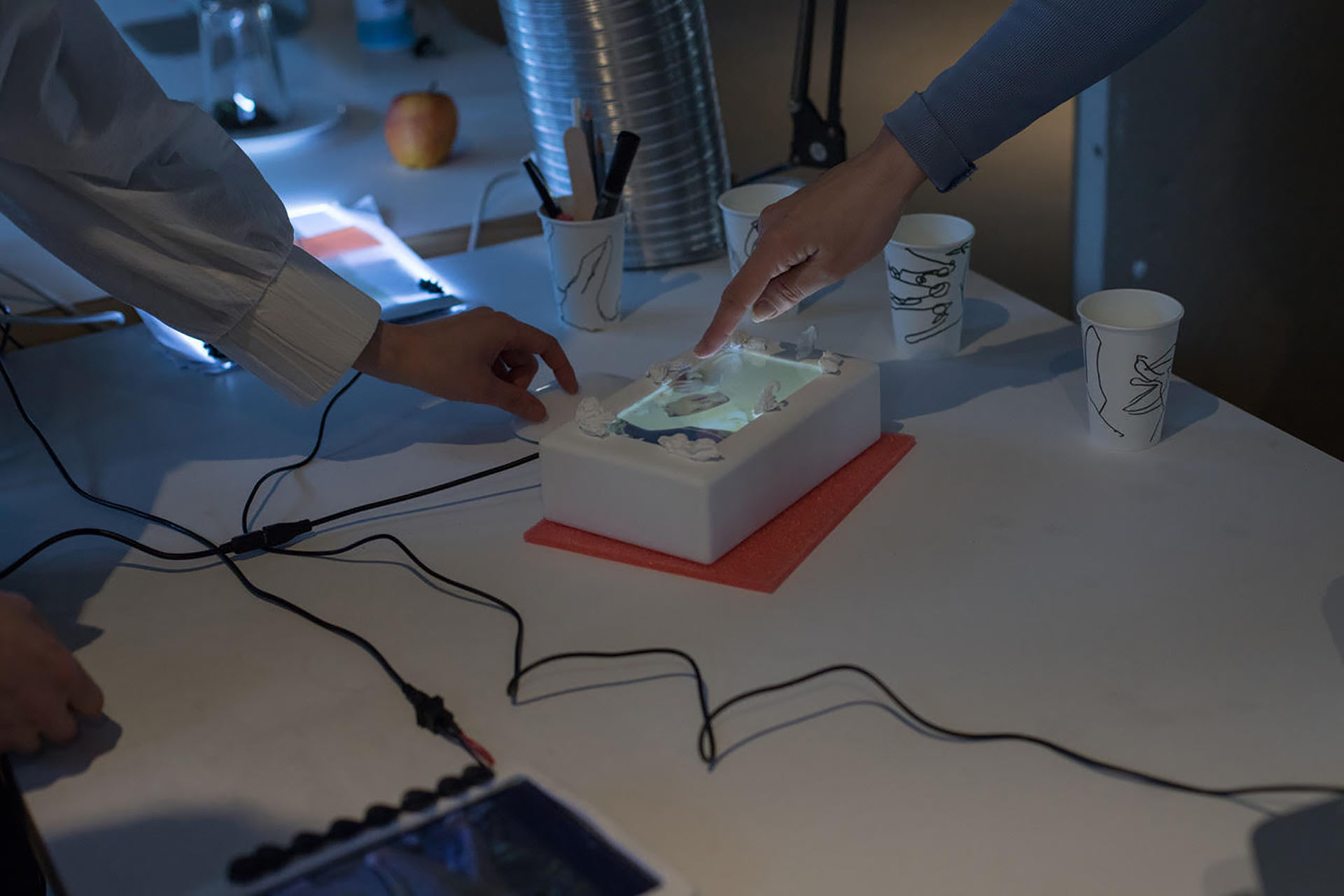
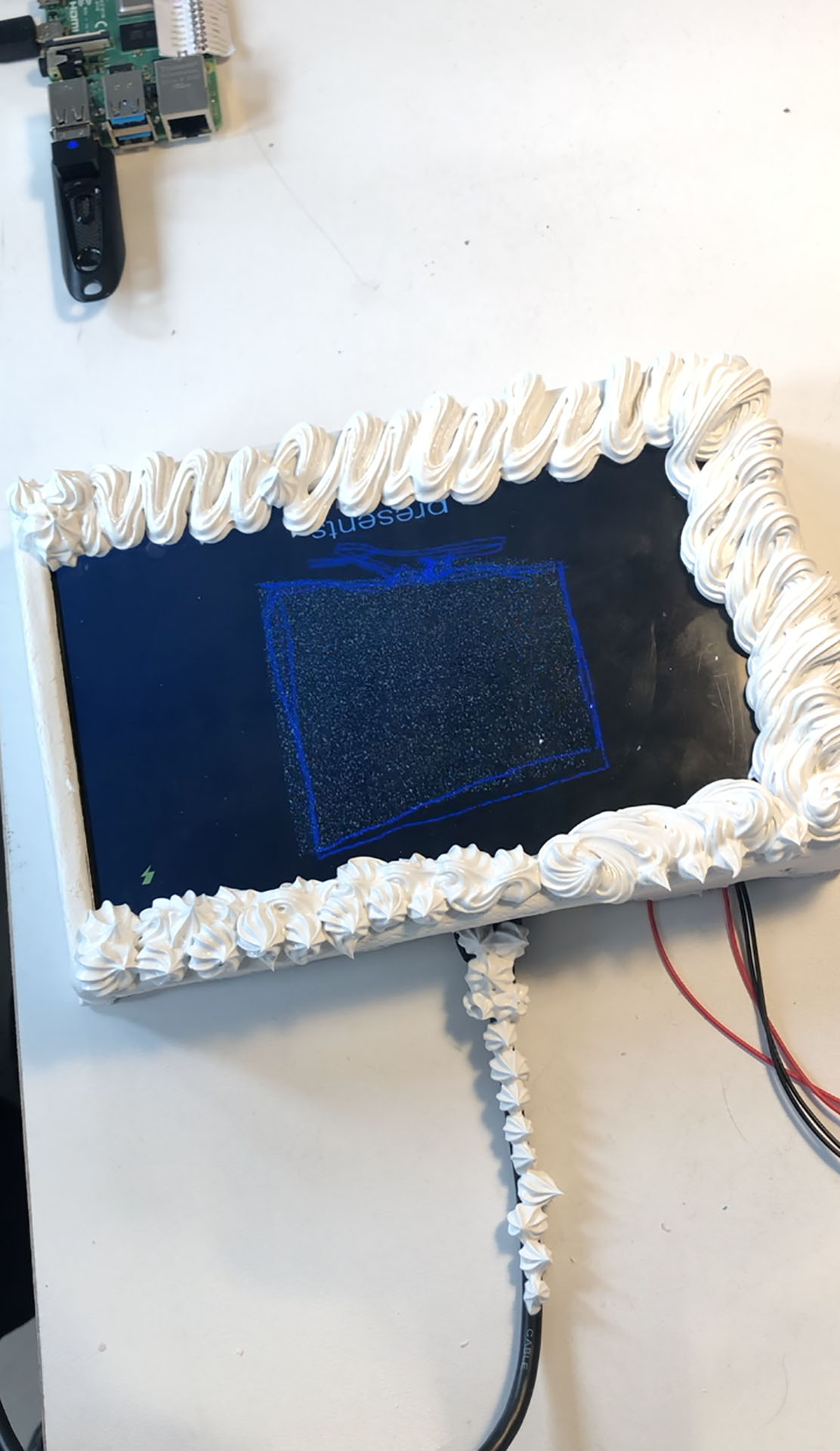
YARA I agree. It’s often when something doesn’t work that you can more easily understand how it was made and the intentions behind it. We have both worked with the object of a decorated cake: I have been building—and breaking—a computerized cake powered by a Raspberry Pi, that alludes to the ways in which we consume media.
KITE Oh, nice!
YARA For me, cakes were synonymous with birthdays and celebrations, and since I grew up in a predominantly Catholic country, I associate this kind of ornamental tradition with Catholicism. I was really interested to read about the different connotations that a decorated cake has for you, drawing from your cultural background. In the performance and sculptural practice, Aǧuyabskuyela, you make edible and inedible funerary cakes and call upon friends, relatives, and kin to talk about feeding others on occasions where feeding people cake is not only a contemporary tradition, but verges into the realm of protocol. You have also mentioned in public talks the importance of passing knowledge through your work and being a knowledge facilitator for your friends and family. I am wondering whether this type of exchange—in which I learn something from your work about a cake, for example, then reflect further on what I do and don’t know—is what you mean by facilitating? Or is the performance in which you decorate the cakes a means for you yourself to reflect on what you know and don’t know? Or maybe both?
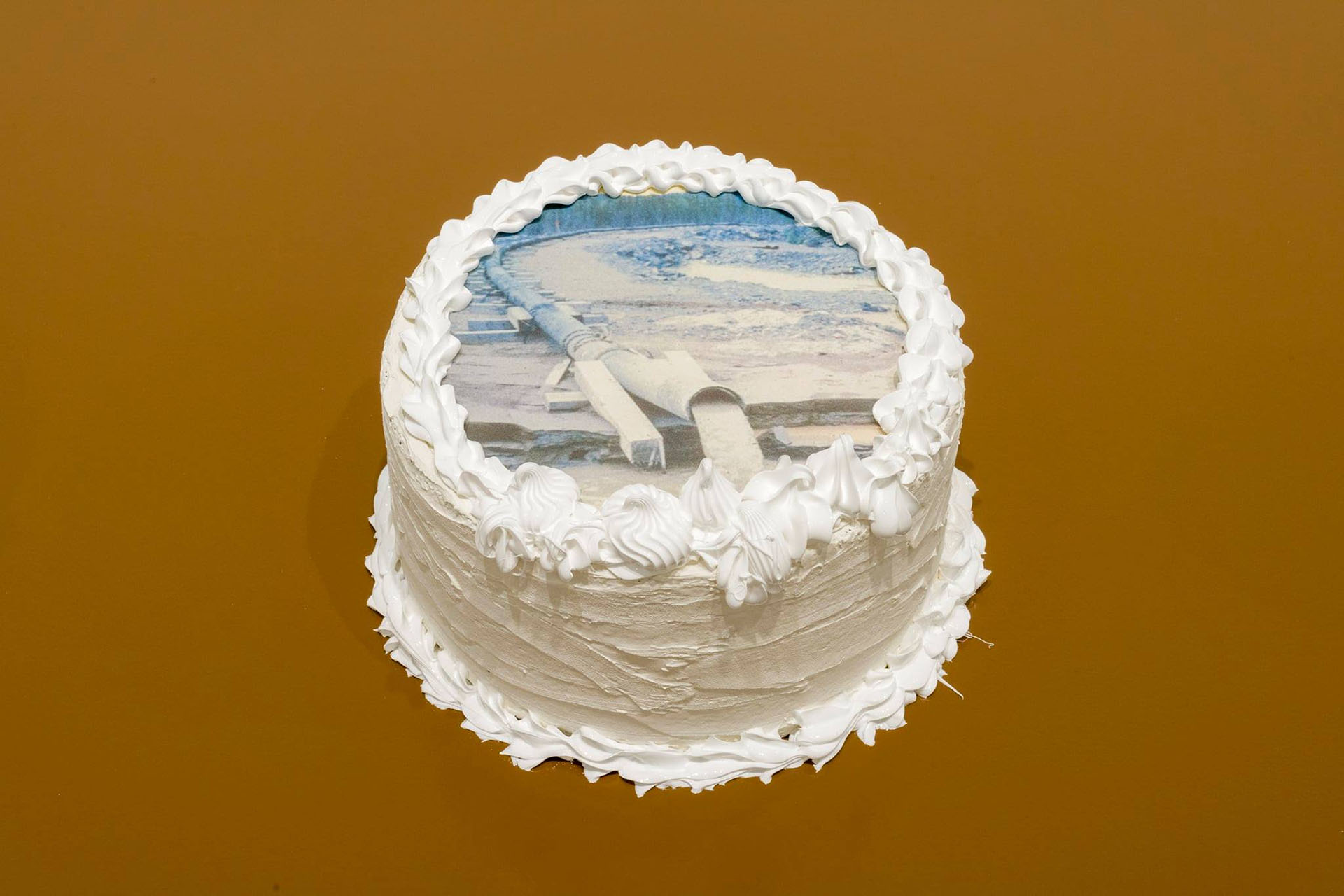
KITE What you said at the end is the most true—especially with performance, but I think with anything I’m doing, I never want to be the knower. Knowing doesn’t do much. If we were to look at a list of things that the Lakota people consider as aspects of interiority, aspects that make something being, then there are some things that are knowable—like emotions, will, intellect, strength, physical strength. Those things are knowable, and so they’re not sacred. But everything unknowable has a different relation to positivism, a different relationship to fact and truth. Things that are true, but not facts, not easily made into facts—those, the unknowable things, are sacred. Taking that and moving it to a piece like the cakes—the cakes are a very open system. I do have a weird obsession with birthdays, and I really like cakes, but the cake is a relation, is an unknown. We can’t figure out where it comes from, or we don’t really know, and it has a relationship to death. It carves out the beginning of a new relationship with your loved one, where they are not physically present. The other thing about these conversations is that they’re always conversations with somebody, where they’re teaching me something. There’s nothing for me to teach my family. I don’t know anything. They know so much.
YARA That corresponds with what Alex said, too: why would you feed the computer something, knowing exactly what it’s going to give back to you? It’s more interesting when you don’t know exactly what will happen.
KITE Yes, but not in a totally random way. It’s not aleatoric.
ALEXANDER Coming back to the question of what is broken and according to whom, I like the idea of using technologies in ways that they’re not meant to be used, or for purposes they aren’t fit for, and trying to stretch them to see what happens. I think it’s interesting to think about ways that you can interact with machines or build relationships with them that is a bit more bumpy or textured or uneven, outside of this very smooth system that they’re purportedly a part of or built for: hyper-efficient, neoliberal capitalism. Making Kin with the Machines is asking the question of what are responsible and reciprocal relationships to have with machines. I am wondering if there can be an element of solidarity with machines. What thoughts have you had on the idea of resisting with machines the labor they’re built for?
KITE This is why, in the Indigenous Protocol and Artificial Intelligence position paper, we’re very invested in the term “frameworks.” The way that I’ve been approaching methodology, by building new methodologies for new technologies based on previous frameworks, is because we already have ethical ways to not treat things as slaves. We already know how to do that. There’s no need to reinvent new ways. It’s very clear how to do these things. When I’m thinking about use of a tool, I’m trapped in the English language with what we can express about non-humans and objects. Lakota is very complicated, too, in that sense, because we actually don’t use animacy terms for objects, either, unless we’re telling mythological stories and talking about cosmological structures. So, it’s not cut-and-dried there, either. But I do think that the core of human-made decision-making towards object building is a relationship that’s a collaboration between many non-humans, because we cannot make something that isn’t made of other beings. They’re always involved, seen or unseen; beginning of the process, end of the process. That’s what drives me up the wall in thinking about Kate Crawford’s approach in “Anatomy of AI”—it breaks everything down, but it does not express relationships. Instead, when we talk about frameworks, I think about the work of Korae Jatafa Henry and Jeremy Kamal. I met them at Sundance New Frontiers Lab, where they were making animations, working with dancers to express relationships between mining in Africa, technology, and mythological beings who are in relationship to those stones [the mined minerals]. It’s just so clear and obvious that wherever you go, wherever you get your mined materials from, there are hyper-local relationships to the land. You have this network of seen and unseen beings. It’s overwhelming. When you’re working with Indigenous frameworks and methodologies, you can’t avoid those things. We wouldn’t build computers the way we do.
ALEXANDER So, it’s about what other kind of relationships you build with them. It’s not a one-way relationship.
KITE Yes, it’s about labor. That brings me back to the George Sword wearable concept. How can you use a tool? You have to respect it. There are other awesome frameworks that didn’t make it into those [position] papers I mentioned, like the Hawaiian relationship to net making. Actually, the Hawaiian relationship to canoe making is even better as an example, because you have to do all these reciprocal actions that are not metaphors. They’re super-clear, like: we have to put tobacco down before we take something, or we did it wrong. They make waves over time by not doing protocol correctly. My favorite example with the canoe is that you have to bury a whole pig where you took the tree for the canoe. And that’s such a great one, because it’s clearly nutrient-dense replenishment. But they also pour awa similarly to the way we give tobacco, and it is a nutrient exchange that says “something so valuable to me, I give to you.” We give our skin. We give our hair. The Lakota people live in a ceremonial world that is exchange based. It sets up this thing where you cannot use and abuse the tool. Or, you can, but you would offend your ceremonial outfit.
YARA You’ve mentioned that you’re working on many things at the same time and that you just shot a film. What else are you working on right now?
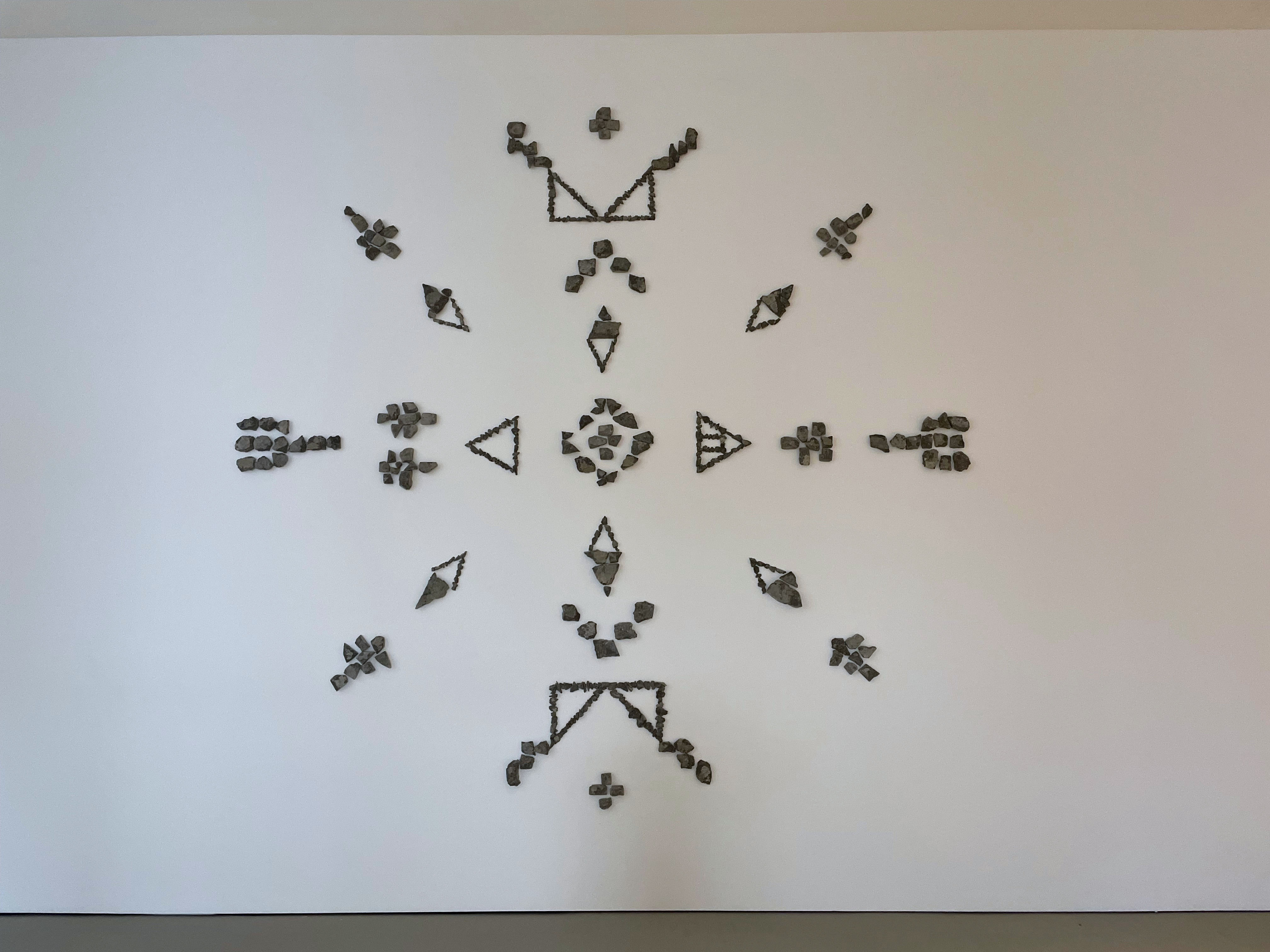
KITE I have a show at the Hammer Museum in L.A. with a stone sculpture that’s the story of a gift exchange between me and Kristopher Rindon Johnson, another sculptor, and a Tongva-Ajachmem elder, L Frank—trying to express gift exchange over the course of performing the exhibition. L Frank gave Rin and me a song, “We gave her some stones,” resulting in the sculpture Wičhóoyake kiŋ lé mičhúwe kiŋ omákiyake. (This story was told to me by my older sister.) In less than two weeks, my Ph.D. work is showing in New York at the Vera List Center. We’re going to try to didactically explain these methodological structures on a wall. That’s a big step. And I have a paper that I really need to edit. It’s with the American Indian Culture and Research Journal at UCLA. That’s a paper on relationships with the unknowable—American mythology versus Indigenous, Lakota relationships with the unknowable and how they’re ethically different. My record label, [Unheard Records], just came out with a huge show yesterday, and, the day before, a compilation with thirty-four people on it. That’s what’s on the docket today.
ALEXANDER That’s a lot! Regarding your work in formulating protocols, there’s a discussion going on now around the idea of Web3 and things built on blockchains through a mix of public and cryptographic means that I find quite hard to follow sometimes. But the language of protocols is often used to discuss the core workings or the core relationships among people within these networks, and I think it’s a very Western and capitalist notion. It’s based on the idea of a contract—a legally-binding agreement between people. Have you ever thought about how it might be possible to envision Web3 with Indigenous protocols in mind? Or is it possible that Web3 can never be practiced in an ethical way, because it is built on extractive technologies like the extractive mining that powers its systems? Maybe the broader question I’m asking is, are there some technologies or some processes that can never be practiced ethically or become ethical through different protocols?
KITE I would defer to Ashley Cordes, who’s a Coquille cryptocurrency expert. She was our collaborator on Indigenous Protocols. She’s about to publish a whole book on this. Her contribution to our conversations was about how the frameworks in our communities can be reflected in compensation methods, in terms of how we compensate each other and reciprocate to each other in different models, which is different in every community, and how this can be applied towards community benefit in the decision-making process. As in, for example, “we’re going to weight this towards elders and children,” or “who do we value in our communities?” So, these are my community’s values. And these are the values we can express in our computational systems, such as cryptocurrencies and blockchain. One of the examples that’s easy to grasp has to do with protocols in cataloging and library information, as in “who has access to this book or this resource?” and how can blockchain can help us in that process? We’re in a digital world. We have culturally complex objects. Is it culturally safe for certain people to have access to them? One example of this was our Maori friends, who were thinking about working on an AI elder that lives in the mountains. You would have to travel very far in order to receive the information physically. Is creating that kind of safety also something that things like blockchain can help with? I don’t know the answer.
ALEXANDER Regarding the question of what sort of knowledge is shared or kept secret, I’m wondering, in the processes of machine learning, when everything you say and do with computers is recorded and put into big data sets, do you think about what the system is allowed to learn from you?
KITE That’s a big concern. I don’t think our elders should be fed into that when we are playing with voice stuff, like when we work with these tools that we know are not good. There are two veins to my AI and machine learning artwork: one is critical and hopefully leans towards humor, like in Fever Dream, a piece that Devin and I made using deep fakes and GPT-2 and voice mimicry. With the other vein, I’m trying fervently to do things well and do things in a good way, knowing that going down that path leads to automatic failure. But it’s funny, because the art world really wants that easily digestible, unethical critical stuff, because it is delicious. It’s like junk food, but you cannot make things ethically with these tools. It’s just true. The reason protocols exist in our communities, the only reason they exist, is to prevent harm. So, when you transgress protocols—anyone can do anything in art, in life; you can choose to do something that you’re not supposed to do—it is relationships and it is responsibility to community that hopefully prevent that. That’s what gets scary when people take our songs and put them on the internet. And that’s why I’m very worried about these song decisions I’m making, because I want to be a good community member. I do feel responsibility towards future generations, and I know that’s all good to feel, but it’s very opposite of anything in the Western world. So, you know, art says you can do, you should do whatever you want. You should transgress all boundaries. You should commodify everything. It will help it live longer. Things should live forever in museums or in data sets.
YARA Speaking of boundaries, I know we are a couple of minutes over our cut-off time and that your schedule is quite packed. I want to thank you for your time and all your answers today.
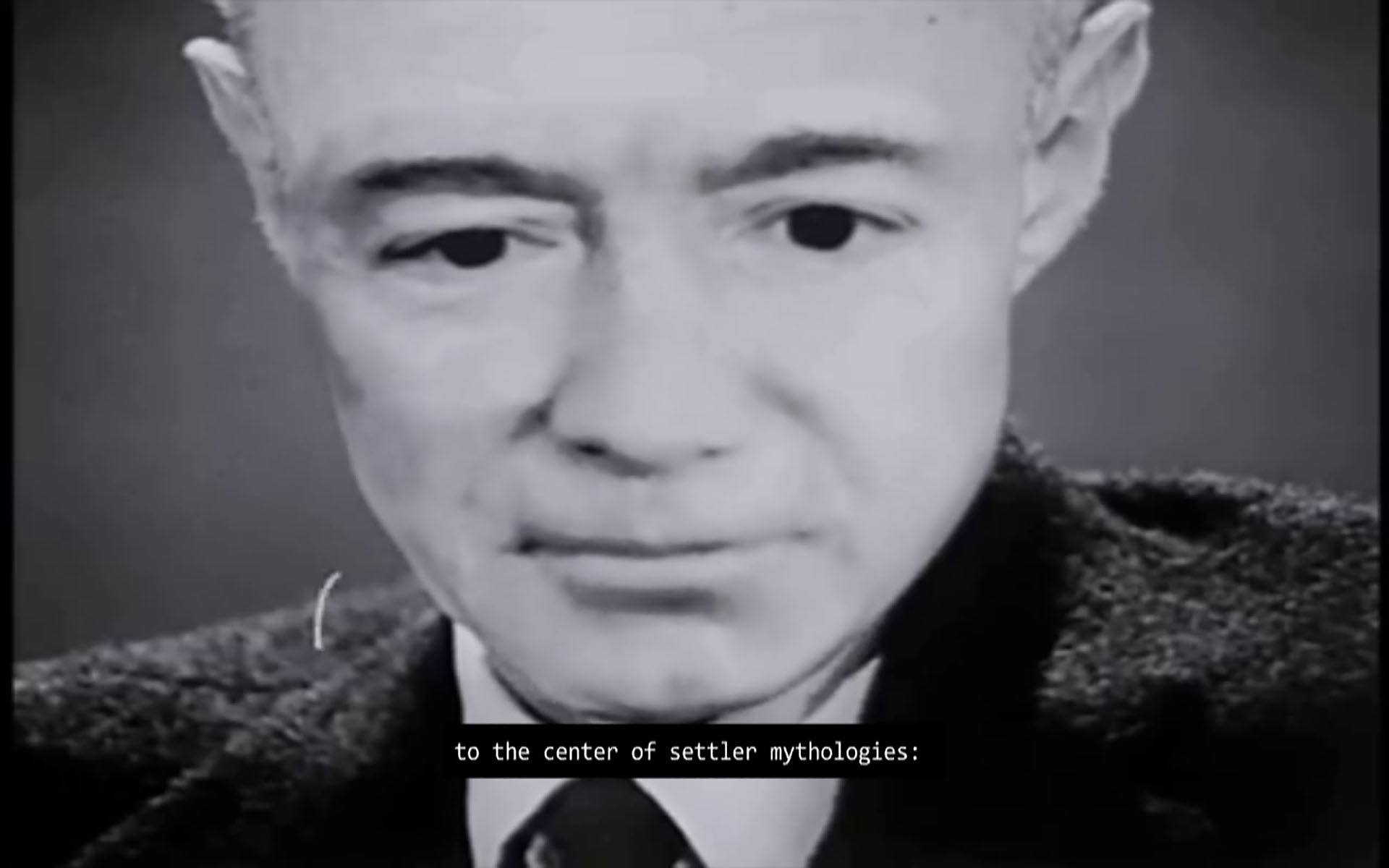
ALEXANDER Yes, thank you. This has been very generous. Before we go, I saw a meme today that I want to share if that’s okay with everyone?
KITE Yeah, great!
ALEXANDER I think it’s related to a lot of what we’ve been talking about and what your work’s about, while at the same time, it gets some of it wrong, potentially, but it is still funny.
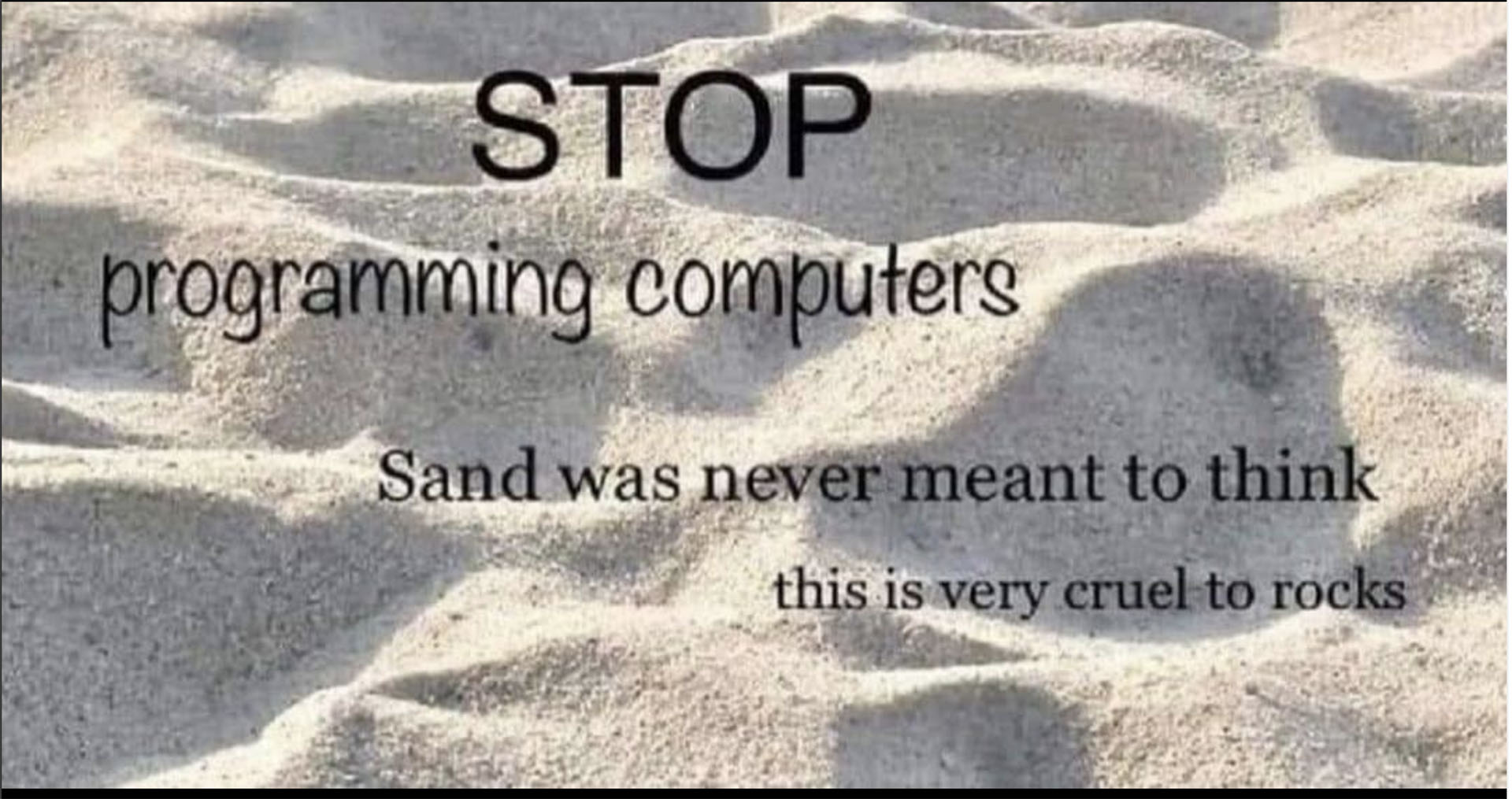
YARA Oh my god, I saw this yesterday.
KITE That’s my research! That’s the punchline.
YARA Where is this from?!
ALEXANDER I don’t know. The depths of Instagram?