Jenna Sutela
in conversation with
Bryant Wells
The following conversation between Jenna Sutela, Bryant Wells, and myself occurred via Zoom on Wednesday, October 28, 2020, at 11:00 New York/17:00 Berlin.
Download this conversation as a PDF
ANGIE KEEFER Thank you, Jenna and Bryant, for agreeing to share your work with each other and the audience for this series. I will introduce you briefly to provide some context for future readers of this conversation, then I’ll leave it to you. Bryant Wells is a recent graduate of the Yale MFA program. His work draws from systems theory and afrofuturist sources to speculate about how new technologies may be used to change our understanding of cognition, potentially inverting hierarchical ideas we have regarding consciousness, and how this shift in perspective might lead to a very different future. Jenna Sutela is a Finnish-born artist who has been working for the last several years with AI and some inhabitants of the microbiome, developing projects that explore consciousness and the potential for more-or-less alien consciousnesses, with a focus on the emergence of novel, even alien, languages.
BRYANT WELLS Thank you, Angie. I’d like to start by asking about your background, Jenna. I understand that you used to operate a collaborative social practice, and I’m curious about how you’ve made the transition to what you do now and how what you were doing before has influenced your current work.
JENNA SUTELA I studied in this very “2000s” media art program at the university in Helsinki, doing a lot of work with technologies, and I was always interested in sound. I combined that with media studies—the history of digital media. My background was not hardcore computational, but my interest in computation has continued developing since then. I graduated in 2008, then I spent a lot of time involved with writing and publishing, until the circle began to close a few years later, around 2013, and I came back to the kind of media art practice that I was taught at school. It sounds a bit better to say “media art” once again, now, than it did a while back. I work with computation and, more recently, with machine learning and AI, as well as biological materials or living materials. I approach the biology aspect through an interest in alternative- or left-cybernetics—open systems experiments. Some of the British cyberneticists were very influential for me, like Stafford Beer with his idea of the “pond brain”—of computing with an ecosystem or looking at the activity of an ecosystem as a kind of computing. Beer used a pond ecosystem as a kind of homeostatic controller. His idea was to replace human management not with computers but with the lively agency of natural, extremely complex systems. And I was always a sci-fi fan, so I was familiar with the idea of “wetware” in cyberpunk—next to software and hardware, wetware being some kind of living computing matter, like, for example, the human brain or the pond. Then I came across this slime mold, Physarum polycephalum, which is known as a natural computer and used in a lot of experiments in mapping or robotics. It took me on this path that I’ve been on recently with the microbes. But what is your own background? What brought you to your interest in thinking about consciousness?
BRYANT I studied graphic design as an undergraduate where I gained an interest in computation and interactive design. Afterwards, I worked for a firm founded by a couple of MIT Media Lab people, and that was an introduction, for me, to the field of “media art.” I recently finished my MFA at Yale, also in graphic design, and the work that I did there hovered around the histories of networked and computational mediums. That’s how I came across cybernetic theory. Ideas presented in Black studies, afrofuturism and music theory—through authors like Kodwo Eshun and Stuart Hall—have helped provide a critical lens for interpreting the lineage of networks and media culture. Of course, science fiction was my earliest introduction to ideas like AI, prior to a more research-driven or academic understanding of these topics.
JENNA Right, and I know there’s an interest in techno linking us, beyond cybernetics and sci-fi—
BRYANT Absolutely. The genesis of techno in the context of Detroit can be tied to industrialized labor as a kind of reappropriation of time.
JENNA I like what you wrote about techno offering perspective on being governed by machines versus being liberated by making use of them.
BRYANT Right, the artist Adam Pendleton makes reference in his work to the poet and jazz musician Amiri Baraka and his “Black Dada Nihilismus”—the idea of the Black Dada mime, which is a method that involves embodying a stereotype or perhaps, in the case of techno, an oppressive system of governance, in a way that changes its priorities or power dynamics.
JENNA Art may also hold space for non-instrumentalized technological thought, focusing on things-in-themselves—beyond their use value. That space needs to be expanded.
BRYANT Yes! You work with machine learning, which is surrounded by questions of ethics, power, and access. Do you see yourself in direct dialogue with that context, or are you using the medium to point elsewhere?
JENNA A lot of my recent work looks at, or looks for, the ghosts in the intelligent machines of our creation that are increasingly shaping our reality. On the one hand, the work is about getting in touch with the nonhuman condition of the computers that work as our interlocutors and infrastructure. On the other hand, it’s about the computers getting in touch with the more-than-human world around them. And then, on a practical note, responding to your question about the context, my work with machine learning or AI has often been in collaboration, typically within some kind of residency, since the “muscle,” computationally speaking, is quite costly. To get access to the required resources, you often need some institutional backing. So, for example, I did a residency at Somerset House Studios in London that included the monster, Google, and I had a lot of doubts about doing that, but I decided that in the series of complex positions and power relations that one sadly has to deal with in the art world all the time, at least this monster was a central force in my field of interest, governing our technological lives, and maybe I could get a closer glimpse into its operations or even access to some otherwise hidden data that I was interested in. As it turns out, the access was limited, of course.
BRYANT In that sense, I think your relationships with these institutions seem both generative and tenuous. They provide resources for your work, which may (at times) be diametrically opposed to the goals of the company.
JENNA Then, too, even in these monstrous companies, there are often quite amazing people, and many of the engineers actually have really wild ideas, and you can share values and ideologies and have deep philosophical conversations. And that’s amazing. But you cannot forget the surrounding structure that you’re operating within—be it in the context of art or every other thing that we do. In one of my recent projects, I Magma, I actually referenced this engineering project from the 1990s in Silicon Graphics, where a lava lamp was used as a random number generator.
BRYANT Yeah, absolutely. In I Magma, the magma fuels the app—it’s a divination app, right?
JENNA Yeah.
BRYANT I Magma has a relationship to the I-Ching, which, of course, inspired the binary system developed by [Gottfried Wilhelm] Leibniz. Some may recognize the I-Ching through proto-Cyberpunk author Philip K. Dick, who used it as a plot device in a few works. How did you arrive in this space between computation, spirituality, and storytelling?
JENNA Yes, the idea of machine-generated divinations draws from the origins of the binary code in this ancient Chinese divination system. Leibniz argued that all matter can be represented as ones and zeroes, or, as it was expressed in the I Ching, Yin and Yang. Conceptually speaking, it’s important to remember that Yin and Yang are understood as complementary rather than opposing forces. They interact to form a dynamic system in which the whole is greater than the sum of its parts. Perhaps instead of binaries—also in computing as in other areas of life—“infinities” could be a better term. One thing that’s central to a lot of my work—both with AI and with bacteria and organisms—is the act of amplifying or deriving from the more-than-human presences that are part and parcel of our lives. In the case of I Magma, it was some kind of a ghost in the machine. The element of chance is another aspect that’s often present in my work. For example, I’ve made labyrinths—almost like stages or architectures—for slime molds to inhabit and perform within however they deem best. Or, in I Magma, it’s a chemical reaction driving the course of events, computationally speaking.
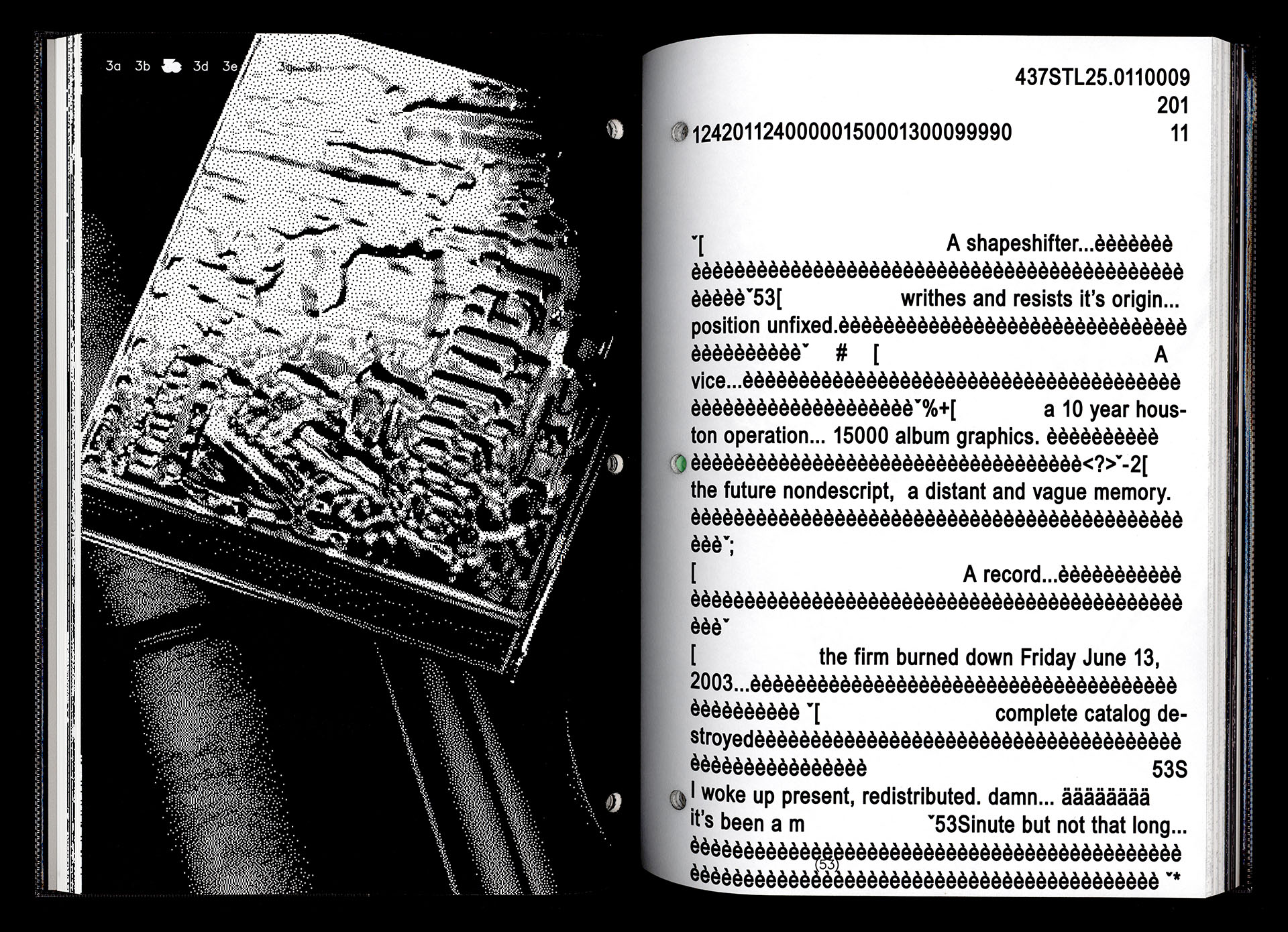
Instead of randomness, the machine oracle looks for patterns, signs, or meaning in the blobs of liquid and color in motion. The algorithm was trained on the Internet Sacred Text Archive—a collection of folkloric mystical texts from decades or even centuries back—and trip reports from the Erowid Shulgin Archives. It connects what it has learned from these sources to the shapes it sees. So, the machine learning program is basically capable of recognizing objects in the randomly moving “lava.” But it’s very hard to parse the connections it makes, because it will see “apple,” for example, and then build from that to a pipe, or something else totally different. It all has this slightly psychedelic tone.
BRYANT So, as the “machine” is reading into these forms, is it also teaching itself? Is it a recursive system in that way? I can imagine it kind of spiraling into its own delusion of what these shapes mean, or what they’re associated with.
JENNA Yes, we actually had to dumb it down a little bit. I was collaborating with [the programmer and poet] Allison Parrish on this, and we found that the GPT-3 language model was a bit too good. It’s lacking some of the accidental poetics, because it’s too accurate. It could actually say something like, “This liquid is looking like an apple.” So, we programmed I Magma to be a bit simpler than it would have been, aiming for poetics and more associative connections.
BRYANT Could you also talk about the use of a head—or your own head—as the source in I Magma?
JENNA It’s a kind of self-portrait; I call it a “neuroplastic” portrait. The choice to include multiple heads in the installation is a tribute to the hive-like existence and collective body of Physarum polycephalum, the single-celled yet “many-headed” species of slime mold, my frequent collaborator. But I was also working with the idea of the Extended Mind. This is a philosophical concept put forth in the 1990s that the brain and its environment can be seen as an indistinguishable, coupled system. These were a few of my reasons, in addition to wanting to work with the concept of a portrait. In a neuroplastic way, the heads are all a bit stretched, too, like coneheads, in order for the lava to flow better.
BRYANT You mentioned the discipline of cybernetics—the study of systems through the lens of communication and control. It’s an approach that connotes a type of dominance or management. In your film Nam-Gut (the microbial breakdown of language), the gut microbiota seems to emphasize communication and coexistence. I’m also thinking along the lines of Ursula Le Guin, and her “stick versus carrier bag” dichotomy from “The Carrier Bag Theory of Fiction.” She makes the case that the receptacle, not the spear, was the first human tool, and that a culture oriented around this history—in which gathering and sharing are primary—might be a very different one than a culture organized around the history of the spear. Do you see your studies of the gut as a foil to the control-based objectives within the cybernetic approach?
JENNA Definitely—that work, like so much of my work in general, is all about interspecies symbiosis, and I’m inspired by Le Guin’s carrier bag theory. I like that the cranium is no longer the limit of our consciousness, and that the gut brain has become such a hot topic. We’ve realized that we are mostly made up of bacteria, fungi, etc. And that kind of plurality—this compound of various species—is what makes us who we are and has an effect on our thoughts and emotions. Nam-gut (the microbial breakdown of language) as well as nimiia cétiï are both dealing with bacterial communication. Here, the machine works as a medium, channeling messages from entities that usually cannot speak. But in real fact, whether we know it or not, we’re already speaking for bacteria through our constant interactions with it. Regarding cybernetics, I’m most attracted to those alternative, or Left versions that are occupied with decentralized forms of intelligence and organization—the ones that don’t consider the world as a closed ecosystem or focus on anthropocentric hierarchies.
BRYANT Is decentralized computing a topic you’ve been pursuing?
JENNA Well, definitely, yeah, that’s a goal, for sure: to have more open or decentralized computing systems. This topic has been present in my work with Physarum polycephalum, the “many-headed” slime mold in particular. I’ve compared the behavior of the ancient, extremophilic, hive-like organism to developments in decentralized computing. Is that something you’ve also been researching?
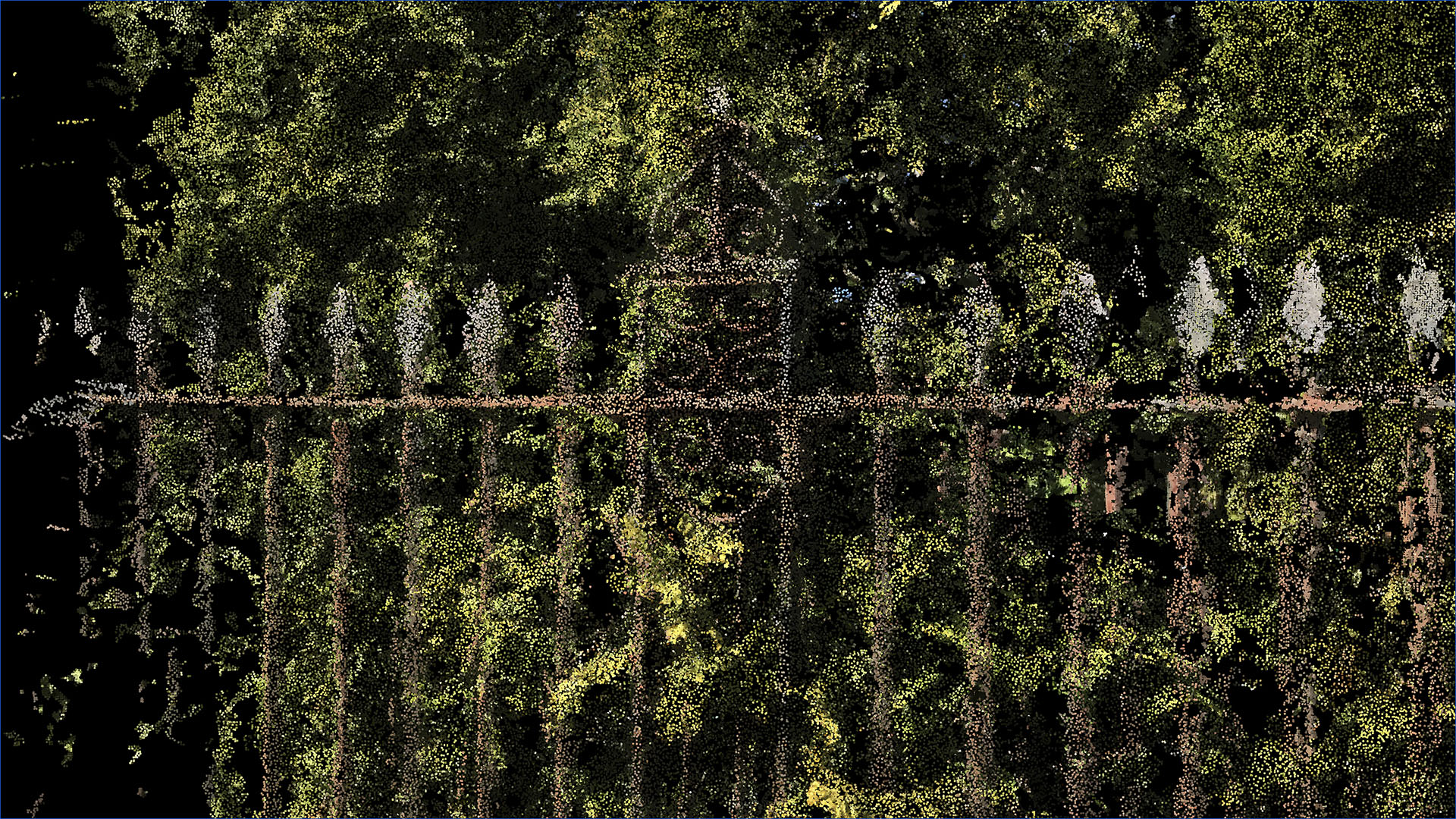
BRYANT The field is a bit fraught right now, but I do think there is a lot of potential in decentralized computing. It’s great to see projects around Web 3.0 pop up, with priorities on issues of access, data ownership, and the development of more healthy, less viral, online communities. I’ve also been interested in shifts at a smaller scale that may help change our understanding of how networks are built and maintained. Things like local area networks and ‘sneakernets’—protocols that I see as being in support of relationships in “meatspace.” I maintain a couple projects in these regards: Local Radio—essentially a web radio that runs on a LAN—and Local Library, a digital folder that is stewarded by students.
Backtracking to natural computers like slime mold circuits or systems of microbiota, how might they help identify the blind spots that are introduced by our own wetware? Perhaps we could talk about the idea of these systems as a medium. Visiting the Pentecostal church as a child, I’ve seen family members capture the Holy Ghost, which is a surreal experience. What sparked your interest in tongues and mediumship?
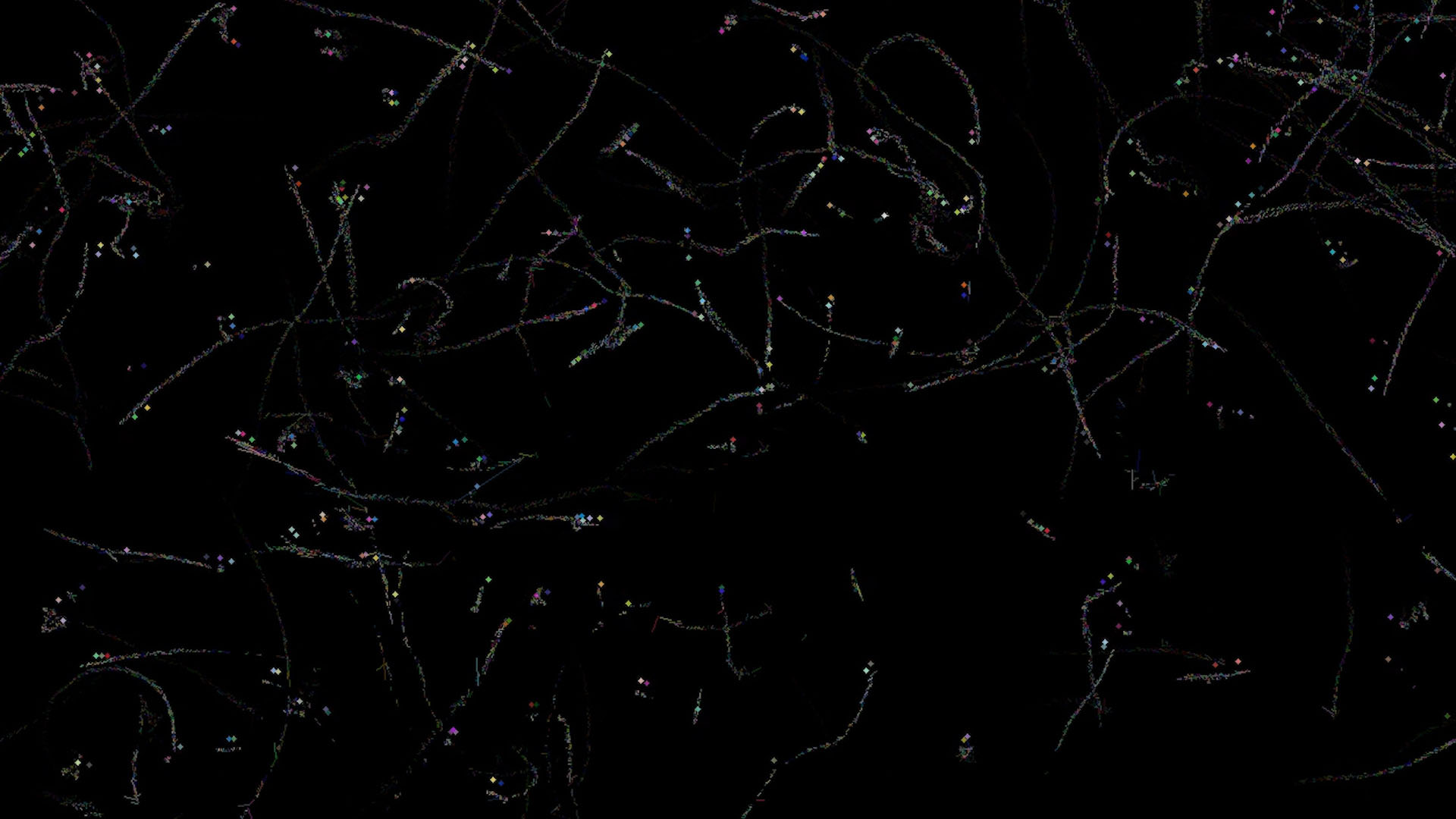
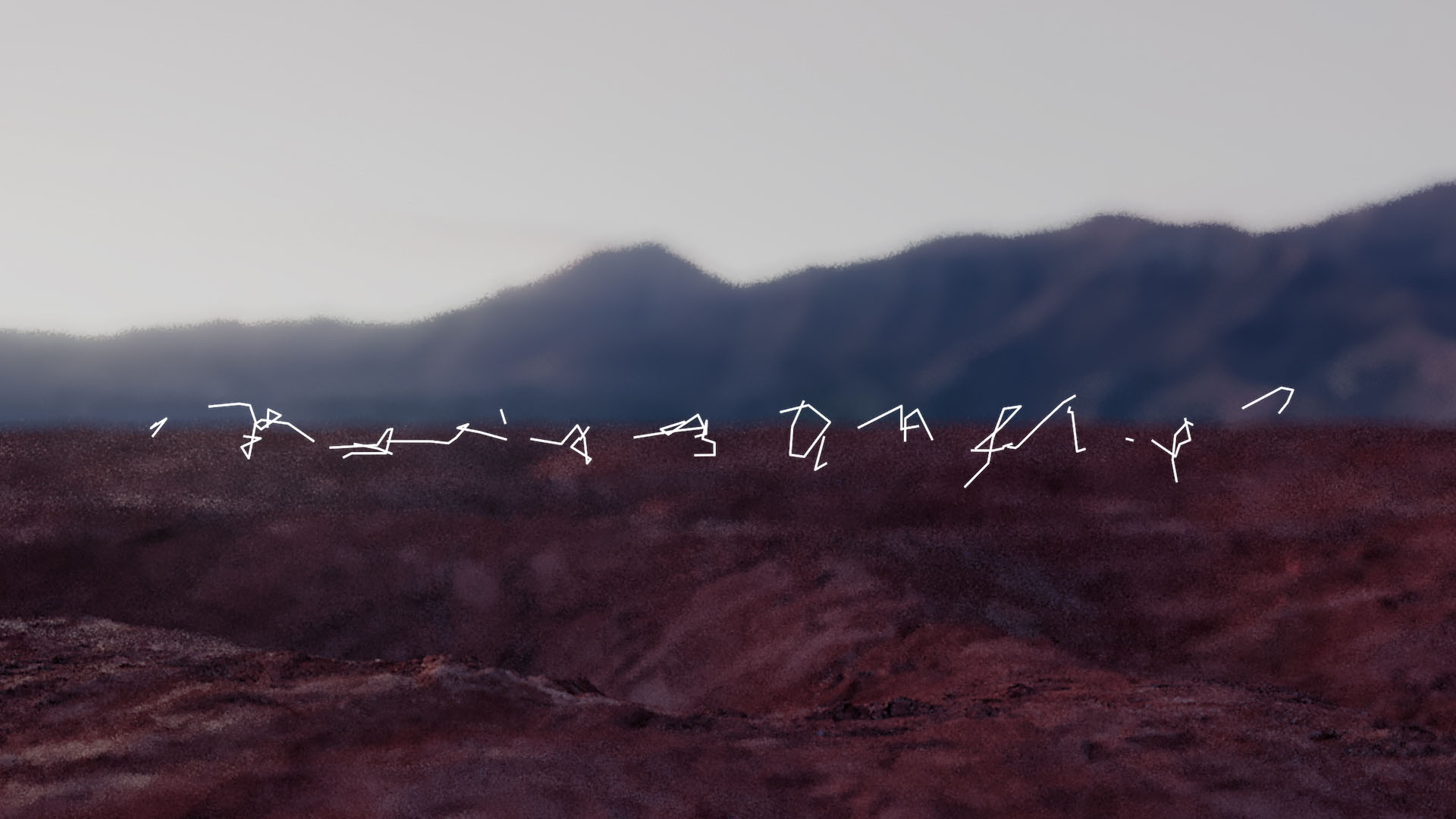
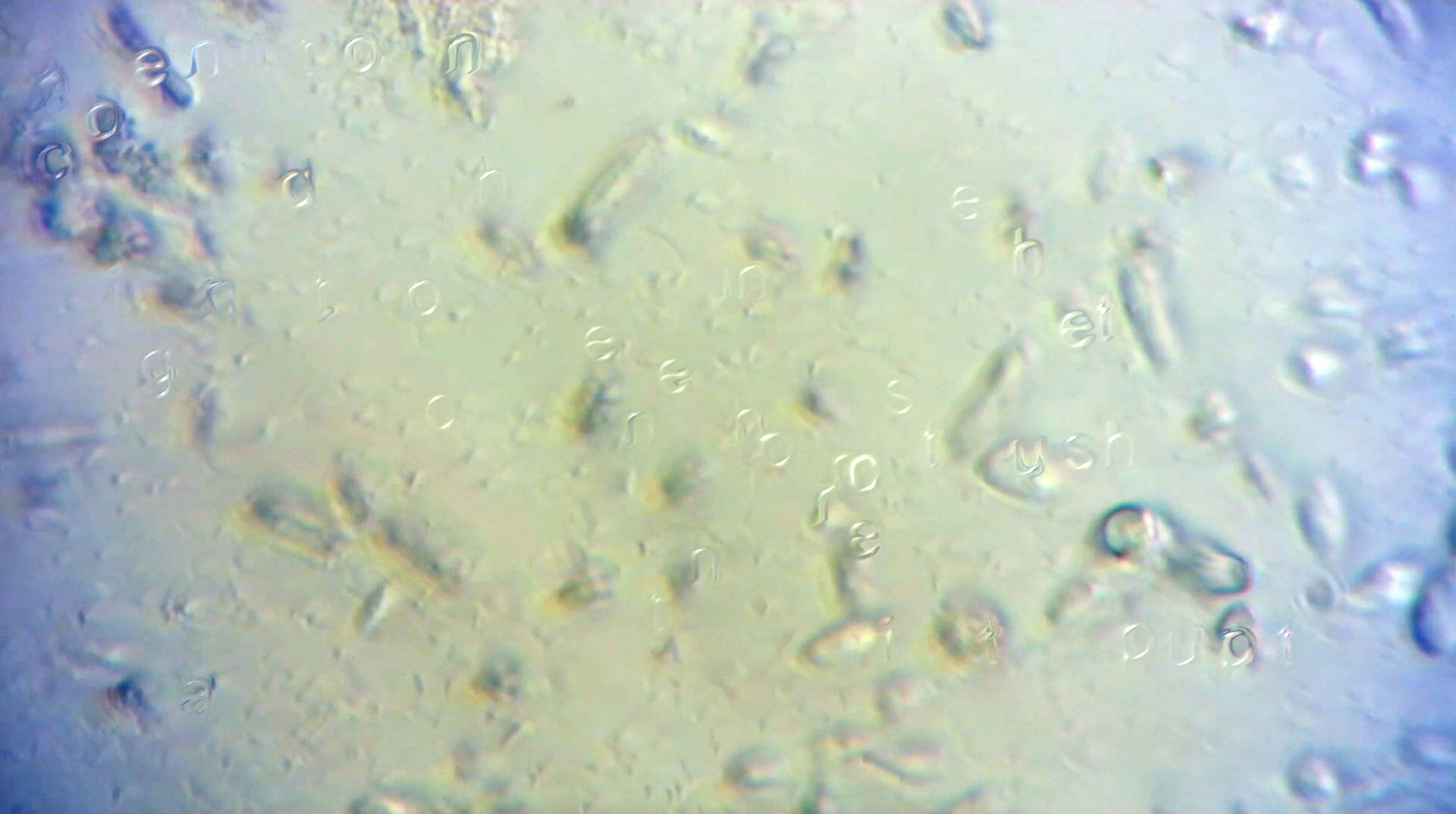
JENNA I think the idea of breaking language apart came from trying to collaborate with creatures that we don’t share a language with, always finding it difficult, if not impossible, yet simultaneously wanting to do just that. It’s also worth saying that I’ve always worked in English, but it’s not my native tongue, so I couldn’t always get everything across the way I wanted to. Being so interested in sound alongside that, vocalizations—especially the unconscious ones, like glossolalia, or speaking in tongues—must have been another starting point for my language experiments. Many of the topics I’m curious about are either microbial or require a telescope to view. Our relationship to the phenomena in our gut brain or on other planets is always technologically mediated. And there seem to be some similarities when it comes to these realms. I mean—as above, so below, no? Anyway, I’m curious about what sound and hearing can add to the generally very image- and sight-dominant ways of sensing our surroundings on both micro- and macroscales. nimiia cétiï drew on language from the Hélène Smith seances, where voices or utterings would come through, seemingly guided by something otherworldly. Smith was Swiss-French. Her real name was Catherine-Elise Müller, and her seances are known as one of the earliest documented forms of glossolalia. This was in the late 1800s. Théodore Flournoy, the linguist and psychologist who studied her, claimed the syntax of her sounds was a lot like Old French. I further bastardized it by recording it and letting an intelligent machine interpret it for my project. I’m looking for ways to reach those unconscious levels where there’s spontaneous language generation—be it by organic or synthetic subjects—at the farthest edge from actual language.
BRYANT That’s a lot like using a lava lamp as a random number generator—it’s impossible for a computing machine to reach outside its own faculties to generate new things. In this case, you’re dealing with speech, but it could be a random number.
JENNA Totally. Anything, like white noise, would be more random [than what a computer generates].
BRYANT We’ve talked about slime molds, probiotics, Mars, the gut. How do you find yourself invested in each new area of your research? And how has collaboration shaped the trajectory of your practice?
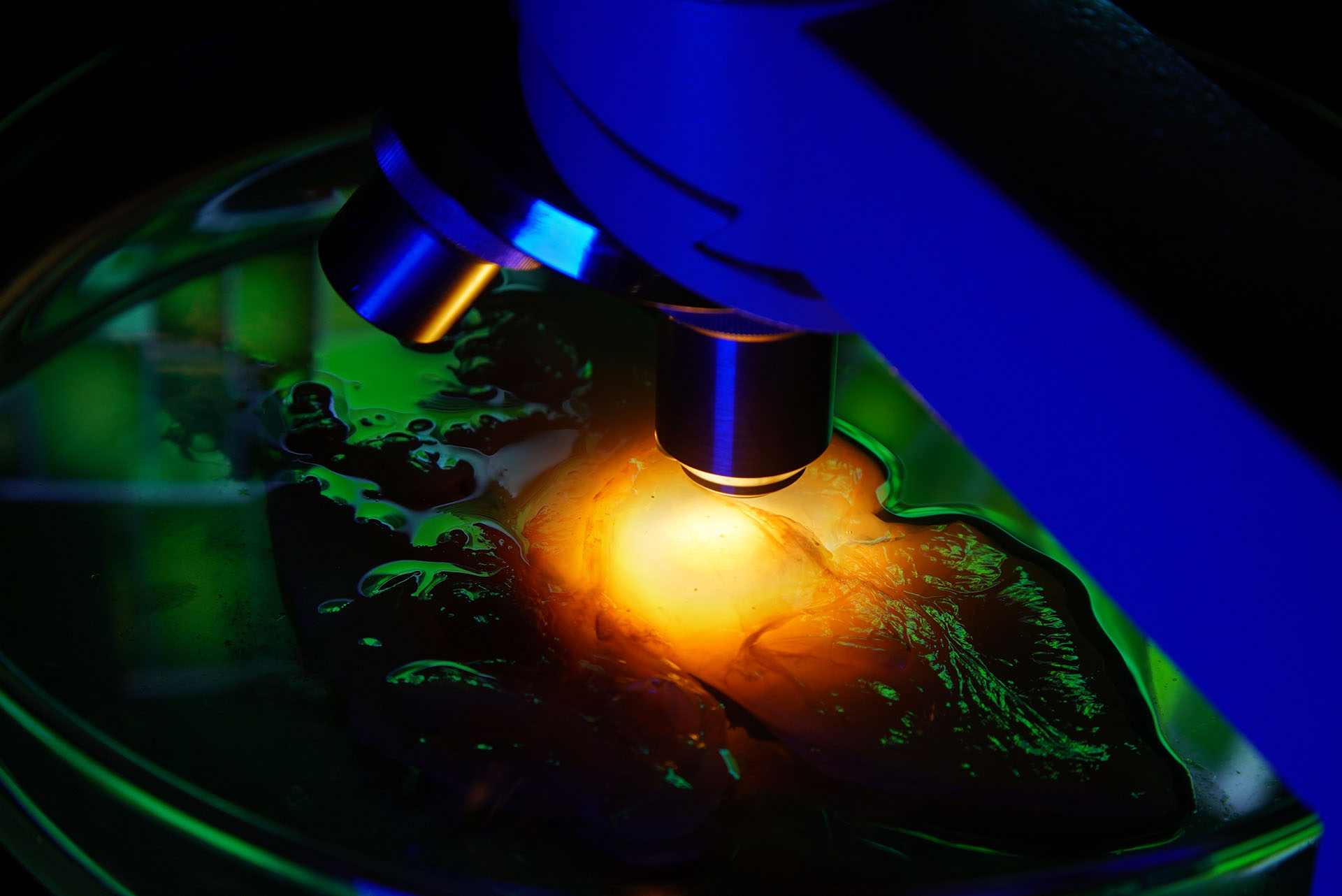
JENNA Collaboration is central, whether with extremophilic organisms, intelligent machines, or ingenious humans. Often, I start with some sort of an assumption or interest or narrative, and this often changes completely over the course of the collaborative processes. Sometimes, the art is really an excuse to get into a laboratory, get to exchange with someone interesting or spend time finding out about some niche topic. In collaborating with scientists, or anyone or anything else for that matter, I hope the exchange changes both of us. There’s always an outsider-ness when it comes to hard sciences, but you often find some sort of other interests that connect you with the scientists. On the slime mold project, I worked with a mathematical biologist named Toshiyuki Nakagaki. He was the person who put the slime mold into a maze for the first time and found that it mapped and responded to the maze quite quickly and with remarkable spatial intelligence. I visited him in Sapporo, Japan. With Nakagaki, the content of our bookshelves is almost identical. I mean, I found some of my favorite manga and obscure literature on linguistics at his office—not just stuff about the slime mold that we might have shared. There’s also something about asking the “wrong” questions. And I rely on the science-fiction liberties of being an artist, so the technical or scientific processes shown in my works are quite heavily edited. For example, in the nimiia cétiï project, there’s a sound that comes from the computer—a kind of narrative sound or spoken word. It’s based on my recordings of Hélène Smith’s materials, as well as on the bacterial movements under a microscope. But I also added wind instruments. I recorded a flutist and a contrabass recorder player, and I used the sounds of them breathing between the playing, sort of “breathing life” into the machine. There’s always that extra layer—I’ll rarely show something from the lab, but rather interpret or fictionalize it.
BRYANT In one part of your film, Holobiont, the process of decontamination is shown. There’s a scientist walking through a threshold and leaving the lab. It made me think of Alien. I was wondering if you’ve ever contaminated a laboratory? Or witnessed a contamination event?
JENNA I have at times tried to bring a laboratory-style process into the gallery, in the form of these slime mold labyrinths. And I’ve come to understand you can’t really separate the slime mold culture from the larger ecosystem, including things like room molds or your own bacteria, unless you’re in a laboratory condition, a so-called clean room. My exhibition slime molds had gathered other life in the display structure I built for them, and they were fighting for the living space. So, in that sense, I’ve participated in contamination events.
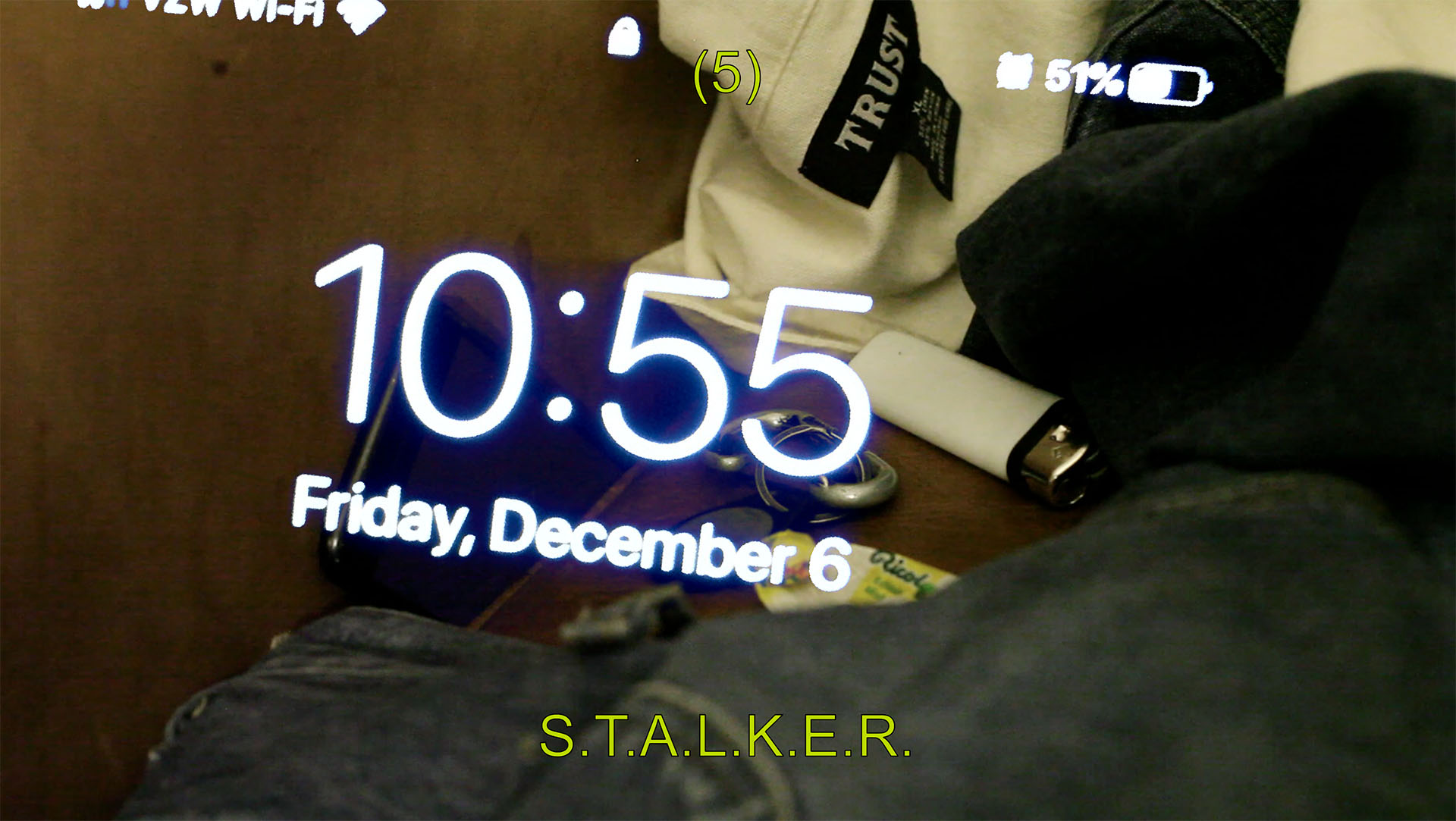
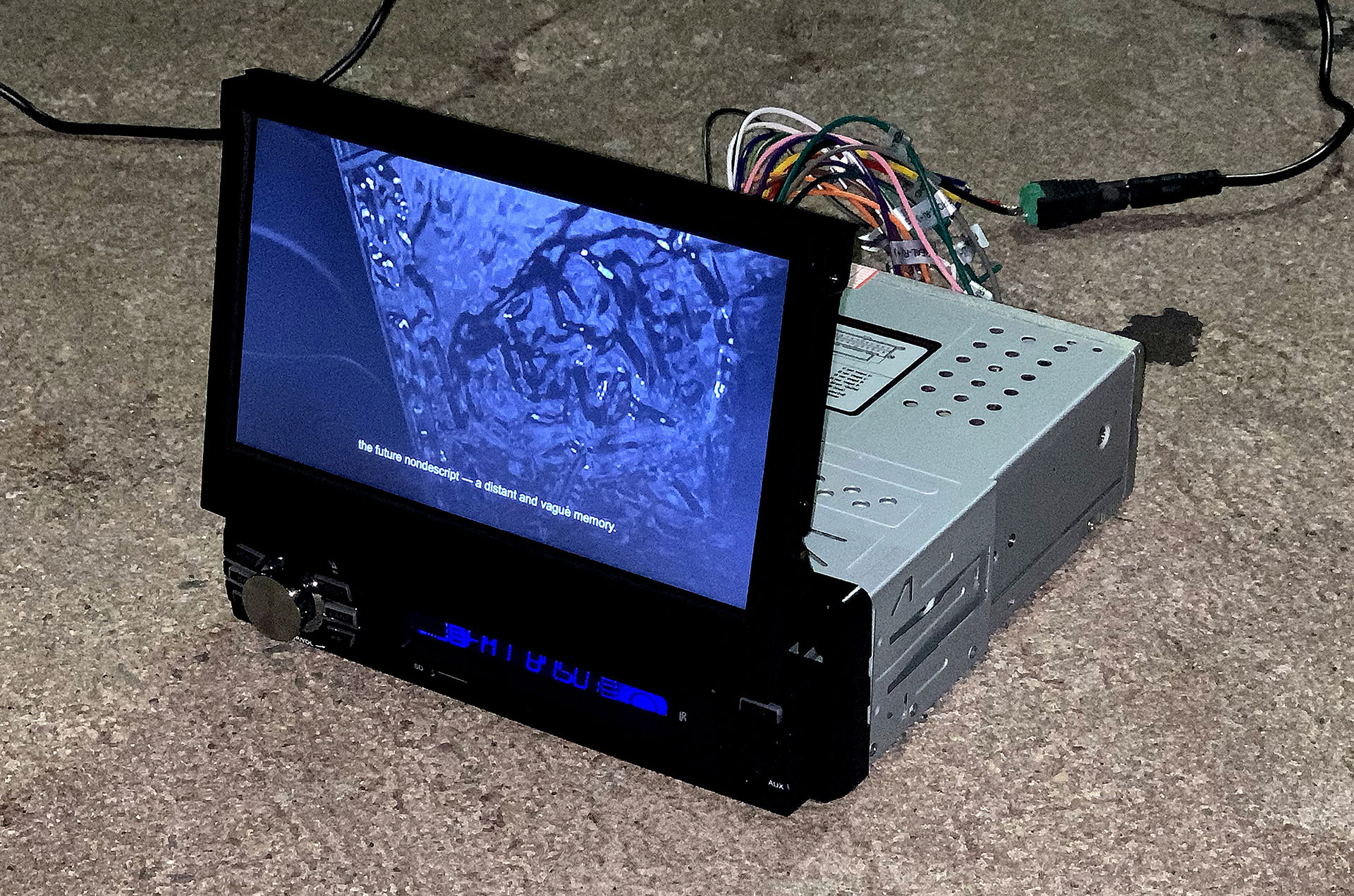
ANGIE This may end up more like a long comment than a question, but I keep coming back to this affinity I see between the two of you and what you’re working with, which I really want to draw out and understand better. Bryant, I want to return to your first question about collaboration. I think both of you are perhaps renegotiating a relationship between agency and autonomy. Conventionally, we have often idealized autonomy as being the pinnacle of agency, whereas in both of your practices you work with agencies that are entirely symbiotic, and you each consciously, consistently acknowledge how—for Bryant—whatever you’re working with affects the social infrastructure around it, and—for Jenna—how so many of our concepts about agency are equally true on the inverse; that is, we are microbial creations as much as, say, intelligent machines are aliens of our own creation. There is a sort of reflexive inversion of those relationships, and I’m thinking about that in terms of ethics. Bringing it back to strictly human, linguistic, philosophical concepts about ethics and trust, there is a question of consent in your works, I think, which has a lot to do with context. Our conventional concepts of trust are related to consent, which relies on this conceit of autonomy. Whereas the systems that you’re describing and working with preclude consent, because they’re about phenomena that emerge from complexity. The work really begs this question about how we move forward with this new awareness of the complexity of our conditions, and reformulate key concepts that make living together feasible, trust being one of them.
JENNA Definitely, yes. Perhaps that’s my interest in moving toward decentralized computing systems, for example, in that they’re tools to create trust, or rather trustless-ness—
ANGIE —to preclude the need for trust as we’ve known it.
BRYANT Yeah, I agree. I think you put it really well, Angie. For me, beyond the split between agency and autonomy is the dynamic of power and independence. I’m thinking about how frameworks like mutual aid can be fruitful endeavors, socially.
JENNA Yes! That is so true, Bryant! It is important to bring attention to our responsibilities not only as part of interconnected, more-than-human ecosystems but also the human society. Beyond being good hosts to, say, the bacteria in our bodies, we should consider the most effective ways to benefit other people, too, considering the particularities of different cultural and living conditions, some of them oppressed and compromised. Similar to the interspecies relations that I’ve been dealing with, the survival of the fittest narrative just won’t do here.
BRYANT That is beautifully expressed! The only thing I would add is that “trust” is a great word to focus on. Sometimes, I wonder if the current infatuation with cryptography, which assumes the position of an adversary, further exacerbates our relationship with competition and incentive. New technologies will surely continue to provide important and helpful utilities, but just as policing does not solve the problem of violence, I am skeptical of the idea that these technologies will somehow relieve us of the anxieties they are created to address before we think more fundamentally about how we relate to one another.
JENNA Finding the balance is always a matter of considering both ends. It’s something we need to keep doing in an ongoing way.