Holly Herndon
in conversation with
Tabea Nixdorff and
Jonathan Zong
The following conversation between Holly Herndon, Tabea Nixdorff, and Jonathan Zong occurred via Zoom on Tuesday, September 29, 2020, at 16:00 Central European Time. We were in Berlin, Arnhem, Cambridge (MA), and Ghent (NY).
Download this conversation as a PDF
ANGIE KEEFER Hi, Holly. Thank you for joining us. I will briefly introduce each of us to start, then turn the conversation over to Jonathan and Tabea, who have many questions for you. I’m an artist and teacher working at the Sandberg Instituut in Amsterdam, where I’m involved in a research program focused on AI. Tabea Nixdorff is a graduating student at the Werkplaats Typografie in Arnhem, and Jonathan Zong is a Ph.D. candidate at M.I.T.’s Computer Science and Artificial Intelligence Lab. Tabea’s and Jonathan’s interests are similarly grounded in the overlap of art and graphic design, but they diverge in that Jonathan is deeply involved with computer science and AI research, whereas Tabea focuses on the history of experimental electronic music composition, particularly as it has involved women composers, and more-or-less-dubiously gendered female voices.
HOLLY HERNDON Great. Thanks for that overview and introduction.
TABEA NIXDORFF Yes, thank you. I’ll start by saying that I’m inspired by your work, Holly, and in preparing for this conversation I also started to appreciate the openness with which you share your thoughts on the processes behind your work. I’ve spent most of my life in Leipzig, Germany but now live in the Netherlands. My professional background is in typography, though I find that doesn’t say very much, or I often don’t know exactly what it means. Having studied at several art schools, for me typography has been mostly an entry point to a broader engagement with language. As a field, it is highly attached to the written word, and through my work I have been drawn to the performance of language. That’s also how I started to become interested in electronic music, and in the use of voice among vocalists and sound poets.
Considering the idea of voice—of having a voice—as a metaphor, I began to think about voice in relation to marginalized histories. Histories that don’t enter or have not yet entered the written canon are often inscribed in chanting or storytelling. With your AI project, the phrase “giving voice to” acquires a whole new dimension of meaning, because you give voice to a machine with the intent that it should become its own voice. That’s a long prelude, but I realize the last live concert at which I heard voices was yours, in February at Sonic Acts in Amsterdam, before the COVID lockdowns began.
HOLLY That was my last concert!
TABEA Oh! I wondered. Since that time, I have felt surrounded by voices in a different intensity, even if they are often recorded or they reach me from my screen. How has it been for you since then, being similarly surrounded by voices when physically gathering for performances isn’t possible?
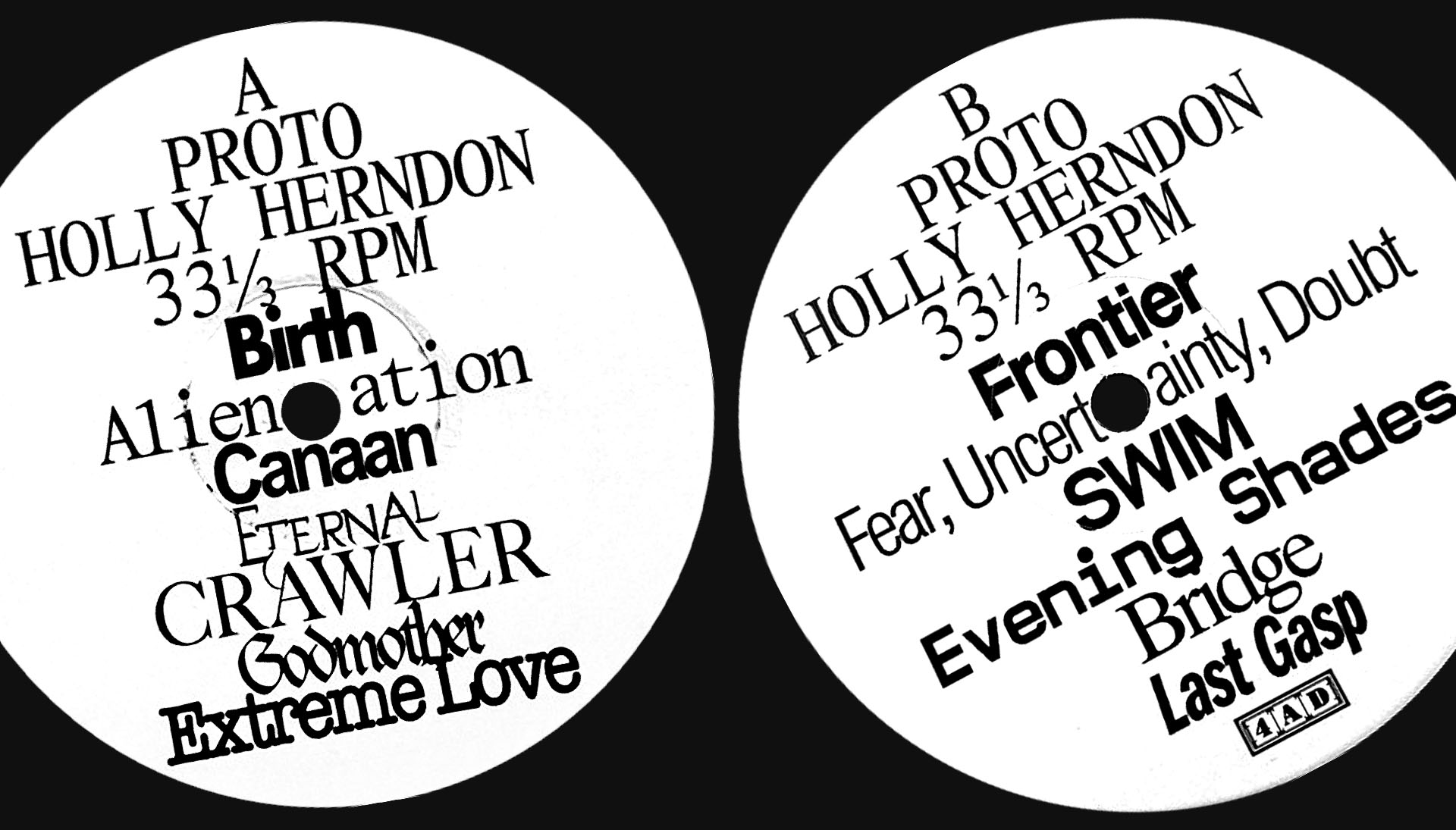
HOLLY That Sonic Acts concert is a sentimental one for me, because I was in a horrible mood before I went onstage—sometimes, when you’re on tour, everything just gets on your nerves, and I was in a brutal mood, and then I went onstage, and it was such a beautiful audience, and it was such a wonderful concert experience, that my mood immediately lifted and I had a really good time. Then, of course, it was the last show that we could have for a while, so I felt extreme guilt for having been in a bad mood. But yes, I’ve felt the palpable difference between having that in my life on a regular basis and not. Even just meeting up with the ensemble regularly—we’re not doing that right now, because we’re not rehearsing. So, it feels like there’s a hole in my practice. I mean, that was the transition that I made from Platform to PROTO. Platform was so much about online connections and seeing those as real, human connections, as part of ourselves. But with PROTO, I really wanted to experience that in-person music-ing again, because it is different when you’re in a room with someone. I’m missing that deeply.
JONATHAN ZONG A theme I find in your work is embodiment, and I think that must come with the recognition that live presence is important. I wanted to ask about your interest in that, and about the influence of Katherine Hayles in your work, as she’s an influence that we share. My Ph.D. work is in human-computer interaction as a sub-discipline of computer science, and I do research on consent and power in data collection and mass surveillance. Like Tabea, I was also trained in typography and design. I’ve thought about how the processes of writing have gradually become disembodied, and how in a digital medium writing and speaking are often treated as biometric data. Data is the way that bodies are understood in machines. This is a very particular way of understanding the world, as you know. In Hayles’ work—particularly How We Became Posthuman, her book on cybernetics—she writes about embodiment, and also about distributed cognition, where thinking is done by both human and non-human actors within a system. Your work is doing exactly that, weaving together human collaborators with data and machine learning, and I’m curious how those ideas shape your thinking.
HOLLY Katherine Hayles was an important theorist for me when I was working on my master’s thesis at Mills College. It’s been a long time, but I remember she was writing a lot about embodied symbols versus printed or transcribed symbols—like a stop sign versus putting your hand up as a stop sign. At the time, I was trying to figure out how to have an embodied electronic music performance with my laptop. The conversation has developed so much since then, but, at the time, there was this kind of strange conversation around what is “natural” or not on a stage, which is absurd, because it’s not like we were born with violins in our hands. But that was the kind of conversation that was being had—whether or not a laptop performance could be embodied, or whether the audience would feel alienated by not understanding the kind of physical gesture that’s happening onstage. That’s why I started working primarily with the digitally-processed voice. I wasn’t even thinking about it as singing, as such. I was thinking about it more as a way to show that the physical gesture that I was making into the microphone was a kind of data stream that was controlling the sound coming out—to try to have this sharing of time and space with the audience through an embodied performance technique.
As I was trying to figure that out, I came up with the digitally-processed voice, which is the hallmark of what I’ve been doing for the last decade or so. I started rethinking this around the time of PROTO, when I was considering machine learning in relationship to vocal folk traditions and group singing traditions. I was thinking about both of those as human coordination techniques. Obviously, machine learning is a much more recent and sophisticated version, but very early examples of group song used in hunting practices, or just in basic communication all around the world, are likely forms of early human tool development. In other words, though we don’t know with certainty, because we don’t have artifacts from choreography—there are no physical leftovers from the choreography itself—some have argued that early tools were developed through human group choreography. So, rather than sitting down and designing a particular hunting tool, there was this group activity—I don’t want to say “dance” because that makes it sound a little more beautiful than it probably was, but it was an embodied group choreography that was feeling its way out, and the “tool” was produced this way, through group coordination. So, that was something I was thinking about to tie the two things together around PROTO. I haven’t engaged with Hayles much since then, but I did listen to a lecture that she gave a couple of years ago, dealing with questions around cognition.
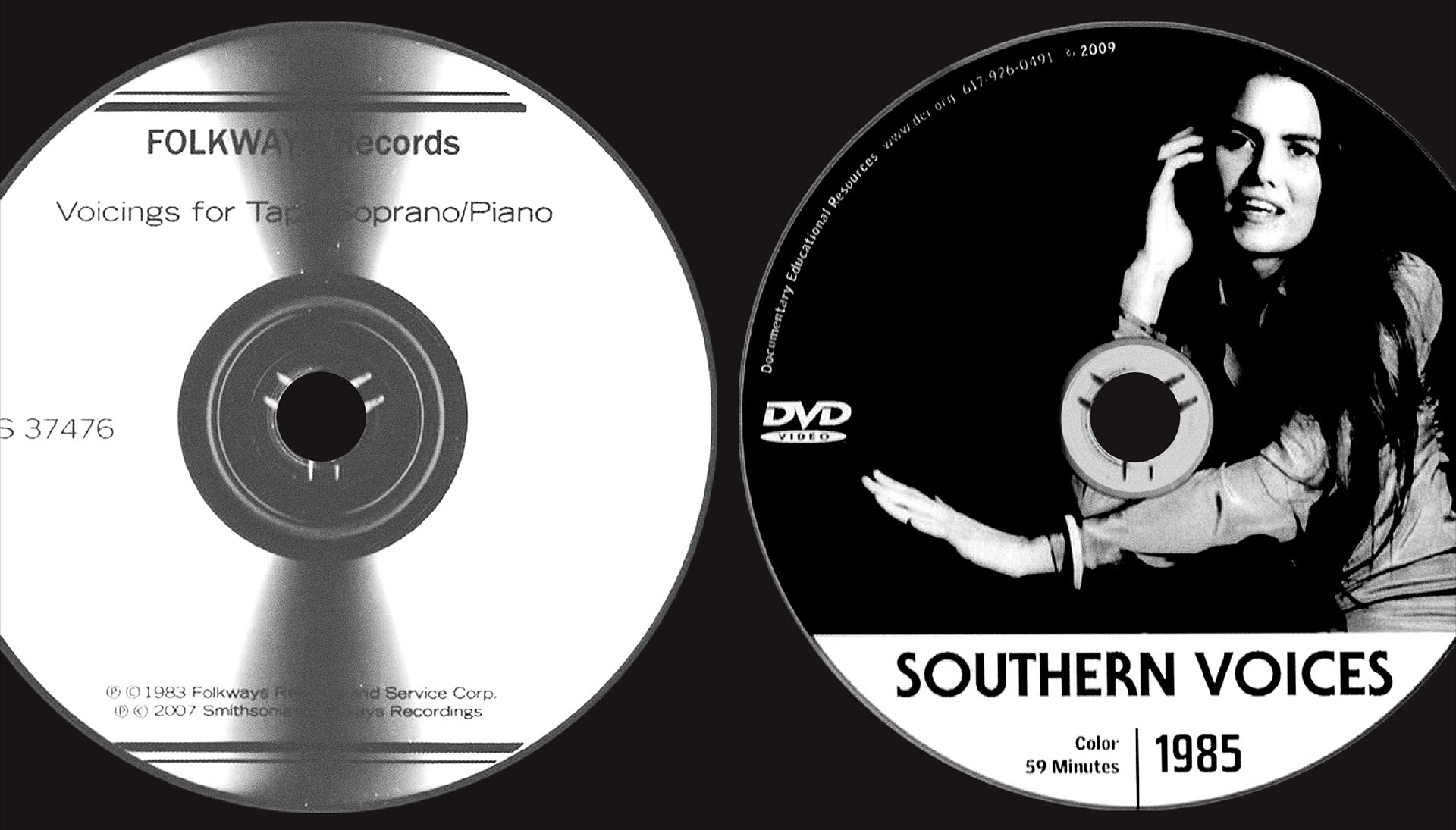
TABEA I’d like to follow up on what you just said about going back to roots—back to early tool-making and these early communal aspects of music making. In my research on early female electronic or experimental composers one thing I’ve found is a kind of lineage of inspiration, where composers are either inspired by or drawing from ancient vocal practices. Jacqueline Nova from Columbia, for example, was a pioneer in the field in the 1960s. She started recording the chanting of indigenous people and mixing it. The American composer Sorrel Hays did a long project in the southern U.S. where she tape recorded local voices and explored the rhythmic signals of their speech patterns, or even Alice Coltrane, who never used her voice or synthesizers until she became involved with Hindu practices. The question then comes up of what is meant by this term “experimental music,” because it turns out to be a deeply Western concept, putting various musical forms in relation to European so-called-classical music. What we call “experimental” or “extended” techniques are embedded in a lot of ancient vocal traditions. This is something I find so beautiful about what I hear in your track “Frontier”— this double embrace of the unknown, both past and future pools of sounds. I am curious to hear more about where the song came from. What inspired you to do the chanting intro?
HOLLY It’s a really good point that you make. It’s interesting that we view a more nasal kind of vocal as experimental, when it probably was the first kind of singing. I mean, we see this kind of singing all around the world. That’s what I found so interesting about it, almost as if it was this innate human technology that was just trying to get out. There’s a musicologist who played a recording of Bulgarian folk music for a village in rural Indonesia, and they couldn’t believe that it wasn’t from the neighboring village, because the tonality was so similar. Of course, the language was different, but they were really surprised that it was from so far away. I find these kinds of things beautiful and interesting. Especially in Western classical music, we view Bel Canto and other stylized vocal techniques as being the neutral vocal in some way, which is bizarre. Coming from East Tennessee, I grew up around a very nasal twang. It’s something that I was ridiculed for when I went away to college—I’ve somehow managed to iron out my voice, which is almost a shame. So, I was trying to tap back into that nasal voice and present it as beautiful in a way. I really like that you picked up on that.
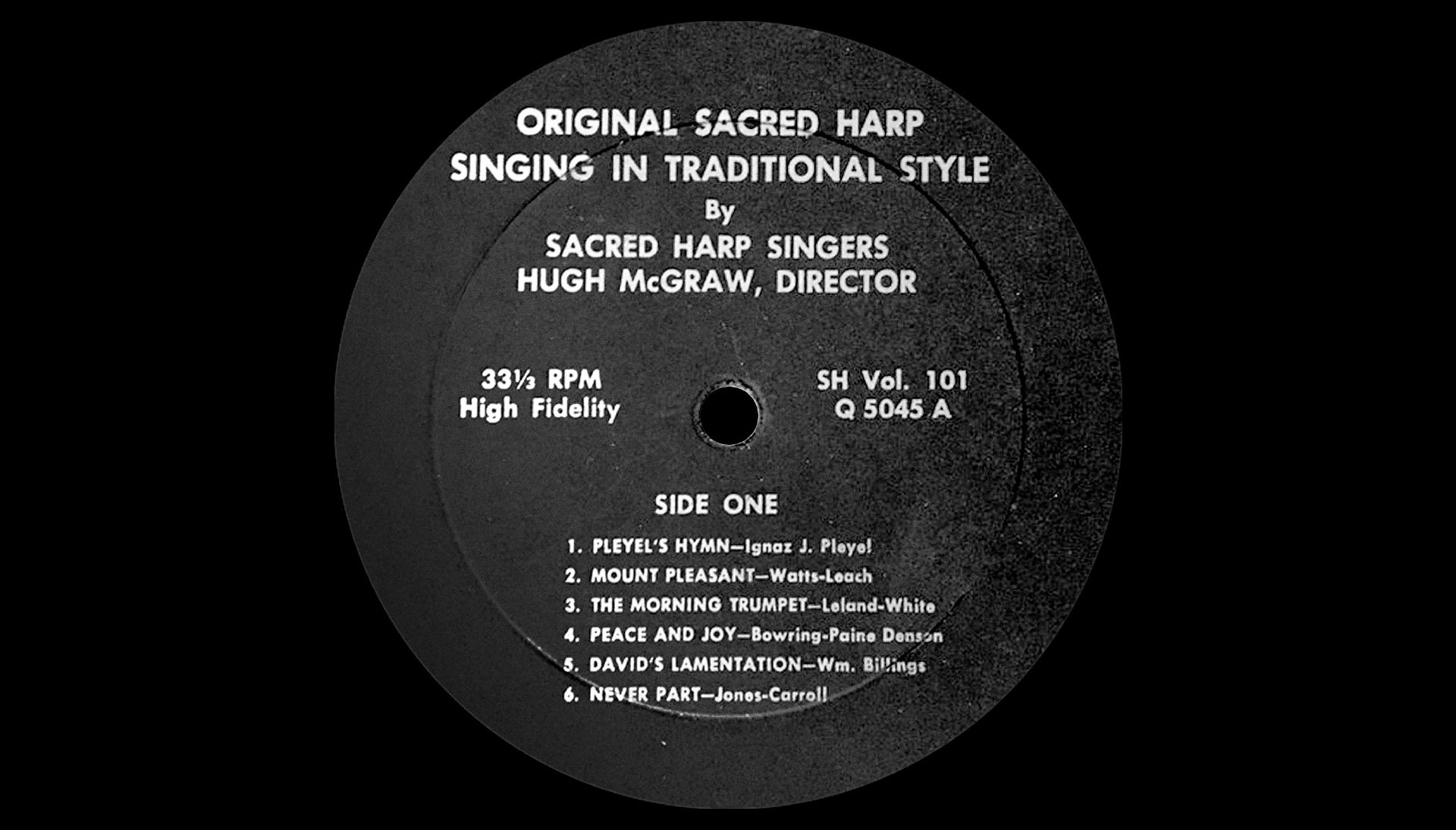
The first two verses of the song “Frontier” are very directly written in the style of Sacred Harp music. I worked with an ensemble member, Evelyn Saylor, who’s an American composer and vocalist in Berlin, and she’s a very active member of the Sacred Harp community. When we were on tour in Australia last year, they were actually having the global Sacred Harp meet up there, and she managed to catch that! She helped me figure out exactly how to voice the polyphony so that it sounds authentically Sacred Harp. What’s unique about that writing is that the lead line is usually found in the tenor. That’s the lead melody. And then the soprano, of course, complements that, while the alto stays in this range that can really be belted. So, it’s called the “power alto”—I love that term. But while very clearly referencing that style of music, I didn’t want to create a period piece. I wanted to bring it into my universe. I was thinking a lot about how machine learning is potentially this new phase of sampling—what we like to call ‘Spawning’—where a computer can listen to a sound and understand its logic, and then create something similar “in the style of” or “with the logic of” without falling under copyright, and how that opens up an entirely new practice as well as a whole quagmire of ethical questions around what we do with the archive.
I was thinking a lot about how quote-unquote “archival” music has been used in electronic music in the past, and, of course, it’s been really misused and abused. One example I’m sure you know of is from the German pop group Enigma. They did the song “Return to Innocence.” Do you know that song? I would sing it, but it would be really embarrassing! You would immediately recognize it, though—the sample is a beautiful Taiwanese indigenous drinking song. A Taiwanese couple, the Duanas, were on a cultural exchange in Paris, and someone recorded their performance. Enigma came across this recording a few years later, and because it was indigenous folk music, they assumed that it was archival material and royalty-free. They made that assumption because of that sound, which already says so much about our history of sampling practice in general. As it turns out, it wasn’t royalty-free—this was a unique arrangement of the song. So, Enigma had to pay the Duanas. They settled out of court, so we don’t know how much they had to pay them, but I assume it was a hefty fee, because the song was a huge, global hit.
Thinking about Pierre Schaeffer and the history of sampling—in his time, the vision of sound entirely decoupled from its source was probably a beautiful idea, that there would be this elevated listening, that you could hear the sound of a train and just enjoy that for its aesthetic properties and not think about it being a train at all. I understand that impulse, and, situated in its time, that made sense. But when you “liberate” a sound from its source, you also delete all the context around it and the people who made it and everything that went into that. I feel like that was a very 20th-century approach to our shared archive—this entitlement that we had to mix and remix things. So, I feel like that’s something that we have to redress when we’re dealing with machine learning, because we can no longer operate under the guise of inspiration when it’s become an automated, industrialized process.
To make a long story short, I was interested in dealing with this Sacred Harp material, but I didn’t want to just sample an existing Sacred Harp song and make a remix electronica thing out of that. I wanted to write my own, record my own, pay the singers who were in the room doing it, and then be able to sample myself and create something new out of that as an interesting way to deal with a sampling practice. Also, if I was just dealing with archival material, I wouldn’t have had the flexibility to do certain things. This may be getting too much into the weeds, but when you’re sampling polyphonic material, the intervalic relationships may limit any re-pitching you can do, because those note relationships have a particular ratio. By writing my own sound source to sample, I was able to have a richer harmonic language.
TABEA You also wrote the lyrics yourself, right?
HOLLY Yeah, a lot of the lyric writing process for me is stream of consciousness, then going back and making things make sense. That sounds like a cop out, but it’s the easiest way for me to tap into whatever I’m reading and researching at the time. I’m always consuming texts, so my own brain does a mash-up of the texts that I’m reading, and it comes out in a certain way, and then my partner, Mat Dryhurst, and I sit down with a kind of puzzle of language and make it make sense together.
JONATHAN I’m interested in how you frame the anthropological aspect of your work, both its connections to song and vocal traditions and also to these historically extractive practices of ethnographic recording and sampling. The way you treat AI’s political economy as a continuation of that history instead of a clean break from it is fascinating and important. While your work sometimes takes a critical stance with AI, it not only points out the problems but also tries to imagine an alternative way of working that has collectivist aspirations and isn’t extractive. Can you talk about how your work tries to articulate a better future for AI and labor? I know that you’ve referred to PROTO as a speculative fiction, for example, which is a great metaphor.
HOLLY I read a lot of science fiction, speculative fiction, all that kind of stuff. I think what you’re talking about comes down to the peculiarity of being raised Christian in the American South—I am so optimistic, yet so many of my interests lead to a pessimistic world view. So, it’s a strange combination of reading a lot of dystopian science fiction, but growing up with this super-optimistic, positive background. I can’t shed that piece of myself. In a way, I have to embrace it. To me, it feels like an intellectual dead end just to provide critique. I mean, I appreciate it—it’s one of the reasons why I love being in Europe. It’s a very critical environment. But I also feel like critique has to be coupled with an idea or a proposal. And that’s not to say that a critique isn’t valid without a proposal. It’s just, if you do want to see certain things in the world, then you have to propose things. If you want to see something change, there has to be a proposal, and those are the kinds of things that get me excited, even if they’re flawed or imperfect. There’s at least some hope in the effort or the trying.
One area where this is popping up recently is the genre of solar punk. It’s a cheesy term, and I apologize for that—I didn’t come up with it. I’ve been recording this podcast called Interdependence with my partner, Mat, and the last episode we recorded was with a guy named Jay Springett, who’s a theorist. He’s very active in the solar punk community, and he was defining how it stands in opposition to things like cyberpunk—this kind of science fiction idea from the 1980s and 90s that was warning the public about an authoritarian, technocratic future, where there’s massive surveillance and corporate overreaching. That was a useful vision at that time, because those fears weren’t widespread in the public, but the fact that so much of our fiction and fantasy is still mining that idea now, I find really depressing and not responsive to how material conditions have changed. I mean, so much of that stuff has become true, so if we just keep reliving those fantasies, I don’t see any escape. The idea of a solar punk future is punk in that it’s optimistic—it’s in opposition to what came before, and it’s trying to problem-solve and come up with new ways forward for dealing with the ecological crisis that we’re facing. Those are the kinds of things that I am excited by, often coming through a flawed process or a stumbling in the dark. It’s difficult right now to express experimental ideas or ways of organizing—people risk being immediately criticized. So, I think it takes guts to make proposals.
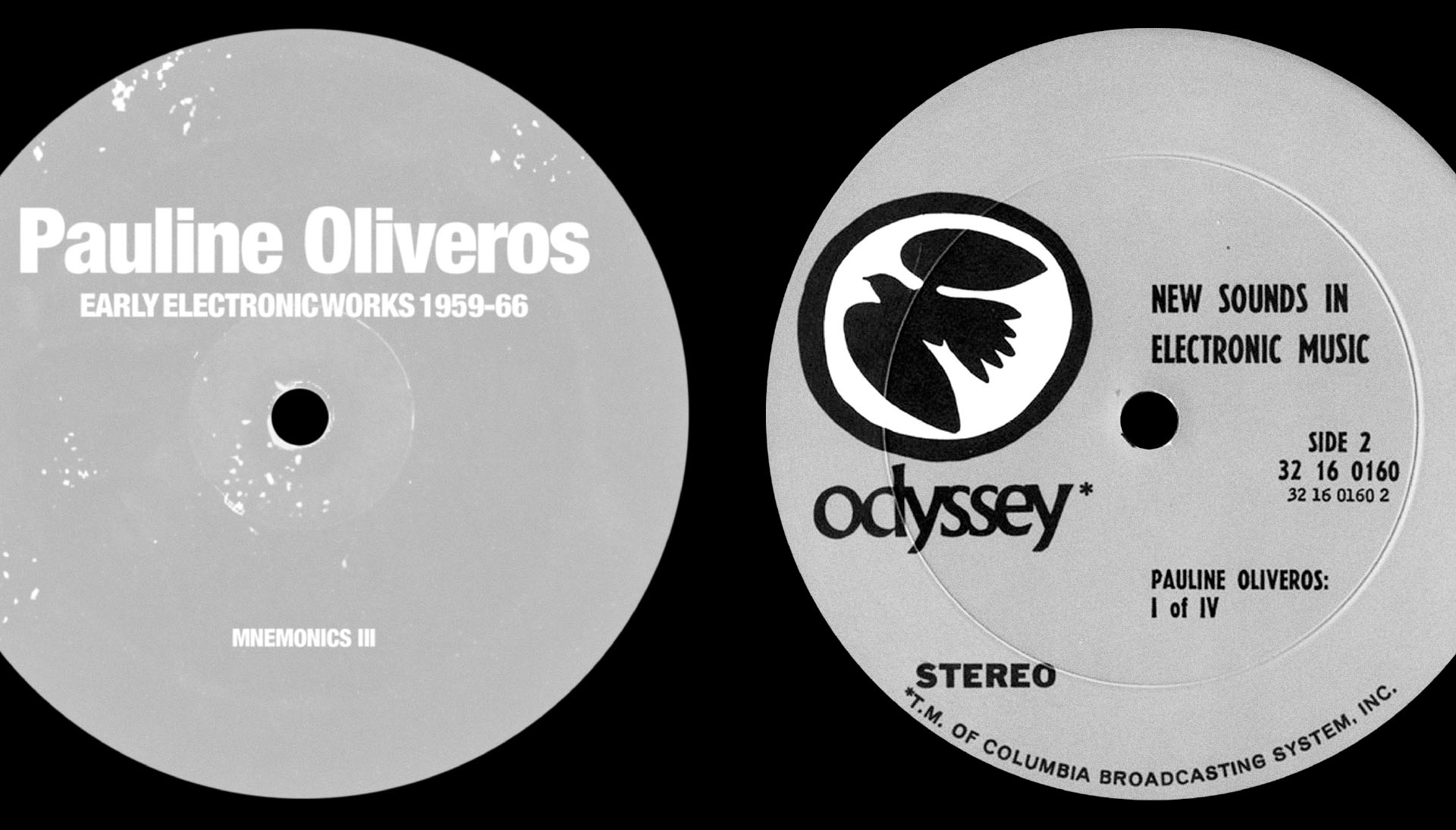
TABEA I’ve been browsing the Pauline Oliveros anthology, Software for People, recently. There’s this speech she gave in 1977 at the International Computer Music Conference—
HOLLY Did you say 1977? Wow!
TABEA Yeah! Back then, she was also advocating for a vision that is not pessimistic or dystopian—she was opposed to the idea that technology will just rule over us and be commercialized, as if we’re bound only to make the worst of it. Instead, it should become a field of experimentation, with scientists looking more to the arts and artists not demonizing technology. I see your experimentation with AI in a similar vein, in that it’s an open-ended way of working with the tools, rather than criticizing them from the beginning.
HOLLY I think Pauline was always kind of living in the future. I was sad to miss her when I was at Mills. She wasn’t there anymore. She was doing a version of virtual class, but I wasn’t a part of that. She’s definitely an inspiration.
TABEA Mills sounds like an amazing place to study. I read that one of your teachers there was Maggi Payne. It seems there were so many people doing ground-breaking things there—Laurie Anderson also comes to mind—working with the voice and technology, doing something she referred to as “audio drag” at a very early point. What kind of impact did Mills have on your understanding of the history of electronic music, especially in terms of role models?
HOLLY Mills is a very strange, idiosyncratic place. They ingested the San Francisco Tape Music Center, so the sense and legacy of that organization was part of it. Going there certainly changed my perspective and my trajectory, and I owe it a lot, but it’s not this perfect utopia. It suffers under the weight of its own history, as do a lot of places with an experimental or “avant-garde” history, sometimes getting stuck in the way that a particular avant-garde moment can become frozen in time. And that clearly doesn’t work. When I was there, though, I really embraced the computer as my main instrument. I don’t know whether that would have happened in another place. People often think about the Bay Area as a monolithic, Silicon Valley, corporate entity, but really it’s a strange combination of a large population of highly technically trained and curious people coming to that subject matter from many different perspectives. So you have a lot of very DIY approaches out there, and I think that’s what I became attracted to—this feeling of agency with the tools that I was using. It was a very nurturing place to learn how to program and to experiment, to figure out that a laptop could be a concert instrument. Seeing mentors such as John Bischoff perform with laptops on stages there, seeing Morton Subotnick perform with his laptop in a beautiful concert hall there, helps you feel like what you’re doing is being accepted and carries some weight. So, that was hugely influential and important. Also, they have a strong improv scene there with Fred Frith and Roscoe Mitchell. Being forced to improvise with a laptop is not something I want to do now, but it was a good thing to do to get over some anxieties. At the time there was also a stigma about anything beat-based. Like, electronic music in the marketplace is dominated by beat-based music, obviously, because it’s subsidized by drink sales and the alcohol industry functions better with a 4:4 on the floor. So, there was a protectionism happening there. I get it, but at the same time, you have young students who are excited about dance music and feel they can’t express that aspect in the university system. That felt a little bit outmoded. I was often using the exact same Max MSP setup in the concert hall as I was on the weekends—the warehouse rave scene in Oakland would be using the same setup, except one wouldn’t have a kick drum, and the other would. I thought that was silly. So, when I released my first album, Movement, I was afraid to put a track like “Fade,” which is an electro song, next to a song like a “Dilato,” which is more like concert-ready “experimental” music. That felt so scary to me—for those things to live in the same kind of LP real estate. Now, I feel like those questions are much less barbed. Even just through the ubiquitous Internet, everything’s living on one plane together. A lot of those genre barriers have been dissolved. At the time, though, this seemed like a big distinction, and that’s something I felt was limiting.
Also, there’s a strangeness in that it’s an all-female school at the undergraduate level, but their graduate program in music is co-ed. The electronic music program I was in had ten people, including two women and eight men. So, I was in a male program on a female island, surrounded by a more impoverished community in East Oakland. You’re in this gated, private, elite institution there—the environment was bizarre.
TABEA That’s the case in many fields. In school, you may have a majority of women, but then when it comes to professionalization and recognition, the ratios flip. In general, was it important for you to find female role models?
HOLLY There was something really nice about learning audio engineering from Maggi [Payne]—the fact that she knew more about microphones and preamps than anyone else on campus. But I’m also careful not to essentialize anything too much. I don’t think a lot of my musical heroes are necessarily tied to gender. With the experience I have now, I think a bigger barrier to a career in electronic music is the passport that you have. I have an American passport, and that meant that I could hop over to Europe and play festivals without having to undergo a rigorous visa process. So, yeah, I think it was a very male-dominated field, and I think there was certainly some discouragement, and there were certain expectations placed on me around my image, and performance, and use of voice, and what that meant. But I also want to maintain perspective as to how my path has gone and how easy or difficult it’s been.
TABEA There are always multiple forces holding people back or encouraging them.
HOLLY Yeah, and just to build on that, I feel that, at the time, things were shifting, and because Mills is an all-female undergraduate school, it may have been ahead of the curve on this conversation. There was a lot of encouragement in the sense of, “How do we get more women involved in this?” Even though the program was male-dominated, they did prioritize teaching the history of the women involved. That was already on the radar of the curriculum there, so I’m sure that had an impact on my experience.
TABEA You’ve spoken about SPAWN as something you are “raising” like a baby with a voice, and I wonder how literal that metaphor is. Do you think of it as a potential socio-political entity—a collaborating AI performer, or is that too literal? Being a machine, is it less human than I’m imagining, perhaps even embodying multiples as an identity?
HOLLY I love this trilogy by Ann Leckie called Ancillary Justice. One of the main characters in it is an AI, and she’s a multiple! It’s difficult to think about SPAWN as one, single entity. It’s also strange that sometimes people want to photograph our computer! She was on the cover of Das Magazin, a Swiss publication, several years ago. I thought that was hilarious. I mean, really, the metaphor was just us trying to find a useful way to talk with a wider audience about these experiments. When you’re dealing with a music press, it runs the whole gamut—I have great, in-depth conversations with people like yourselves, and then I also have quick, ten-minute conversations with click-bait news sources. So, in trying to find a way to communicate these ideas with a wider audience, I wasn’t necessarily aiming to humanize the concept but to make more visible the amount of human labor and effort that went into creating her—that it was like raising a child. She only has access to what we feed her. She only has access to the data that’s around her. Where that comes from matters, and how we treat that, and how we raise her as a community, matters.
Around the time that we started this project, the Blade Runner reboot came out, and we were asked to do a project related to that. It was never published, but we wrote a kind of fanfic prequel to Blade Runner. The idea we came up with was of a scientific couple who were creating inhuman intelligences. They had a huge fight, and the man of the couple took the technology and created the Tyrell Corporation, and that turned out to be Blade Runner. The female from the couple was named Donna, and she created a splinter civilization with her daughter, Spawn, where she allowed the inhuman intelligence to flourish and explore its own differences to humanity. So, that’s where the original embers of the ideas appeared. Mat claims that’s why we started calling SPAWN “she,” but I thought I started calling SPAWN “she” when I first heard audio that she put out that was trained on my voice. I heard myself, and I thought, “Oh, that sounds like me,” and I identify as she, and so she was she. I don’t know what the truth is, it’s been so long. But we found it to be a useful metaphor to communicate certain ideas—not everybody wants to talk about vocal sovereignty and data politics.
JONATHAN It seems you’ve long been committed to speaking across different audiences and engaging in different conversations. Your dissertation, for example, shares its material with your most recent album. They’re both about PROTO. How do you think about the relationship between your scholarly research and your art practice and music career? How do these two interact or intersect?
HOLLY It’s complicated because sometimes ideas that work in some contexts have an entirely different meaning in another, so you have to wrap things up with a lot of framing when speaking to each audience. I came out of a noise music scene, and I started with these noise politics of, you know, “I’m so loud and so difficult to understand, that makes me really interesting.” But as I matured as an artist, it became more interesting to actually communicate with an audience. That doesn’t mean I dumb things down or simplify them, but I like creating bridges for people, with multiple layers of understanding, so that people can simply enjoy a concert on a visceral level, or, if they are interested in the more research-oriented aspects, they can access those, as well. I try to make the music function on its own, so that people don’t necessarily have to read the program notes to understand some arcane-sounding performance. In New Music circles, we call that programmatic music. But it’s an ongoing challenge, because each community brings its own understanding, so you can’t assume the same baseline of knowledge. I try to be as inclusive as possible while not oversimplifying things. I think people often underestimate each other. Like, a “wider audience,” whatever that means, can handle complicated issues if they’re not couched in specialist language.
JONATHAN One thing I love is that not only are you bringing your scholarly ideas into more public conversations, but you’re contributing to scholarship through a highly personal, reflexive approach that’s focused on your own experience and subjectivity. I think that’s something academia needs a lot more of. Now that you’ve defended your dissertation—and congratulations on that, Doctor—
HOLLY Thanks!
JONATHAN —to what extent do you see yourself as both a scholar and an artist, going forward? Does one of these dominate for you?
HOLLY I feel like I bring a lot of baggage to that question! I don’t know why this is, but I think maybe I put “scholar” on a pedestal, and I feel like I’m not worthy of that title! I feel more comfortable with the title of “artist,” because it’s more flexible. I mean, especially when it comes to technical research, the work that I was doing with SPAWN didn’t have to have any kind of perfected methodology, because the outcome I was looking for was “sounds interesting to my ear.” So, what I’m doing is such a different kind of goal in the lab than that of a research scientist working at a software plug-in company or something like that. I feel more comfortable with the artist banner, but maybe that says something about the baggage that I bring to this question.
JONATHAN No, that’s helpful—I mean, it’s an unfair question to ask, too, because I think all of us in this room would say that that’s a false distinction anyway.
TABEA I also think that academia should become more comfortable with intuition as a valid resource.
HOLLY Right. I agree with that. I have to say, especially with PROTO but also with Platform before that, the research and the art-making process were like stumbling around in the dark. A lot of it is just intuitive, just making decisions—X, Y, Z aesthetic decisions—and not really understanding until six months later—after reading X, Y, Z—why that intuitive decision made sense. So, I totally agree with that sentiment.
TABEA As a last question, coming full circle to the concert in Amsterdam earlier this year—you were saying that SPAWN wasn’t ready for the stage. Is that something you decided intuitively that day, or is there an end goal for SPAWN—that she should be an adult, for example? I guess everyone is constantly learning, so there’s no end in that sense, but what is her future?
HOLLY My metric for her to perform is that she can do it in real time, and not just be playing back prerecorded aspects of herself. So, I’m actually working on a real-time system with a couple of engineers at the moment. At the time, it didn’t have the fidelity that would make it interesting for a concert. I didn’t want to use smoke and mirrors, faking it—the whole point of this project was to show the tech where it actually is, and find that beautiful in and of itself without trying to create some kitsch cyber-future. The tech just wasn’t ready then. I think it will be ready in the next couple of months, which I’m really excited about, because—we’ve touched on this a little bit—one of the hardest parts of working with SPAWN was that it was not in real-time. It required rendering time. That is counterintuitive for me, because I work so much with digitally-processed voice, and so much of that is just me improvising in the studio with whatever kind of process chain I’ve come up with for the day, and then I perform with that and figure out interesting things with that. So, it’s a very embodied-in-the-moment, real-time feedback system that I have going. When I had to work in this offline way, that was frustrating, so it’s been a goal since the beginning to have her perform in real-time, and that I could perform through her. She’s getting really close, and it’s really exciting and sounds really cool. I can’t wait to share it with everyone!
At the time of that Sonic Acts show in Amsterdam, one thing we were doing was a training aspect at each show. One of the ensemble members leads the audience in a call and response. The ensemble member will sing a line, and then the audience will sing it back. We’ve recorded those on our entire tour over the last year. So, we have singing recordings from everywhere that we toured, and we’re trying to make audience voice models out of those recordings. Of course, it’s difficult. I don’t know if you guys are working with machine learning, but it’s difficult to do anything that has polyphony, and a crowd sound is always polyphonic, because we have different voice ranges—people are singing out of tune, and it’s messy and difficult. But in a way, it would be nice to capture the essence of each audience’s sound and be able to perform through, say, “Sónar Barcelona, 2019.” If I could sing through that voice, it would be amazing. So, that’s something that we’re working on, also as a way to show audiences that as soon as something is captured in any form of media, it can become part of a training canon. I think a lot of people are like, “What is a training canon? What is training data? What does that mean?” It’s the photographs on your phone. It’s your text messages. It’s everything. Anything that can be captured in any form of media can be training an invisible intelligence toward a product that you may never even interface with. And that’s something that people don’t really think about.
Back around the time of Platform, we were doing a lot of public service announcements around data privacy with our Facebook performances. Mat would often go to the Facebook attendance for whatever show we were playing, and he would then write a comedic text around the attendees. All this stuff would be public. We could click on this club show on this night, and he could see all the people. He could go to their walls. He could see, “Oh, this person just got a new job. Oh, this person just broke up with so-and-so.” And then he would type these things on the big screen, and people were shocked and horrified—some people thought it was funny—but we were just trying to show people that these things that feel private because of their graphic design aren’t necessarily private. In fact, they’re very public. And Facebook can do whatever they want with your images and train whatever products, whatever services that they want, using your information. So, building on that, we wanted to show people how to create a training cannon—it’s just as simple as singing a song.
ANGIE Thank you, Holly. I believe we’re almost out of time. Do you have any questions for us?
HOLLY This is going towards a book?
ANGIE Initially, it will be published in PDF form. Each of the interviews in the series exists as a separate PDF on Library Stack, which is a platform developed by two artist-designer-programmers to help with the distribution of artist-made materials. They recognized that the entities that, in effect, control metadata for search systems are all large, for-profit companies, and the data fields that those companies provide preclude a lot of research, and certainly a lot of artists’ work, from being discovered, because, for example, if there’s no field for “graphic designer,” or no room for more than five contributors per catalog record on a platform like Amazon, then that information is, practically-speaking, lost. So, Library Stack exists in part to supply metadata about artists’ objects to library catalog systems. But they also produce and serve content and are a platform for artists to publish. They were one of the guests in the seminar series that I developed last year within the AI research program at Sandberg. We looked at Are.na, Library Stack, and W.A.G.E., all of which are artist-made organizations using data and data tools in ways that could be shoehorned into an “AI for artists” foundation course.
HOLLY Very cool. That sounds amazing. Thank you for sharing that. Thank you all so much for your thoughtful questions and for your interest in my work. I really appreciate having such smart people interested in what I’m doing and getting to hear your questions. It’s always nice to answer these kinds of questions, because it helps me to reconfirm or re-ask myself those same things and solidify my stances. So, thank you.
TABEA Thank you!
JONATHAN Thank you so much for making time for us.